
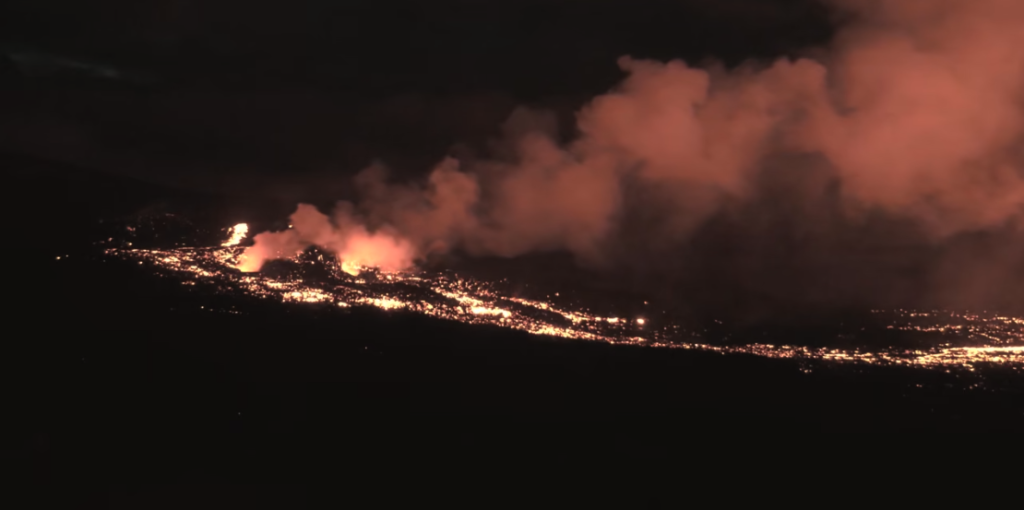
Twin lava fountains from Kilauea volcano trigger park and highway closures
#Kilauea #volcano #lava fountains #park closures #highway closures #eruption #Hawaii
📌 Key Takeaways
- Kilauea volcano erupts with twin lava fountains
- Eruption leads to closures of nearby parks
- Highways are also shut down due to volcanic activity
- Authorities are monitoring the situation for safety
📖 Full Retelling
🏷️ Themes
Volcanic Eruption, Public Safety
📚 Related People & Topics

Hawaii
U.S. state
Hawaii ( hə-WY-ee; Hawaiian: Hawaiʻi [həˈvɐjʔi, həˈwɐjʔi]) is an island state of the United States, in the Pacific Ocean about 2,000 miles (3,200 km) southwest of the U.S. mainland. One of the two non-contiguous U.S. states (along with Alaska), it is the only state not on the North American mainlan...

Kīlauea
Active volcano in Hawaii
Kīlauea (US: KIL-ə-WAY-ə, Hawaiian: [kiːlɐwˈwɛjə]) is an active shield volcano in the Hawaiian Islands. It is located along the southeastern shore of Hawaii Island. The volcano is between 210,000 and 280,000 years old and grew above sea level about 100,000 years ago.
Entity Intersection Graph
Connections for Hawaii:
Mentioned Entities
Deep Analysis
Why It Matters
This volcanic activity matters because Kilauea is one of the world's most active volcanoes, posing immediate safety risks to residents, tourists, and infrastructure in Hawaii. The park and highway closures disrupt local transportation, emergency services, and tourism—a key economic driver for the island. It also signals potential for more extensive eruptions that could threaten communities with lava flows, toxic gas emissions, and air quality issues.
Context & Background
- Kilauea has been erupting nearly continuously since 1983, making it one of the longest-running eruptions in recorded history.
- In 2018, a major eruption destroyed over 700 homes and reshaped parts of the Big Island, leading to massive evacuations and economic losses.
- The volcano is part of Hawaii Volcanoes National Park, a UNESCO World Heritage site and major tourist attraction that draws over 1 million visitors annually.
- Kilauea is monitored by the Hawaiian Volcano Observatory, which uses seismic data, gas measurements, and satellite imagery to predict eruptions and issue warnings.
What Happens Next
Scientists will closely monitor gas emissions, ground deformation, and seismic activity to forecast if the eruption intensifies or subsides. Additional road closures or evacuations may be ordered if lava flows advance toward populated areas. The park will likely remain closed until volcanic activity stabilizes and air quality improves, potentially impacting tourism for weeks.
Frequently Asked Questions
Yes, it poses risks from lava flows, toxic sulfur dioxide gas, and airborne volcanic glass particles. Authorities have closed affected areas and may order evacuations if conditions worsen.
Closures typically last until volcanic activity decreases and safety assessments are complete. This could range from days to weeks, depending on eruption patterns.
While possible, current activity appears less intense. However, Kilauea is unpredictable, and scientists are monitoring closely for signs of escalation.
Check official updates from Hawaii Volcanoes National Park and local authorities. Avoid closed areas and be prepared for itinerary changes due to air quality or access issues.