
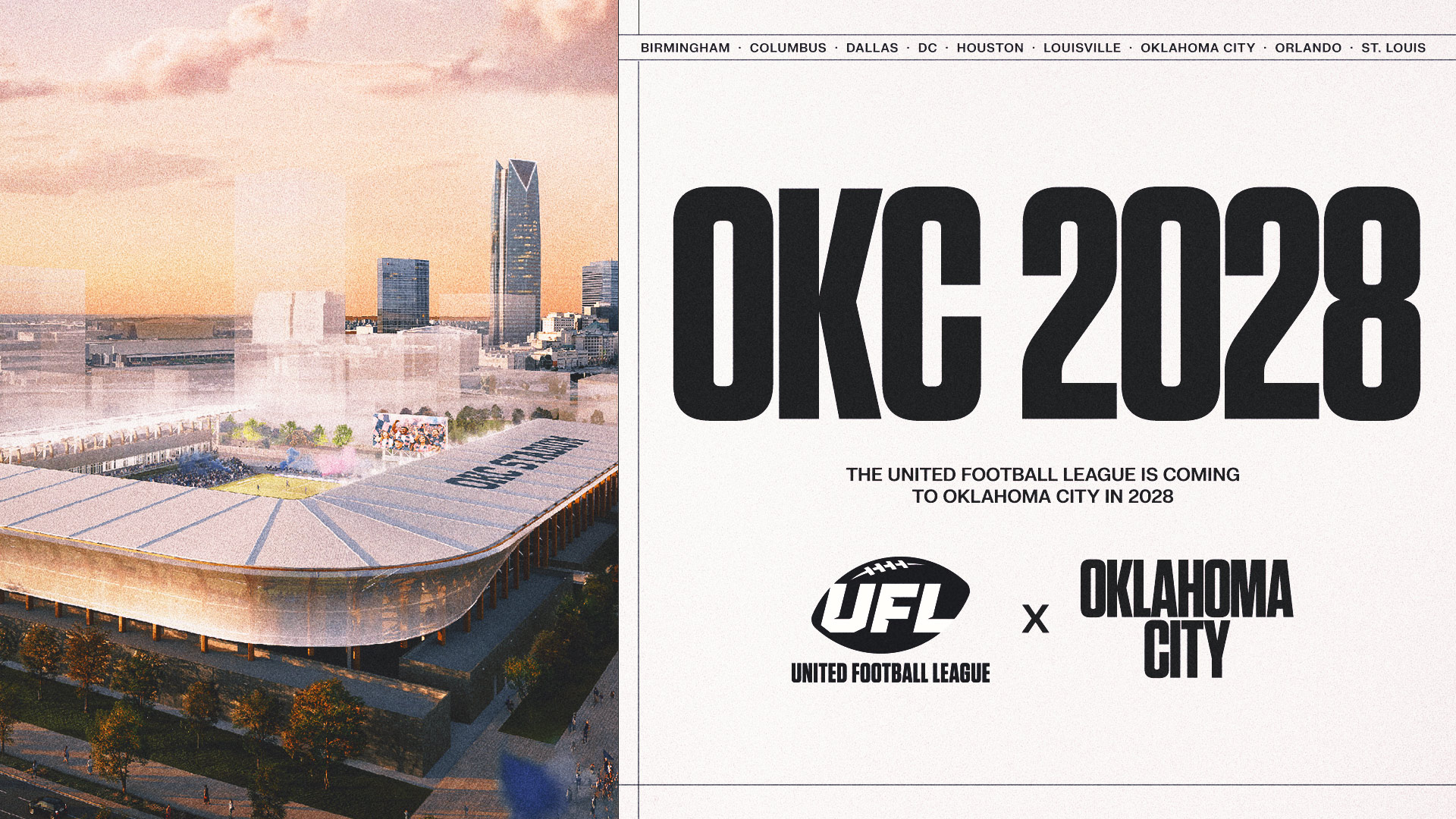
UFL Expanding to Oklahoma City, Moving to 10 Teams in 2028
#United Football League #UFL expansion #Oklahoma City #professional football #spring football #MAPS 4 Stadium #2028 season #new franchise
📌 Key Takeaways
- The UFL will expand to 10 teams for the 2028 season.
- Oklahoma City has been awarded one of the two new expansion franchises.
- The team will play in the new MAPS 4 Multipurpose Stadium.
- League officials cited Oklahoma's strong football culture and new stadium as key reasons for the expansion.
- The identity of the second expansion city and the Oklahoma City team's nickname are not yet known.
📖 Full Retelling
🏷️ Themes
Sports Expansion, League Growth, Franchise Development
📚 Related People & Topics

Oklahoma City
Capital city of Oklahoma, United States
Oklahoma City ( OH-klə-HOH-mə -), often shortened to OKC, is the capital and most populous city of the U.S. state of Oklahoma. It is the 20th-most populous U.S. city and 8th largest in the Southern United States, with a population of 681,054 at the 2020 census. It is the county seat of Oklahoma Co...
Entity Intersection Graph
Connections for Oklahoma City:
Mentioned Entities
Deep Analysis
Why It Matters
This expansion represents a significant vote of confidence in the viability of spring football, a sector that has historically struggled with sustainability. For Oklahoma City, adding a UFL franchise diversifies the city's sports portfolio and maximizes the utility of the taxpayer-funded MAPS 4 stadium project. It also provides football fans in the region with a professional option that complements the local college football culture without competing directly with the NFL's fall schedule.
Context & Background
- The UFL was formed in 2024 following the merger of the XFL and the USFL, creating a consolidated spring football league.
- Spring football leagues have a history of financial instability, with previous iterations like the AAF and original XFL folding quickly.
- The MAPS 4 program is a $1 billion sales tax initiative in Oklahoma City that includes funding for the new multipurpose stadium.
- Oklahoma City previously hosted the Oklahoma City Yard Dawgz, an arena football team, from 2004 to 2009.
- The Oklahoma City Thunder, an NBA franchise, moved to the city in 2008 and is widely regarded as a model small-market success story.
What Happens Next
The UFL is expected to announce the location of the second expansion franchise required to reach ten teams. In Oklahoma City, officials will likely launch a branding campaign to determine the team's nickname and colors before the 2028 kickoff. Construction on the MAP 4 Multipurpose Stadium will continue with a target completion date ahead of the 2028 season.
Frequently Asked Questions
The team is scheduled to debut during the 2028 UFL season.
The league cited the state's deep passion for football at all levels and the city's proven ability to support a major league franchise like the Thunder.
The team will play its home games at the MAPS 4 Multipurpose Stadium, which is currently under construction.
The league currently features eight teams, though the 2024 season introduced three new franchises: Columbus, Louisville, and Orlando.
Source Scoring
Detailed Metrics
Key Claims Verified
Confirmed by multiple sports news outlets reporting on the same UFL announcement.
Widely reported as the specific new market. The team will play at the new MAPS 4 Multipurpose Stadium.
Consistently reported across sources; no branding has been announced.
Multiple reports state the second new market has not been announced.
This claim about the *current* season's new teams could not be independently verified from primary UFL sources or other major sports databases for the 2025 season. It may be speculative or an error.
Caveats / Notes
- The article contains a claim about three specific new teams for the 'current season' (Columbus, Louisville, Orlando) which appears unverified and potentially incorrect, as the UFL's 2024/2025 teams are well-documented and do not include these names. This error reduces confidence in the article's fact-checking for non-core claims. The 2028 plan is credible but distant, carrying moderate execution/volatility risk.