
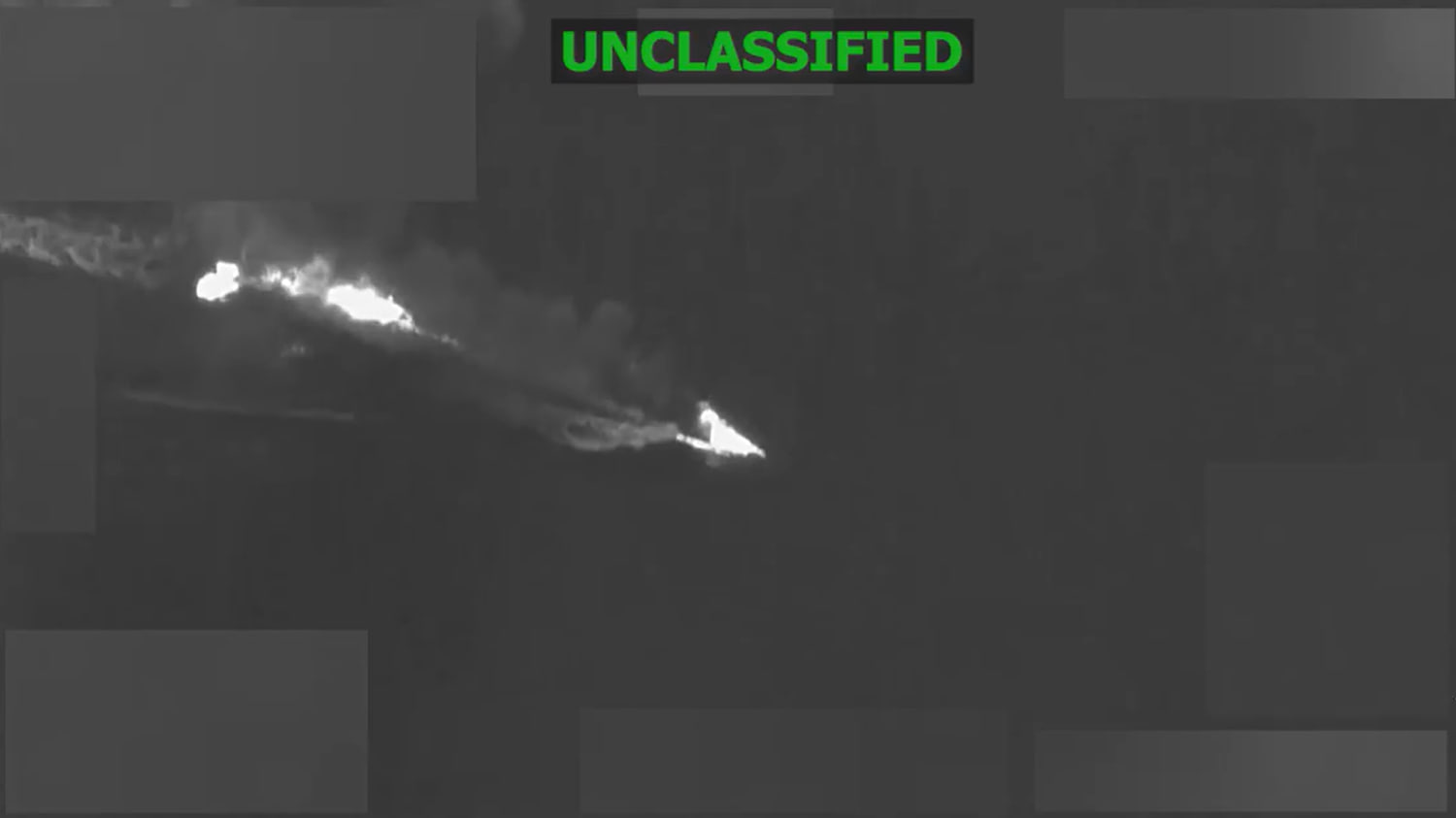
U.S. strikes alleged drug boat in eastern Pacific, leaving 3 survivors
#U.S. military #drug smuggling #Pacific Ocean #strike #survivors #counter-narcotics #vessel
📌 Key Takeaways
- U.S. military conducted a strike on a suspected drug-smuggling vessel in the eastern Pacific Ocean.
- The operation resulted in the vessel being disabled or destroyed.
- Three individuals survived the incident and were recovered from the water.
- The action was part of counter-narcotics efforts in the region.
📖 Full Retelling
🏷️ Themes
Military Action, Drug Interdiction
📚 Related People & Topics

Pacific Ocean
Largest ocean
The Pacific Ocean is the largest and deepest of Earth's five oceanic divisions. It stretches from the Arctic Ocean in the north to the Southern Ocean, or, depending on the definition, to Antarctica in the south, and is bounded by the continents of Asia and Australia in the west and the Americas in t...
Entity Intersection Graph
Connections for Pacific Ocean:
Mentioned Entities
Deep Analysis
Why It Matters
This incident matters because it represents an escalation in U.S. counternarcotics operations in international waters, potentially affecting maritime law enforcement protocols and U.S.-Latin American relations. It impacts drug trafficking networks operating in the Pacific corridor, regional security forces, and international maritime law discussions. The use of lethal force against alleged drug vessels raises legal and human rights questions about jurisdiction and proportionality in interdiction operations.
Context & Background
- The U.S. has conducted counternarcotics operations in the Eastern Pacific since the 1980s, primarily targeting cocaine trafficking from South America to North America
- The U.S. Coast Guard and Navy regularly patrol international waters under agreements with partner nations to intercept drug shipments
- Previous interdictions typically involve boarding, seizure, and arrest rather than direct strikes against vessels
- The Eastern Pacific drug corridor accounts for approximately 60% of cocaine trafficking to the United States according to DEA estimates
- International maritime law allows for interdiction of suspected drug vessels in international waters under certain bilateral agreements and UN conventions
What Happens Next
The U.S. will likely conduct an internal investigation into the incident and may face diplomatic inquiries from affected nations. Legal proceedings may follow regarding the survivors' status and potential charges. The incident could lead to revised rules of engagement for future interdiction operations and increased scrutiny of U.S. maritime enforcement tactics in international forums.
Frequently Asked Questions
The U.S. typically operates under bilateral agreements with flag states and international conventions that permit interdiction of suspected drug trafficking vessels. However, the use of lethal force rather than boarding procedures raises additional legal questions about proportionality and use of force under international law.
The three survivors were likely crew members of the targeted vessel. They will probably be detained, medically treated if injured, and processed through legal channels—potentially facing drug trafficking charges in U.S. courts or being transferred to their home countries for prosecution.
Most interdictions involve boarding teams seizing vessels and arresting crew members. Direct strikes against vessels are unusual and suggest either an imminent threat assessment, inability to safely board, or a shift in operational tactics that could indicate changing threat perceptions or policy directions.
Countries in the Eastern Pacific region including Colombia, Ecuador, Peru, and Central American nations whose waters are used for drug transit could be affected. The flag state of the vessel (if registered) and the nationalities of the crew will also have diplomatic and legal interests in the outcome.