

US Supreme Court to hear Guam hazardous waste explosions case
#Supreme Court #Guam #hazardous waste #explosions #environmental law #legal case #waste management
📌 Key Takeaways
- The US Supreme Court will review a case involving hazardous waste explosions in Guam.
- The case likely centers on legal liability or regulatory compliance for the explosions.
- Outcome could impact environmental law and waste management standards.
- Hearing indicates significant legal or public safety implications at stake.
🏷️ Themes
Environmental Law, Supreme Court
📚 Related People & Topics
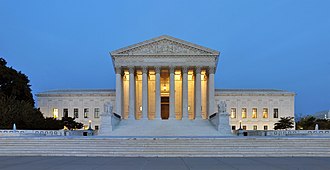
Supreme court
Highest court in a jurisdiction
In most legal jurisdictions, a supreme court, also known as a court of last resort, apex court, high (or final) court of appeal, and court of final appeal, is the highest court within the hierarchy of courts. Broadly speaking, the decisions of a supreme court are binding on all other courts in a nat...

Guam
U.S. territory in Micronesia
Guam ( GWAHM; Chamorro: Guåhan [ˈɡʷɑhɑn]) is an island that is an organized, unincorporated territory of the United States in the Micronesia subregion of the western Pacific Ocean. Guam's capital is Hagåtña, and the most populous village is Dededo. It is the westernmost point and territory of the U...
Entity Intersection Graph
Connections for Supreme court:
Mentioned Entities
Deep Analysis
Why It Matters
This case is important because it addresses the legal responsibility for hazardous waste cleanup, which has significant environmental and public health implications. It affects Guam's residents, who face risks from explosions and contamination, as well as federal and territorial governments involved in waste management. The outcome could influence how similar Superfund cases are resolved nationwide, impacting environmental policy and corporate liability for pollution.
Context & Background
- Guam, a U.S. territory in the Pacific, has a history of environmental issues related to military and industrial activities.
- The case involves the Ordot Dump, a hazardous waste site that has caused explosions and contamination, leading to cleanup efforts under the federal Superfund law (CERCLA).
- Superfund cases often involve disputes over cost allocation between multiple responsible parties, including government entities and private companies.
- Guam has previously sought contributions from the U.S. government for cleanup costs, citing federal involvement in waste disposal at the site.
- The Supreme Court's involvement indicates the legal complexity and national significance of the issue, as it may interpret CERCLA provisions.
What Happens Next
The Supreme Court will schedule oral arguments, likely in the coming months, with a decision expected by June 2025. The ruling will determine whether Guam can proceed with its claims for cost recovery, potentially leading to further litigation or settlement negotiations. Depending on the outcome, it may set a precedent for other territories or states dealing with similar hazardous waste disputes.
Frequently Asked Questions
The Comprehensive Environmental Response, Compensation, and Liability Act (CERCLA) is a U.S. federal law enacted in 1980 to clean up hazardous waste sites. It holds polluters financially responsible for cleanup costs and allows the government to take action against contamination. The law established a trust fund (Superfund) for sites where responsible parties cannot be identified.
Guam is seeking contributions from the U.S. government for cleanup costs at the Ordot Dump, a hazardous waste site that has caused explosions. The case reached the Supreme Court due to legal disputes over interpretation of CERCLA and the statute of limitations for such claims. This highlights the territory's efforts to address environmental damage with federal support.
The Supreme Court's decision could set a precedent for how CERCLA applies to cost-recovery claims involving government entities. It may influence similar cases in other territories or states with hazardous waste sites, affecting liability and cleanup funding. This could shape environmental justice and policy for communities dealing with pollution.
The Ordot Dump has experienced explosions due to methane gas buildup from decomposing waste, posing immediate safety hazards. Long-term risks include soil and water contamination from toxic substances, threatening public health and ecosystems. Cleanup is essential to prevent further environmental damage and protect residents.
Responsibility is disputed between Guam's government and the U.S. federal government, with Guam arguing that federal activities contributed to the waste. Under CERCLA, multiple parties, including past operators and waste generators, may be held liable. The Supreme Court case will help clarify the allocation of these costs.