
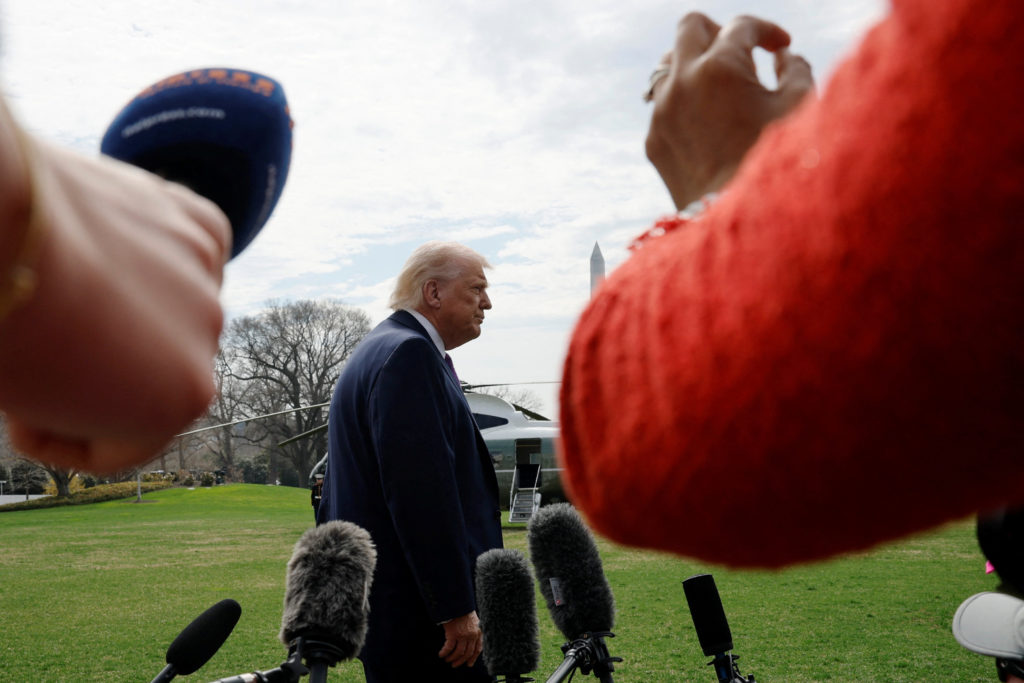
WATCH: Asked what U.S. needs to do to end Iran war, Trump says 'more of the same'
#Trump #Iran war #U.S. strategy #foreign policy #military action
📌 Key Takeaways
- Trump suggests continuing current U.S. strategy to end Iran war.
- He advocates for 'more of the same' approach in response to the question.
- The statement implies no major policy shifts regarding Iran.
- It reflects a stance of maintaining existing military or diplomatic actions.
📖 Full Retelling
🏷️ Themes
U.S. Foreign Policy, Iran Conflict
📚 Related People & Topics
List of wars involving Iran
This is a list of wars involving the Islamic Republic of Iran and its predecessor states. It is an unfinished historical overview.

Donald Trump
President of the United States (2017–2021; since 2025)
Donald John Trump (born June 14, 1946) is an American politician, media personality, and businessman who is the 47th president of the United States. A member of the Republican Party, he served as the 45th president from 2017 to 2021. Born into a wealthy New York City family, Trump graduated from the...
Entity Intersection Graph
Connections for List of wars involving Iran:
Mentioned Entities
Deep Analysis
Why It Matters
This statement matters because it signals a continuation of current U.S. policy toward Iran during a period of heightened regional tensions, potentially affecting Middle East stability, global oil markets, and international security alliances. It impacts U.S.-Iran relations, regional actors like Israel and Saudi Arabia, and global powers involved in nuclear negotiations. The approach could influence ongoing proxy conflicts and nuclear non-proliferation efforts in the region.
Context & Background
- The U.S. and Iran have had hostile relations since the 1979 Iranian Revolution and subsequent hostage crisis at the U.S. embassy in Tehran.
- The 2015 Joint Comprehensive Plan of Action (JCPOA) nuclear deal was abandoned by the Trump administration in 2018, leading to renewed sanctions and increased tensions.
- Iran has supported proxy groups across the Middle East, including Hezbollah in Lebanon and Houthi rebels in Yemen, creating regional security challenges.
- Recent years have seen attacks on oil tankers, U.S. bases, and the assassination of Iranian General Qasem Soleimani by the U.S. in 2020.
- Iran has continued advancing its nuclear program since the collapse of the JCPOA, raising concerns about potential weapons development.
What Happens Next
Continued U.S. pressure through sanctions and military presence will likely persist, potentially leading to further Iranian provocations or proxy attacks. Diplomatic efforts may remain stalled unless there's a change in administration or policy approach. Regional tensions could escalate, particularly regarding Iran's nuclear advancements and support for militant groups.
Frequently Asked Questions
This likely refers to continuing the current U.S. approach of maximum pressure through sanctions, military deterrence, and diplomatic isolation of Iran, rather than pursuing renewed nuclear negotiations or concessions.
This position suggests the U.S. will not rejoin the 2015 nuclear agreement or pursue similar diplomatic solutions, maintaining pressure tactics that have failed to halt Iran's nuclear advancements since 2018.
Risks include further regional destabilization through proxy conflicts, increased chance of direct military confrontation, accelerated Iranian nuclear development, and strain on U.S. alliances with European partners who favor diplomacy.
Iran will likely continue advancing its nuclear program while supporting proxy attacks against U.S. interests and allies, potentially escalating to more direct military actions if tensions increase significantly.
Alternatives include renewed diplomatic engagement through direct negotiations or multilateral frameworks, confidence-building measures, phased sanctions relief, or regional security arrangements involving Gulf states.