
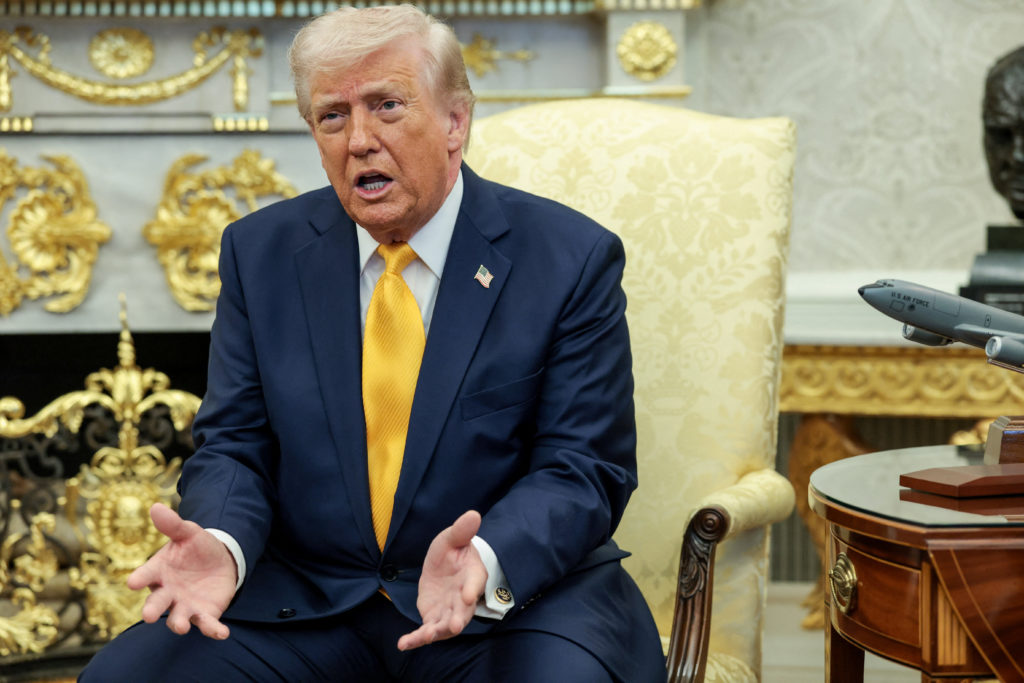
WATCH: 'Why didn't you tell me about Pearl Harbor?' Trump says when Japanese reporter asks why allies didn't know about Iran plan
#Trump #Japan #Iran plan #Pearl Harbor #allies #press conference #diplomatic communication
📌 Key Takeaways
- Trump responded to a Japanese reporter's question about allies not being informed of an Iran plan with a reference to Pearl Harbor.
- The exchange occurred during a press interaction, highlighting diplomatic communication issues.
- Trump's comment drew historical parallels, implying criticism of allies' past actions.
- The incident underscores tensions in international relations and information sharing among allies.
📖 Full Retelling
🏷️ Themes
Diplomacy, Historical References
📚 Related People & Topics

Pearl Harbor
Harbor on the island of Oahu, Hawaii
Pearl Harbor is a lagoon harbor on the island of Oʻahu, Hawaii, United States, west of Honolulu. It was often visited by the naval fleet of the United States before it was acquired from the Hawaiian Kingdom by the U.S. with the signing of the Reciprocity Treaty of 1875. Much of the harbor and surrou...

Japan
Country in East Asia
Japan is an island country in East Asia. Located in the Pacific Ocean off the northeast coast of the Asian mainland, it is bordered to the west by the Sea of Japan and extends from the Sea of Okhotsk in the north to the East China Sea in the south. The Japanese archipelago consists of four major isl...

Donald Trump
President of the United States (2017–2021; since 2025)
Donald John Trump (born June 14, 1946) is an American politician, media personality, and businessman who is the 47th president of the United States. A member of the Republican Party, he served as the 45th president from 2017 to 2021. Born into a wealthy New York City family, Trump graduated from the...
Entity Intersection Graph
Connections for Pearl Harbor:
Mentioned Entities
Deep Analysis
Why It Matters
This exchange matters because it reveals diplomatic tensions between the U.S. and key allies regarding military coordination, potentially undermining trust in security partnerships. It affects U.S.-Japan relations specifically, as the Pearl Harbor reference invokes historical trauma while questioning current intelligence sharing. The incident also impacts global perceptions of U.S. foreign policy consistency and reliability as a security partner.
Context & Background
- The 1941 Pearl Harbor attack by Imperial Japan killed 2,403 Americans and brought the U.S. into World War II, creating lasting historical sensitivity in U.S.-Japan relations.
- Japan has been a key U.S. ally since the post-war security treaty of 1951, hosting major U.S. military bases and participating in joint defense arrangements.
- The U.S. has frequently coordinated military actions with allies like Japan, particularly in Middle East operations, making consultation expectations standard practice.
- Iran tensions have escalated since the U.S. withdrew from the nuclear deal in 2018, with recent incidents including drone strikes and tanker seizures raising regional conflict risks.
What Happens Next
Japanese officials will likely seek clarification through diplomatic channels about U.S. consultation protocols. The incident may prompt discussions at upcoming G7 or bilateral meetings about intelligence sharing mechanisms. Future U.S. military actions in the Middle East will face increased scrutiny from allies regarding advance notification procedures.
Frequently Asked Questions
Trump used the historical reference to deflect questions about current intelligence sharing, suggesting allies sometimes withhold information. However, the analogy is historically problematic as Japan was an enemy during Pearl Harbor but has been a close ally for decades.
While unspecified in this exchange, it likely refers to recent U.S. military movements or strike planning regarding Iran tensions. The U.S. has increased Middle East military presence amid escalating conflicts with Iranian proxies.
Japan will likely address this through private diplomatic channels while publicly maintaining alliance solidarity. Japanese officials may seek clearer consultation protocols to prevent similar incidents that reference painful historical memories.
Yes, other allies may question U.S. consultation commitments, potentially making them more cautious in intelligence sharing. NATO partners and Asian allies will watch how this develops as it reflects broader patterns in U.S. foreign policy approaches.