
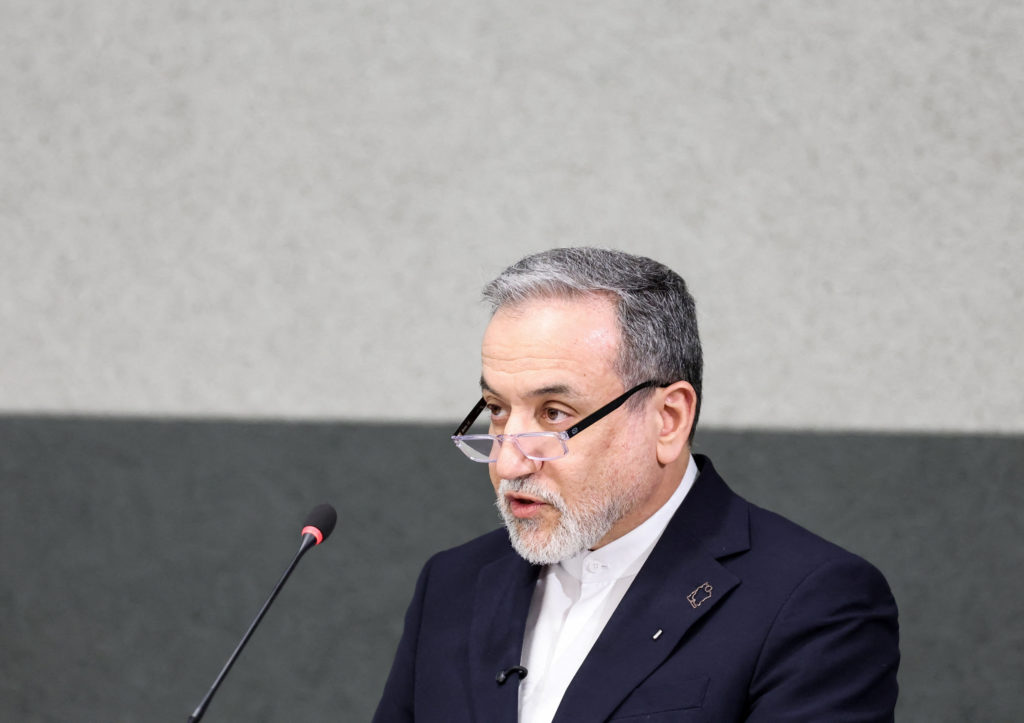
What Iran's foreign minister told us about the next supreme leader, rising oil prices
#Iran #supreme leader #foreign minister #oil prices #succession #energy #Middle East
📌 Key Takeaways
- Iran's foreign minister discussed succession plans for the next supreme leader
- The minister addressed concerns about rising global oil prices
- Iran's role in global energy markets was a central topic
- The interview revealed insights into Iran's internal political dynamics
📖 Full Retelling
🏷️ Themes
Iranian politics, Energy markets
📚 Related People & Topics

Iran
Country in West Asia
# Iran **Iran**, officially the **Islamic Republic of Iran** and historically known as **Persia**, is a sovereign country situated in West Asia. It is a major regional power, ranking as the 17th-largest country in the world by both land area and population. Combining a rich historical legacy with a...

Middle East
Transcontinental geopolitical region
The Middle East is a geopolitical region encompassing the Arabian Peninsula, Egypt, Iran, Iraq, the Levant, and Turkey. The term came into widespread usage by Western European nations in the early 20th century as a replacement of the term Near East (both were in contrast to the Far East). The term ...
Entity Intersection Graph
Connections for Iran:
Mentioned Entities
Deep Analysis
Why It Matters
This news matters because it provides rare insight into Iran's political succession plans, which will shape the Middle East for decades. The discussion of oil prices reveals how Iran plans to leverage its energy resources amid global market volatility. This affects global energy markets, regional geopolitics, and Iran's 85 million citizens who will live under the next supreme leader's rule. International policymakers and energy traders need to understand these dynamics as Iran remains a key player in both OPEC and regional conflicts.
Context & Background
- Iran's current Supreme Leader Ayatollah Ali Khamenei is 85 years old and has held power since 1989, making succession planning increasingly urgent
- Iran holds the world's fourth-largest oil reserves and is OPEC's third-largest producer, giving it significant influence over global energy markets
- The Assembly of Experts, an 88-member clerical body, is constitutionally responsible for selecting Iran's next supreme leader
- Previous supreme leader transitions (from Khomeini to Khamenei in 1989) occurred during periods of regional instability and economic challenges
- Iran's oil exports have been constrained by U.S. sanctions since 2018, affecting its economy and global market share
What Happens Next
Within 6-12 months, we'll likely see increased maneuvering among potential successors as Khamenei's health becomes more concerning. Iran will probably coordinate with OPEC+ members on production cuts to maintain oil prices above $80/barrel. The Assembly of Experts may begin informal discussions about succession criteria, though formal selection won't occur until after Khamenei's death. Regional tensions could escalate as Iran seeks to demonstrate strength during leadership transition uncertainty.
Frequently Asked Questions
While no official candidates are named, likely contenders include Ayatollah Ebrahim Raisi (current president), Ayatollah Ahmad Jannati (head of Assembly of Experts), and Ayatollah Alireza Arafi. All are hardline conservatives aligned with Khamenei's policies, suggesting continuity rather than reform.
A new supreme leader would likely maintain Iran's current nuclear stance initially but might adjust tactics. Any successor would need to consolidate power first, potentially delaying serious negotiations for 1-2 years while establishing authority.
Higher prices would significantly boost Iran's revenue despite sanctions, potentially adding $20-30 billion annually. This would ease budget pressures and fund regional proxies, but wouldn't solve structural economic problems like inflation and unemployment.
The Assembly of Experts selects the supreme leader, requiring a majority vote. Candidates must be senior Islamic jurists with political wisdom. The process is secretive, but the Revolutionary Guards and clerical networks heavily influence the outcome.
Sustained prices above $100/barrel could slow global growth, particularly in energy-importing nations. However, current diversified energy supplies and strategic reserves make a 1970s-style oil crisis less likely, though inflation pressures would increase.