
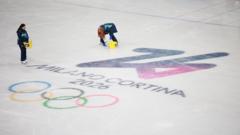
What is Olympic ice and how is it made?
#Milan-Cortina 2026 #Winter Olympics #Ice making #Glaciology #Refrigeration #Figure skating #Speed skating
📌 Key Takeaways
- Olympic ice is not uniform across sports, with figure skating requiring 'softer' ice and speed skating requiring 'harder' ice.
- Technicians use purified water and thin-layer application techniques to ensure the structural integrity of the rink.
- The Milan-Cortina 2026 organizers are utilizing advanced refrigeration and thermal sensors to maintain precise temperature controls.
- The chemistry of the ice, including the removal of oxygen and minerals, is vital for preventing cracks during high-impact maneuvers.
📖 Full Retelling
Specialized ice technicians and organizers for the Milan-Cortina 2026 Winter Games are currently finalizing advanced freezing techniques in Italy to ensure optimal surfaces for various athletic disciplines ahead of the upcoming international competition. This meticulous preparation process is essential because different Olympic sports—ranging from figure skating to speed skating—require distinct ice temperatures and textures to ensure athlete safety and peak performance levels. By tailoring the molecular structure and surface friction of the rinks, organizers aim to meet the rigorous international standards mandated by the International Olympic Committee and various sport federations.
Creating "Olympic-grade" ice is a sophisticated engineering feat that begins with highly purified water to prevent air bubbles and mineral deposits, which can weaken the surface. For figure skating, the ice must be relatively soft and thick, maintained at approximately -3 to -4 degrees Celsius, to allow for cushioned landings and deep blade edges. Conversely, long-track speed skating requires much harder, thinner ice kept at a colder -7 to -9 degrees Celsius, facilitating maximum glide and minimum friction for high-speed laps. These variations require specialized refrigeration systems buried beneath the concrete slabs of the arenas.
The process involves applying the water in dozens of thin, microscopic layers rather than one single pour, a technique that builds structural integrity. Technicians often use a fine spray or misting system to build the base, followed by a painting process to achieve the iconic bright white look of the rink. Once the surface is established, sensors embedded in the floor monitor temperature fluctuations in real-time, allowing engineers to make micro-adjustments based on the heat generated by the thousands of spectators who will fill the venues during the 2026 events. This intersection of chemistry and mechanical engineering remains one of the most critical behind-the-scenes operations in Winter Olympic logistics.
🏷️ Themes
Sports Science, Engineering, Olympic Games
Entity Intersection Graph
No entity connections available yet for this article.