
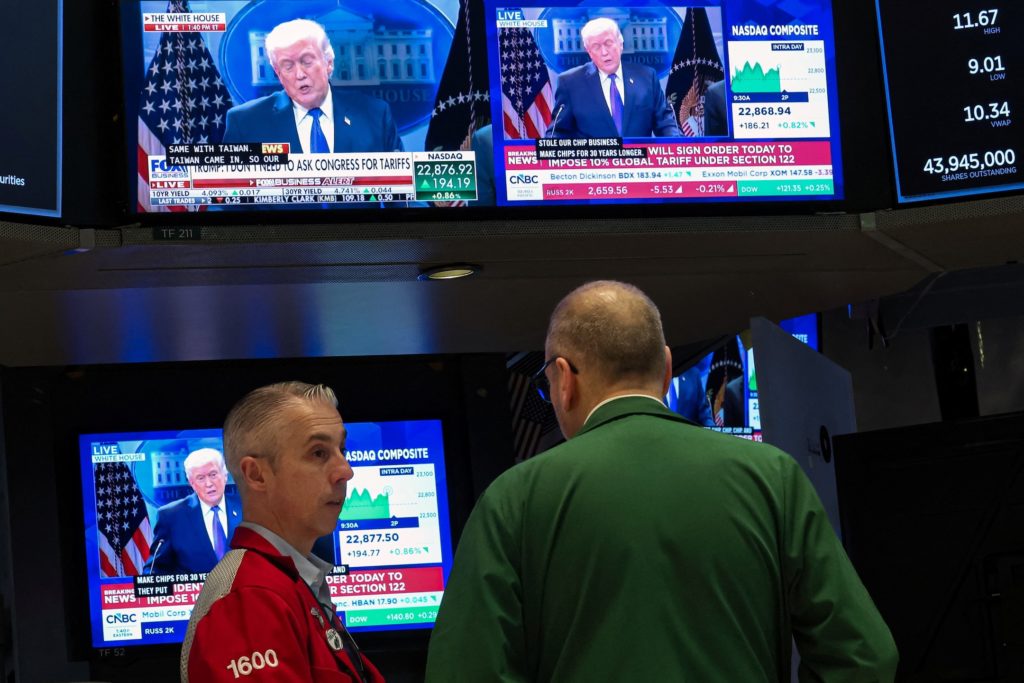
What's next for consumers and the economy after the Supreme Court's tariff ruling
#Supreme Court #Tariffs #Trump #Economy #Consumers #Trade policy #Legal challenges
📌 Key Takeaways
- Supreme Court struck down many of President Trump's global tariffs
- Trump pledged to keep most tariffs in place through alternative means
- Expert analysis provided by Yale professor Natasha Sarin
- Potential impact on consumers and businesses nationwide
📖 Full Retelling
🏷️ Themes
Trade policy, Economic impact, Legal challenges
📚 Related People & Topics

Consumer
User of a product or service
A consumer is a person or a group who intends to order, or use purchased goods, products, or services primarily for personal, social, family, household and similar needs, who is not directly related to entrepreneurial or business activities. The term most commonly refers to a person who purchases g...
Supreme court
Highest court in a jurisdiction
In most legal jurisdictions, a supreme court, also known as a court of last resort, apex court, high (or final) court of appeal, and court of final appeal, is the highest court within the hierarchy of courts. Broadly speaking, the decisions of a supreme court are binding on all other courts in a nat...

Economy
Area of production, distribution, trade of, and consumption of goods and services
An economy is an area of the production, distribution and trade, as well as consumption of goods and services. In general, it is defined as a social domain that emphasize the practices, discourses, and material expressions associated with the production, use, and management of resources. A given eco...

Tariff
Goods import or export tax
A tariff or import tax is a duty imposed by a national government, customs territory, or supranational union on imports of goods and is paid by the importer. Exceptionally, an export tax may be levied on exports of goods or raw materials and is paid by the exporter. Besides being a source of revenue...

Donald Trump
President of the United States (2017–2021; since 2025)
Donald John Trump (born June 14, 1946) is an American politician, media personality, and businessman who is the 47th president of the United States. A member of the Republican Party, he served as the 45th president from 2017 to 2021. Born into a wealthy New York City family, Trump graduated from the...
Entity Intersection Graph
No entity connections available yet for this article.
Mentioned Entities
Deep Analysis
Why It Matters
The Supreme Court ruling removes many tariffs that had been in place for years, potentially lowering import costs and affecting consumer prices. It also signals a shift in trade policy that could influence future negotiations and economic stability.
Context & Background
- Supreme Court invalidated several Trump era tariffs on steel and aluminum
- Trump pledged to keep tariffs through alternative measures
- The ruling creates uncertainty for importers and consumers
- Potential impact on inflation and trade relations
- Legislative and executive responses are likely
What Happens Next
Congress may draft new tariff legislation or negotiate alternative trade agreements to replace the struck‑down measures. Consumers may see changes in the prices of imported goods as the administration seeks to maintain trade barriers through other tools.
Frequently Asked Questions
The ruling invalidated tariffs on steel and aluminum imports that were imposed during the Trump administration.
He may use alternative trade tools, negotiate new agreements, or pursue legislative action to maintain similar protectionist effects.
It could affect the cost of imported goods, potentially lowering prices if tariffs are removed, but also creating uncertainty as new trade measures are considered.
Yes, it may prompt new legislation and renegotiation of trade agreements to address the gaps left by the struck‑down tariffs.