
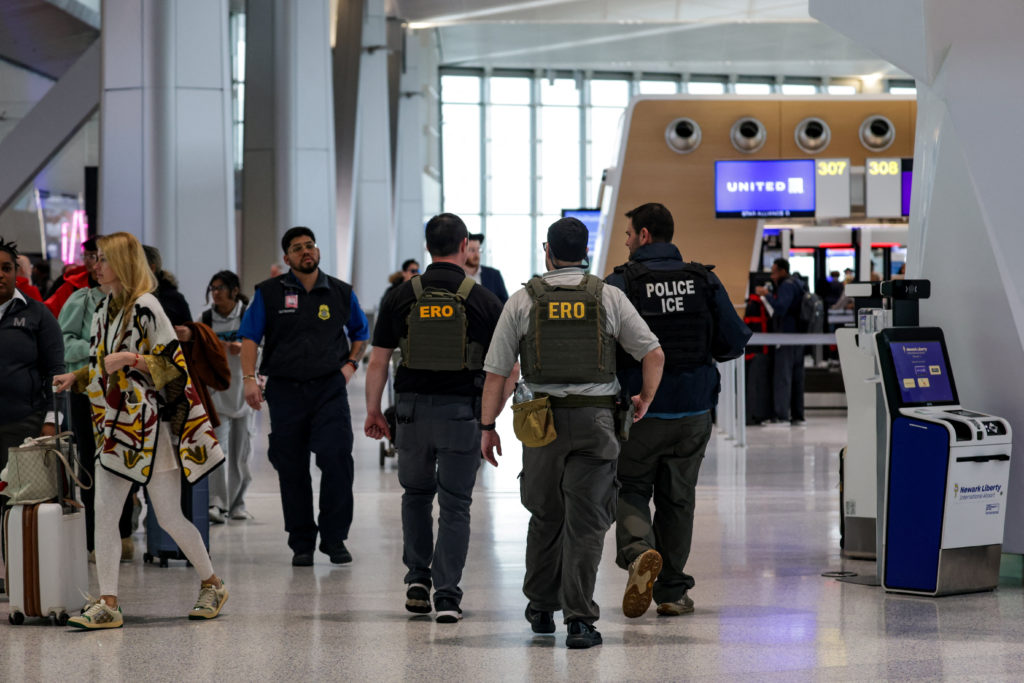
Why do ICE agents get paid during the partial government shutdown, but not TSA?
#ICE #TSA #government shutdown #federal funding #essential personnel #appropriations #mandatory spending
📌 Key Takeaways
- ICE agents are paid during the shutdown due to being funded by fees and mandatory spending, not annual appropriations.
- TSA agents are unpaid as their funding relies on annual appropriations halted by the shutdown.
- The shutdown highlights disparities in federal employee pay based on funding sources.
- Essential personnel like TSA agents must work without pay, while others like ICE continue receiving salaries.
📖 Full Retelling
🏷️ Themes
Government Shutdown, Federal Pay
📚 Related People & Topics

Transportation Security Administration
United States federal government agency
The Transportation Security Administration (TSA) is an agency of the United States Department of Homeland Security (DHS) that has authority over the security of transportation systems within and connecting to the United States. It was created as a response to the September 11 attacks to improve airp...

United States Immigration and Customs Enforcement
US federal law enforcement agency
The United States Immigration and Customs Enforcement (ICE) is a federal law enforcement agency under the United States Department of Homeland Security. Its stated mission is to conduct criminal investigations, enforce immigration laws, preserve national security, and protect public safety. ICE was ...
Entity Intersection Graph
Connections for Transportation Security Administration:
View full profileMentioned Entities
Deep Analysis
Why It Matters
This news matters because it highlights the unequal impact of government shutdowns on federal employees, creating financial hardship for some while others continue receiving paychecks. It affects thousands of TSA agents who must work without pay during security screenings at airports, potentially impacting morale and airport operations. The disparity also raises questions about how government agencies are funded and classified during budget impasses, with implications for future shutdown negotiations and employee rights.
Context & Background
- The current partial government shutdown began on December 22, 2018, when Congress and the White House failed to agree on funding for border security measures.
- Federal agencies are funded through different mechanisms - some through annual appropriations (like TSA) and others through multi-year or permanent funding (like ICE's detention operations).
- During shutdowns, 'essential' employees must continue working without pay, while 'non-essential' employees are furloughed, creating confusion about which agencies fall into which category.
- The Department of Homeland Security, which oversees both ICE and TSA, has complex funding streams that affect how different components operate during shutdowns.
- Previous government shutdowns have created similar disparities, with some agencies able to use fee-based funding or carryover funds to continue operations.
What Happens Next
TSA agents will continue working without pay until the shutdown ends, potentially leading to increased sick calls and operational challenges at airports. Congress may face pressure to pass legislation guaranteeing back pay for all affected federal employees once the shutdown concludes. The disparity could become a bargaining point in shutdown negotiations, with lawmakers potentially pushing for more consistent treatment of federal workers across agencies.
Frequently Asked Questions
ICE agents continue receiving pay because much of their funding comes from permanent appropriations and fee-based accounts that aren't affected by annual budget disputes. Their detention operations are considered essential and funded through mechanisms that remain active during shutdowns.
Yes, TSA agents are considered 'essential' employees who must continue working to maintain airport security, but their funding comes from annual appropriations that have lapsed. They will receive back pay once Congress passes funding legislation, but face immediate financial hardship.
Approximately 800,000 federal employees are affected, with about 380,000 furloughed and 420,000 working without pay. The exact numbers vary by agency and their funding sources, creating the disparity between agencies like ICE and TSA.
Technically yes, but quitting would mean forfeiting back pay guarantees and benefits. Many TSA agents continue working due to professional responsibility, fear of job loss, and the expectation they'll eventually receive back pay when the shutdown ends.
Yes, similar disparities occurred during the 2013 and January 2018 shutdowns, where some DHS components continued operations while others faced funding lapses. Each shutdown reveals inconsistencies in how different agencies are funded and classified.