
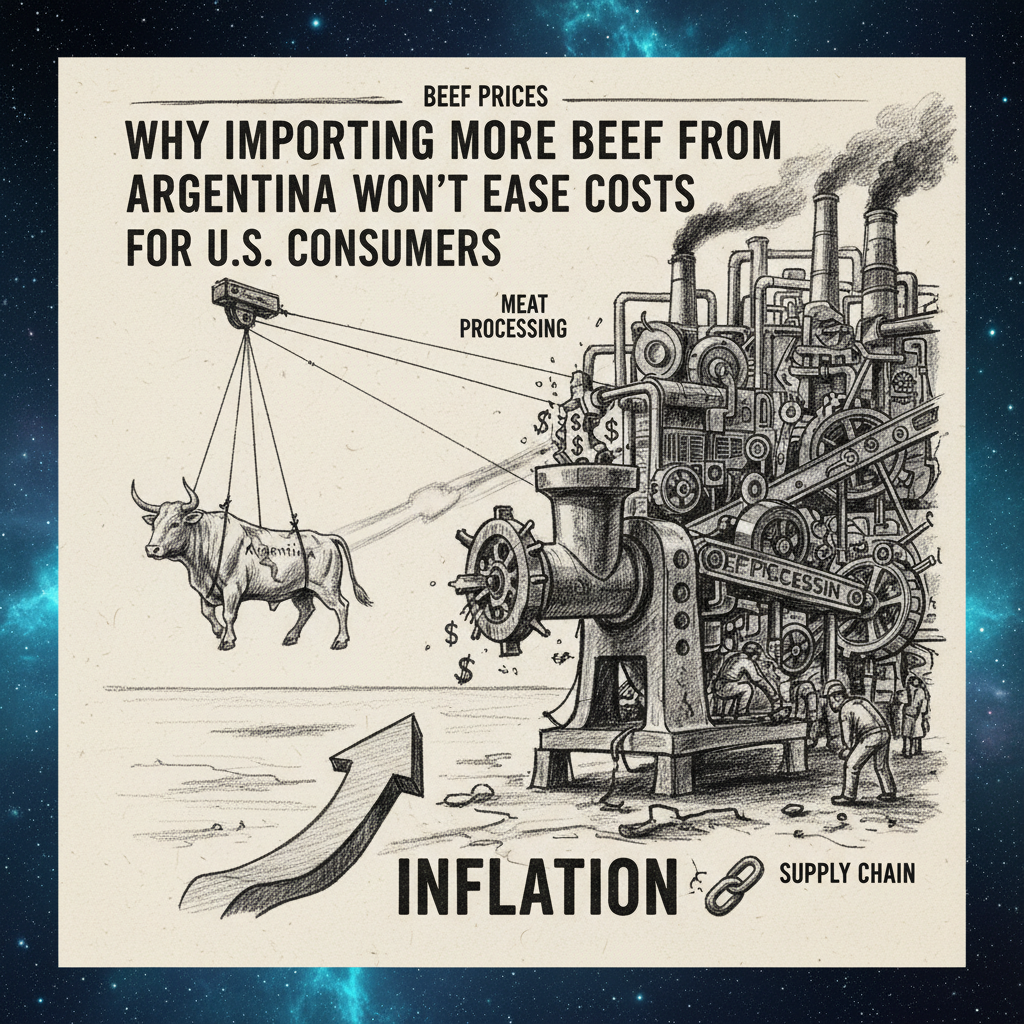
Why importing more beef from Argentina won't ease costs for U.S. consumers
#beef imports #Argentina beef #U.S. beef prices #supply constraints #meatpacking #consumer prices #trade policy
📌 Key Takeaways
- Economists say more Argentine beef imports alone won't lower U.S. retail prices.
- Domestic supply constraints and processing bottlenecks are primary drivers of high prices.
- Imported beef may ease short-term shortages for specific cuts but won't fix structural issues.
- Durable price relief requires investment in U.S. herd rebuilding, processing capacity and logistics.
- A combination of targeted trade measures and long-term domestic policies is needed.
📖 Full Retelling
Economists warned recently that boosting beef imports from Argentina will not, on its own, rein in runaway beef prices for U.S. consumers because the principal drivers of elevated domestic prices are rooted in U.S. supply constraints, production costs and meat-processing bottlenecks. The analysts and industry observers speaking about the issue emphasized that while additional imports can alleviate short-term shortages of particular cuts, they do little to address the structural issues that determine retail beef prices across the United States. This assessment follows heightened public concern about food inflation and policy discussions about using trade to ease consumer costs.
Experts say the U.S. cattle herd size, domestic feed and input costs, and limited slaughter and processing capacity are central to current price pressures. Restoring herd numbers takes years of breeding decisions and capital investment, so supply-side improvements are not immediate even if incentives are introduced. Meanwhile, consolidation in meatpacking and regional processing shortages amplify price transmission from wholesale to retail, meaning temporary supply increases from abroad may not lower supermarket prices uniformly.
Trade economists also note practical limits to substitution. Imported beef often targets different market segments or product specifications—such as particular cuts or quality grades—than what U.S. consumers demand, and shipping, border inspection and labeling requirements add time and cost. Temporary surges in imports can moderate prices for specific items, but unless imports are sustained, scalable and integrated into domestic distribution channels, the overall effect on consumer bills will be muted. Furthermore, reliance on imports creates exposure to exchange-rate swings and foreign supply shocks.
Policy prescriptions from analysts focus less on one-off import increases and more on addressing the structural determinants of cost. Recommendations include expanding domestic processing capacity, supporting herd rebuilding through targeted incentives, improving supply-chain logistics, and enhancing market competition. Economists argue that a mix of short-term trade adjustments and long-term domestic investment will be necessary to produce durable downward pressure on retail beef prices rather than temporary, localized relief.
Ultimately, while Argentina and other exporters can play a role in softening specific market tightness, economists caution that meaningful and sustained relief for U.S. consumers requires tackling domestic production and processing issues that underlie price formation.
🏷️ Themes
Beef prices, Supply chain, Trade policy
Entity Intersection Graph
No entity connections available yet for this article.
Original Source
Taming runaway U.S. beef prices will require more than stepping up imports, economists said. Here's the key to cutting costs.
Read full article at source