
Why Trump's remark about discussing Taiwan arms sales with China has raised concerns
#Donald Trump #Xi Jinping #Taiwan #arms sales #Six Assurances #Taiwan Relations Act #Three Communiques #U.S. policy #China #Taipei #budget #April 2026 #record arms package
📌 Key Takeaways
- Donald Trump announced he is discussing Taiwan arms sales with Xi Jinping on Feb 19 2026
- The comment potentially violates the 1982 Six Assurances that prohibit U.S.–China consultation on Taiwan arm sales
- Experts warn of a dangerous precedent that could give China leverage over U.S. arms shipments to Taipei
- Taiwan is heavily dependent on U.S. support under the Taiwan Relations Act and other diplomatic agreements
- The U.S. had recently approved a record‑breaking $11 billion arms package for Taiwan in December
- China has condemned the arms sale and continues military pressure on the island
- Taiwan’s government faces budgetary and parliamentary challenges in paying for the weapons package
- Trump’s upcoming visit to China in April raises uncertainty about U.S. policy toward Taiwan
- The U.S.-Taiwan relationship rests on the Taiwan Relations Act, Three Communiques, and Six Assurances
📖 Full Retelling
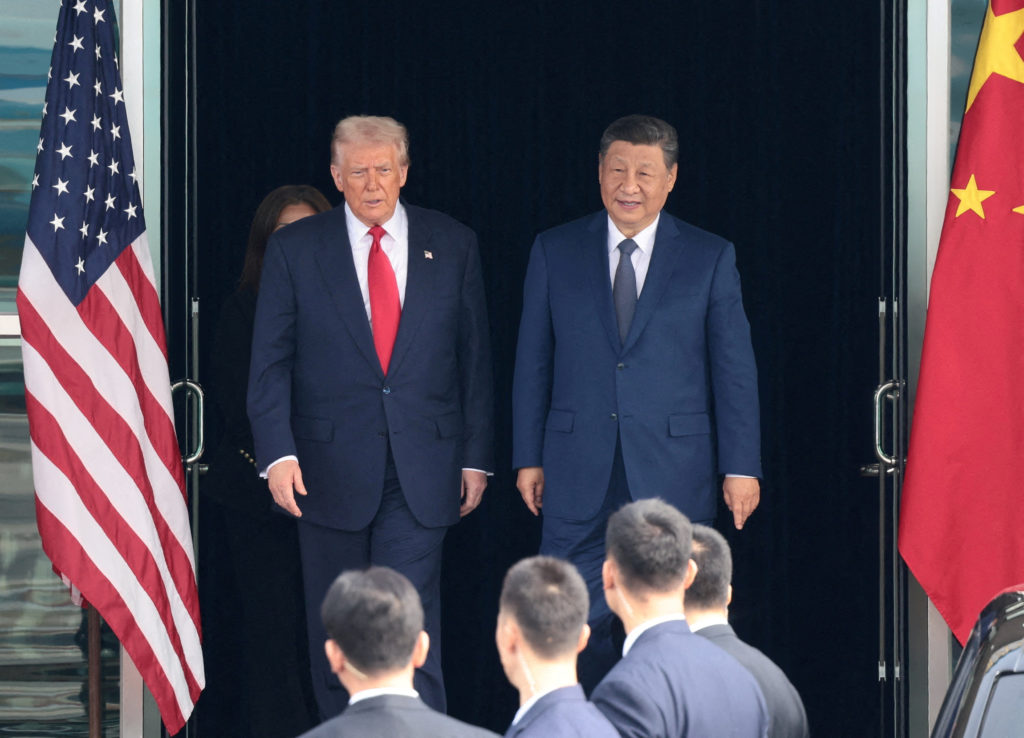
On Monday, February 19 2026, U.S. President Donald Trump told journalists that he is discussing potential arms sales to Taiwan with Chinese President Xi Jinping, a comment that has raised alarm in Taipei because it appears to violate decades‑old U.S. policy principles that prevent consultation with Beijing on arms sales to the island. The remark came in a media briefing in Washington, and the U.S. politician explained that he has a "very good relationship with President Xi" while assuring the public that a decision would be reached "pretty soon." The statement has sparked concern among experts, politicians and Taiwan’s security officials that it could set a dangerous precedent allowing China to influence U.S. arms shipments to Taipei ahead of Trump’s planned visit to China in April.
The article explains that the U.S. has historically kept its arm‑sales to Taiwan separate from Beijing, following the 1982 Six Assurances, of which the second expressly states that the United States would not consult with China on such sales. It also notes that Taiwan relies on U.S. support under the Taiwan Relations Act, the Three Communiques and the Six Assurances to deter Chinese aggression. Trump’s remark is therefore seen as potentially weakening that policy framework, providing Beijing with leverage over future U.S. defense sales to Taipei and raising doubts in Taiwan about the reliability of U.S. security commitments.
China has condemned last year’s record‑breaking $11 billion arms package for Taiwan and has continued to conduct military drills near the island. At the same time, Taiwan’s own government faces internal budgetary and parliamentary hurdles to securing payment for existing U.S. weaponry. Taiwan’s leaders, led by President Lai Ching‑te, are worried that the U.S. may not intervene decisively if a Chinese attack occurs, especially if the United States now appears to be open to discussing arms sales with Xi.
Experts such as William Yang of the International Crisis Group and Hoo Tiang Boon of Nanyang Technological University see Trump’s comments as creating a "dangerous precedent," implying that Beijing could demand concessions on future U.S. sales to Taipei. Such a shift could undermine the U.S.’s strategic ambiguity and broad bipartisan support for the Taiwan Relations Act, which has historically shielded Taiwan from direct confrontation by Beijing.
🏷️ Themes
U.S.-China relations, Taiwan sovereignty, Defense policy and arms sales, Diplomatic precedent and strategy, Geopolitical tension, Political risk within Taiwan, International security framework, Policy evolution
Entity Intersection Graph
No entity connections available yet for this article.
Original Source
By — Simina Mistreanu, Associated Press Simina Mistreanu, Associated Press Leave your feedback Share Copy URL Email Facebook Twitter LinkedIn Pinterest Tumblr Share on Facebook Share on Twitter Why Trump's remark about discussing Taiwan arms sales with China has raised concerns World Feb 19, 2026 3:06 PM EST U.S. President Donald Trump's comment that he is discussing potential arms sales to Taiwan with Chinese President Xi Jinping is raising concerns in Taipei as the island democracy relies on U.S. backing in the face of China's territorial claims. On Monday, Trump told journalists he is discussing the potential sales with the Chinese leader, an unexpected statement that experts say might violate decades-old foreign policy principles defining the United States' relationship with self-ruled Taiwan. WATCH: Taiwan fears U.S. ouster of Maduro may embolden China to mimic the move "I'm talking to him about it. We had a good conversation, and we'll make a determination pretty soon," Trump said when asked about Xi's opposition to the arms sales. He added he has "a very good relationship with President Xi." His comments have stirred a debate among some experts and politicians about whether this signals a potential change in U.S. policy toward Taiwan ahead of Trump's planned visit to China in April. Here is some context: A 'dangerous precedent'? Trump consulting Xi about arms sales to Taiwan may violate the so-called Six Assurances, a set of non-binding U.S. policy principles formulated in 1982 under President Ronald Reagan that have helped to guide the U.S. relationship with Taipei, said William Yang, a senior Northeast Asia analyst for the International Crisis Group. The second of the Six Assurances states that the U.S. "did not agree to consult with the People's Republic of China on arms sales to Taiwan." "That basically has been executed by several U.S. presidents after Ronald Reagan to justify and continue the arms sales to Taiwan without actually discussing the topic wi...
Read full article at source