
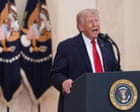
‘A litany of lies’: Trump’s rambling primetime Iran address sparks backlash
📖 Full Retelling
📚 Related People & Topics

Iran
Country in West Asia
# Iran **Iran**, officially the **Islamic Republic of Iran** and historically known as **Persia**, is a sovereign country situated in West Asia. It is a major regional power, ranking as the 17th-largest country in the world by both land area and population. Combining a rich historical legacy with a...

Donald Trump
President of the United States (2017–2021; since 2025)
Donald John Trump (born June 14, 1946) is an American politician, media personality, and businessman who is the 47th president of the United States. A member of the Republican Party, he served as the 45th president from 2017 to 2021. Born into a wealthy New York City family, Trump graduated from the...
Entity Intersection Graph
Connections for Iran:
Mentioned Entities
Deep Analysis
Why It Matters
This news matters because it highlights significant concerns about presidential communication during an international crisis, affecting U.S. credibility and public trust. It impacts domestic political discourse, as critics and supporters clash over the administration's transparency and handling of Iran tensions. The backlash could influence public opinion, congressional oversight, and future diplomatic engagements, with implications for national security and democratic accountability.
Context & Background
- The U.S. and Iran have had strained relations since the 1979 Iranian Revolution and the subsequent hostage crisis.
- Tensions escalated in recent years after the U.S. withdrew from the 2015 Iran nuclear deal (JCPOA) in 2018 and imposed sanctions.
- In early 2020, a U.S. drone strike killed Iranian General Qasem Soleimani, leading to Iranian retaliatory strikes and fears of broader conflict.
- President Trump has a history of controversial public statements, with fact-checkers often disputing his claims on various issues.
- Primetime presidential addresses are traditionally used for major announcements, but this one drew criticism for perceived inaccuracies and lack of clarity.
What Happens Next
Expect increased scrutiny from Congress, media, and allies over the administration's Iran policy and communication accuracy. Diplomatic efforts may face challenges if trust erodes, and future addresses could be met with heightened skepticism. Public backlash might influence political dynamics ahead of upcoming elections, with potential investigations or hearings on the matter.
Frequently Asked Questions
Critics accused the address of containing falsehoods and being disorganized, undermining its credibility during a sensitive geopolitical moment. They argued it failed to provide clear policy direction or reassure the public about de-escalation with Iran.
It complicates relations by raising doubts about U.S. messaging and intentions, potentially hindering diplomacy. Iran may use the backlash to question U.S. reliability, while allies might seek clearer communication to avoid miscalculations.
Clear, accurate communication is vital to maintain public trust, guide policy, and prevent misunderstandings that could escalate conflicts. In crises, it shapes domestic and international responses, affecting security and stability.
Fact-checking holds leaders accountable by verifying claims, informing the public, and preserving democratic norms. It helps counter misinformation, though it can also fuel partisan debates over media bias and truth.
It could energize critics and deepen partisan divides, but supporters may dismiss the backlash as media bias. The fallout might influence voter perceptions in future elections, depending on how the Iran situation evolves.