
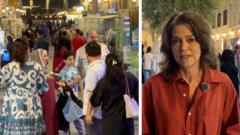
'A new norm': BBC visits Doha market starting to fill up again two weeks into Iran war
#Doha #market #Iran war #BBC #recovery #new norm #Qatar
📌 Key Takeaways
- Doha market shows signs of recovery two weeks after Iran conflict began
- Residents are adapting to a 'new norm' amid ongoing regional tensions
- BBC reports increased activity and commerce returning to the market
- The situation reflects gradual normalization despite the war's impact
📖 Full Retelling
🏷️ Themes
War Recovery, Economic Resilience
📚 Related People & Topics

Qatar
Country in West Asia
Qatar, officially the State of Qatar, is a country in West Asia. It occupies the Qatar Peninsula on the northeastern coast of the Arabian Peninsula in the Middle East; it shares its sole land border with Saudi Arabia to the south, with the rest of its territory surrounded by the Persian Gulf. The Gu...
BBC
British public service broadcaster
# British Broadcasting Corporation (BBC) The **British Broadcasting Corporation (BBC)** is the national broadcaster of the United Kingdom. Headquartered at **Broadcasting House** in London, it holds the distinction of being the world's oldest national broadcasting organization and the largest broad...

Doha
Capital and largest city of Qatar
Doha (; Arabic: الدوحة, romanized: ad-Dawḥah [ædˈdæwħæ, -ˈdoː-]) is the capital city and main financial hub of Qatar. Located on the Persian Gulf coast in the east of the country, north of Al Wakrah and south of Al Khor and Lusail, it is home to most of the country's population. It is also Qatar's f...
List of wars involving Iran
This is a list of wars involving the Islamic Republic of Iran and its predecessor states. It is an unfinished historical overview.
Entity Intersection Graph
Connections for Qatar:
View full profileMentioned Entities
Deep Analysis
Why It Matters
This news matters because it shows how civilian life adapts during regional conflict, revealing the resilience of ordinary people amid geopolitical tensions. It affects Qatari residents who must maintain daily routines despite nearby warfare, regional economies dependent on Gulf stability, and international observers monitoring conflict spillover. The market's recovery suggests localized conflicts may not always paralyze civilian commerce in neighboring states, offering insights into modern warfare's asymmetric impacts on civilian populations.
Context & Background
- Qatar maintains diplomatic relations with Iran despite regional tensions, positioning itself as a mediator in Middle Eastern conflicts
- The Iran war referenced likely involves either direct conflict with Israel or proxy warfare through groups like Hezbollah or Houthi rebels
- Doha has previously hosted Taliban negotiations and other diplomatic talks, establishing itself as a neutral ground in regional disputes
- Gulf markets are particularly sensitive to regional instability due to their dependence on trade routes and expatriate populations
- Two weeks represents a critical timeframe where initial panic typically subsides and adaptation patterns emerge in conflict zones
What Happens Next
Market activity will likely continue normalizing unless conflict escalates or expands geographically. Qatar may increase diplomatic efforts to mediate ceasefire talks given its historical role. Regional shipping and trade patterns may adjust if conflict persists, potentially affecting global energy markets. International observers will monitor whether this represents genuine stability or temporary respite before further escalation.
Frequently Asked Questions
It demonstrates how regional conflicts don't always completely disrupt civilian life in neighboring countries, showing economic resilience and adaptation. This challenges assumptions about immediate regional economic collapse during Middle Eastern conflicts.
Qatar often adopts a mediation role, using its diplomatic channels and Al Jazeera media influence to facilitate negotiations. The country maintains relationships with multiple sides in regional disputes while protecting its own economic interests.
Potential escalation of conflict, disruption of shipping routes through the Strait of Hormuz, or retaliatory attacks could reverse market recovery. Regional investor confidence remains fragile during active warfare periods.
Unlike wars that immediately paralyzed regional commerce, this suggests modern conflicts may have more contained economic effects due to better infrastructure and crisis management. However, prolonged conflict typically eventually disrupts trade patterns.
It suggests populations are developing faster adaptation mechanisms to geopolitical instability, possibly due to experience with previous regional conflicts. This normalization of conflict conditions represents both resilience and concerning acceptance of perpetual tension.