
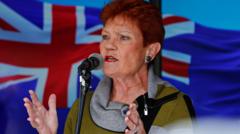
A right-wing populist party made big poll gains - and it's shaking up Australian politics
📖 Full Retelling
📚 Related People & Topics

Politics of Australia
In Australia, politics operates under the written Australian Constitution, which sets out Australia as a constitutional monarchy, governed via a parliamentary democracy in the Westminster tradition. Australia is also a federation, where power is divided between the federal government and the states....
Entity Intersection Graph
Connections for Politics of Australia:
Mentioned Entities
Deep Analysis
Why It Matters
This development matters because it signals a significant shift in Australia's political landscape, potentially disrupting the traditional two-party system dominated by the Liberal-National Coalition and Labor. It affects Australian voters by offering alternative policy positions on immigration, economic nationalism, and social issues that differ from mainstream parties. The rise of right-wing populism could influence government formation, policy agendas, and political discourse in upcoming elections.
Context & Background
- Australia has historically been dominated by two major political blocs: the center-right Liberal-National Coalition and the center-left Australian Labor Party.
- Right-wing populist movements have gained traction globally in recent years, including in Europe and the United States, often focusing on anti-immigration, nationalist, and anti-establishment platforms.
- Australia's preferential voting system allows smaller parties to gain influence through preference deals with major parties, even without winning many seats outright.
- Previous right-wing populist movements in Australia include Pauline Hanson's One Nation party, which has experienced fluctuating support since the 1990s.
What Happens Next
The party will likely focus on consolidating its support ahead of the next federal election, expected by 2025. Major parties may adjust their policies to address voter concerns that are driving support to the populists. There could be increased media scrutiny of the party's candidates and policy proposals. The party may attempt to form alliances with other minor parties or independent candidates to increase its parliamentary influence.
Frequently Asked Questions
These parties often emphasize reduced immigration, especially through stricter border controls, economic protectionism to support local industries, and skepticism toward global institutions. They frequently position themselves as anti-establishment voices representing 'ordinary Australians' against political elites.
It could fragment the conservative vote, potentially making it harder for the Liberal-National Coalition to win majority government. The party might win seats in regions where traditional parties are unpopular, and its preferences could determine outcomes in marginal electorates under Australia's preferential voting system.
Yes, similar movements have emerged periodically, most notably Pauline Hanson's One Nation party in the late 1990s and again in recent years. These parties have sometimes won seats in parliament and influenced policy debates, particularly on immigration and multiculturalism.
Support often comes from voters in regional areas, older demographics, and those feeling economically disadvantaged or culturally threatened by globalization and social change. These parties frequently attract voters dissatisfied with mainstream political options.