
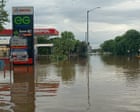
‘A saltwater crocodile on the AFL oval’: worst flooding in decades inundates NT as residents urged to avoid water
#flooding #Northern Territory #crocodile #emergency #inundation #weather #residents #disaster
📌 Key Takeaways
- Severe flooding in the Northern Territory is the worst in decades, causing widespread inundation.
- Residents are warned to avoid floodwaters due to hazards like crocodiles, as seen on an AFL oval.
- The flooding has disrupted communities and infrastructure, prompting emergency responses.
- The event highlights the increasing frequency and intensity of extreme weather in the region.
📖 Full Retelling
🏷️ Themes
Natural Disaster, Public Safety
📚 Related People & Topics

Northern Territory
Territory of Australia
The Northern Territory (abbreviated as NT; known formally as the Northern Territory of Australia and informally as the Territory) is an Australian internal territory in the central and central-northern regions of Australia. The Northern Territory shares its borders with Western Australia to the west...
Entity Intersection Graph
Connections for Northern Territory:
View full profileMentioned Entities
Deep Analysis
Why It Matters
This flooding represents the most severe inundation in decades for Australia's Northern Territory, directly threatening thousands of residents with displacement, property damage, and dangerous wildlife encounters. The situation is critical because emergency services are overwhelmed, and crocodiles entering populated areas create immediate life-threatening hazards beyond typical flood risks. This disaster disrupts essential services, damages infrastructure, and will require significant federal recovery assistance, affecting both local communities and national emergency response resources.
Context & Background
- The Northern Territory experiences annual wet seasons from November to April, but this event exceeds normal monsoon patterns in severity and scale
- Saltwater crocodile populations have rebounded since becoming protected in 1971, with an estimated 100,000-200,000 now inhabiting NT waterways
- Major flooding in the NT typically occurs in river systems like the Daly, Victoria, and Roper Rivers, but this event appears more widespread
- The region has experienced increasing extreme weather events in recent years, consistent with climate change projections for northern Australia
- Indigenous communities in remote areas are particularly vulnerable during floods due to limited evacuation routes and infrastructure
What Happens Next
Emergency services will conduct search and rescue operations for stranded residents over the coming days, with evacuation efforts likely continuing through the week. Water levels are expected to remain high until rainfall subsides, potentially for several more days. Recovery assessments will begin once waters recede, followed by cleanup operations and infrastructure repairs that may take months. Wildlife authorities will conduct crocodile removal operations in populated areas as floodwaters retreat.
Frequently Asked Questions
Floodwaters allow crocodiles to access areas they normally cannot reach, including streets, yards, and public spaces. The murky water makes them difficult to spot, and their natural hunting behavior continues despite the changed environment.
This is described as the worst flooding in decades, suggesting it exceeds both the 2018 Katherine floods and 2006 Daly River floods in severity. The combination of widespread inundation and wildlife threats makes it particularly unprecedented.
Residents are urged to avoid all floodwater due to hidden dangers including strong currents, submerged hazards, contamination, and crocodiles. Emergency services advise sheltering in place if safe or following official evacuation orders.
Remote communities face heightened risks due to limited road access, potential isolation from supplies and medical care, and traditional housing that may be less flood-resistant. Aerial evacuations may be necessary for some locations.
Beyond immediate damage, long-term impacts could include infrastructure repairs costing millions, psychological trauma from wildlife encounters, changes to crocodile management policies, and potential relocation discussions for vulnerable communities.