
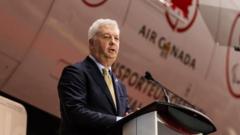
Air Canada CEO 'deeply saddened' his poor French skills distracted from victims of crash
📖 Full Retelling
📚 Related People & Topics

Air Canada
Flag carrier and largest airline of Canada
Air Canada is the flag carrier and the largest airline of Canada, by size and passengers carried. Air Canada is headquartered in the borough of Saint-Laurent in the city of Montreal. The airline, founded in 1937, provides scheduled and charter air transport for passengers and cargo to 222 destinatio...

Chief executive officer
Highest-ranking officer of an organization
A chief executive officer (CEO), also known as a chief executive or managing director, is the top-ranking corporate officer charged with the management of a company or a nonprofit organization. CEOs find roles in various organizations, including public and private corporations, nonprofit organizatio...
Entity Intersection Graph
Connections for Air Canada:
Mentioned Entities
Deep Analysis
Why It Matters
This news matters because it highlights the intersection of corporate accountability, cultural sensitivity, and crisis communication in a bilingual country like Canada. It affects Air Canada's reputation, French-speaking communities who expect linguistic respect, and the families of crash victims who deserve undivided attention. The CEO's language proficiency becoming a distraction underscores how missteps in public messaging can overshadow substantive issues during tragedies.
Context & Background
- Air Canada is Canada's largest airline and, as a former Crown corporation, has official bilingualism obligations under Canadian law.
- French and English are both official languages in Canada, with Quebec having French as its sole official language and strong legal protections for its use.
- The airline has faced previous criticism over French-language services, including a 2022 ruling by the Commissioner of Official Languages that found it failed to respect linguistic rights.
- Corporate leaders in Canada, especially those in federally regulated industries, are often expected to demonstrate proficiency in both official languages as a matter of national identity and inclusivity.
What Happens Next
Air Canada will likely implement enhanced language training for executives and review its crisis communication protocols to prevent similar distractions. The CEO may face continued scrutiny from language advocates and political figures, potentially leading to public apologies or commitments to improve French services. The airline might also face regulatory attention or symbolic penalties from official language authorities, though the immediate focus will remain on supporting crash victims and investigations.
Frequently Asked Questions
As a national airline in officially bilingual Canada, Air Canada is expected to serve both English and French speakers equally. CEO proficiency symbolizes respect for linguistic duality and helps ensure effective communication with all stakeholders, including employees, customers, and regulators in French-speaking regions.
Media and public discourse shifted focus from the victims' needs and crash investigation to criticism of the CEO's French abilities during his response. This diverted attention from substantive safety and support issues, potentially undermining trust in the airline's crisis management priorities.
Under Canada's Official Languages Act, Air Canada must provide services in both English and French, particularly in regions with significant demand. This includes communications, signage, and customer service, with failures subject to investigation by the Commissioner of Official Languages.
Yes, it may damage the airline's reputation among French-speaking customers and communities, leading to calls for boycotts or regulatory action. However, long-term impact depends on how Air Canada addresses the issue and whether it strengthens its commitment to bilingualism and crisis transparency.