
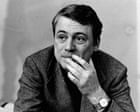
Alexander Kluge, author and key film-maker in the New German Cinema movement, dies aged 94
#Alexander Kluge #New German Cinema #film-maker #author #obituary #German culture #post-war cinema
📌 Key Takeaways
- Alexander Kluge, a pivotal figure in New German Cinema, has died at age 94.
- He was renowned as both an author and a film-maker, contributing significantly to post-war German culture.
- His work helped define the New German Cinema movement, which revitalized German film in the 1960s and 1970s.
- Kluge's death marks the loss of a major intellectual and artistic voice in contemporary German history.
📖 Full Retelling
🏷️ Themes
Obituary, Film History
📚 Related People & Topics
New German Cinema
Period in German cinema
New German Cinema (German: Neuer Deutscher Film) is a period in West German cinema which lasted from 1962 to 1982, in which a new generation of directors emerged who, working with low budgets, and influenced by the French New Wave and Italian Neorealism, gained notice by producing a number of "small...

Alexander Kluge
German author, film director and public intellectual (1932–2026)
Alexander Kluge (14 February 1932 – 25 March 2026) was a German author, philosopher, academic and film director.
Entity Intersection Graph
Connections for New German Cinema:
View full profileMentioned Entities
Deep Analysis
Why It Matters
Alexander Kluge's death marks the end of an era for German cultural history, as he was one of the last surviving pioneers of the New German Cinema movement that revolutionized post-war German film. This matters to film scholars, cultural historians, and European artists who viewed Kluge as a bridge between Germany's troubled past and its modern artistic identity. His multidisciplinary work spanning literature, film, television, and theory influenced generations of filmmakers and intellectuals who sought to create art that critically engaged with history and society. The loss is particularly significant for Germany's cultural landscape as it represents the passing of a generation that fundamentally reshaped how German artists approached national identity and historical memory.
Context & Background
- The New German Cinema movement emerged in the 1960s as a rejection of commercial German filmmaking and sought to create artistically ambitious films that addressed Germany's Nazi past and post-war identity.
- Kluge co-authored the 1962 Oberhausen Manifesto, a pivotal document where young filmmakers declared 'the old cinema is dead' and demanded artistic freedom from commercial constraints.
- He won the Golden Lion at Venice Film Festival in 1968 for 'Artists Under the Big Top: Perplexed,' establishing international recognition for the movement.
- Kluge was known for his 'collage' technique that mixed documentary footage with fictional elements to create complex historical critiques.
- Beyond film, he was a prolific writer who published over 30 books and created innovative television programs that blended essay, documentary, and fiction formats.
What Happens Next
Expect memorial events and retrospectives at major film institutions like the Berlin International Film Festival, Goethe Institute, and German cultural centers worldwide throughout 2024. Film archives will likely digitize and restore Kluge's extensive body of work, making it more accessible to new generations. Academic conferences and publications will reassess his legacy in the context of contemporary European cinema and political discourse. The German government may posthumously honor him with cultural awards recognizing his contributions to national artistic heritage.
Frequently Asked Questions
New German Cinema was a film movement from the 1960s-1980s where directors like Kluge, Rainer Werner Fassbinder, and Werner Herzog created artistically innovative films that critically examined German history and identity. It rejected commercial filmmaking in favor of personal, politically engaged cinema that gained international acclaim while redefining German cultural production after World War II.
The 1962 Oberhausen Manifesto co-authored by Kluge was a revolutionary declaration where 26 young filmmakers demanded artistic autonomy from commercial film industry constraints. This document became the founding statement of New German Cinema, leading to government funding for independent films and enabling a generation of directors to create works that transformed German cinema's international reputation.
Kluge was a true multidisciplinary artist who published numerous books of fiction and theory, created innovative television programs for German public broadcasters, and taught as a professor of film. His television work particularly blended documentary, essay, and fictional elements in formats that influenced European media production and created new forms of cultural criticism accessible to broad audiences.
Kluge received numerous honors including the Golden Lion at Venice (1968), the Theodor W. Adorno Prize (2009), and Germany's prestigious Georg Büchner Prize (2003). These awards recognized both his artistic innovations in film and his contributions to German literature and intellectual life, cementing his status as one of Germany's most important cultural figures.
Kluge's films and writings consistently engaged with Germany's traumatic 20th century history, particularly the Nazi era and World War II. He used collage techniques mixing documentary footage with fiction to explore how historical memory functions, creating complex works that resisted simple narratives about Germany's past while insisting on the importance of critical historical examination.