
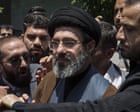
Ali Khamenei’s son Mojtaba chosen as Iran’s new supreme leader
#Mojtaba Khamenei #Ali Khamenei #Supreme Leader #Iran #Succession #Political Leadership #Khamenei Family
📌 Key Takeaways
- Mojtaba Khamenei, son of former Supreme Leader Ali Khamenei, has been selected as Iran's new supreme leader.
- The succession marks a significant shift in Iran's political and religious leadership.
- The appointment could influence Iran's domestic policies and international relations.
- The decision reflects the continued influence of the Khamenei family within Iran's power structure.
📖 Full Retelling
🏷️ Themes
Leadership Succession, Political Power
📚 Related People & Topics

Ali Khamenei
Supreme Leader of Iran since 1989
Ali Hosseini Khamenei (born 19 April 1939) is an Iranian cleric and politician who has served as the second supreme leader of Iran since 1989. He previously served as the third president of Iran from 1981 to 1989. His tenure as supreme leader, spanning 36 years, makes him the longest-serving head of...
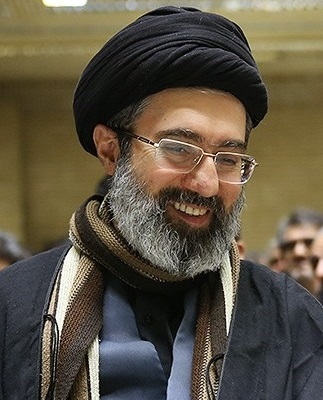
Mojtaba Khamenei
Iranian politician and cleric (born 1969)
Mojtaba Hosseini Khamenei (born 8 September 1969) is an Iranian politician and Muslim cleric. The second eldest child of Ali Khamenei, the former supreme leader of Iran, Mojtaba Khamenei served in the Iran–Iraq War from 1987 to 1988, and also reportedly took control of the Basij that was used to sup...

Iran
Country in West Asia
# Iran **Iran**, officially the **Islamic Republic of Iran** and historically known as **Persia**, is a sovereign country situated in West Asia. It is a major regional power, ranking as the 17th-largest country in the world by both land area and population. Combining a rich historical legacy with a...
Succession
Topics referred to by the same term
Succession is the act or process of following in order or sequence.
Supreme Leader
Topics referred to by the same term
A supreme leader or supreme ruler is a powerful figure with an unchallenged authority.
Entity Intersection Graph
Connections for Ali Khamenei:
View full profileMentioned Entities
Deep Analysis
Why It Matters
This news is critically important because the Supreme Leader is Iran's highest authority, controlling the military, judiciary, and foreign policy. Mojtaba Khamenei's selection represents a potential dynastic succession in what's officially an Islamic Republic, which could undermine the revolutionary principles established in 1979. This affects Iran's 85 million citizens, regional neighbors concerned about Iran's foreign policy continuity, and global powers engaged in nuclear negotiations. The transition could either stabilize or destabilize Iran's political system depending on internal acceptance.
Context & Background
- The position of Supreme Leader was created after the 1979 Iranian Revolution, with Ayatollah Ruhollah Khomeini serving as the first holder until 1989
- Ali Khamenei has been Supreme Leader since 1989, making him one of the world's longest-serving rulers
- The Assembly of Experts is constitutionally responsible for selecting the Supreme Leader, though their independence has been questioned in recent years
- Mojtaba Khamenei has been a powerful behind-the-scenes figure for years, reportedly influencing appointments and security matters
- Iran's political system blends theocratic and republican elements, with the Supreme Leader holding ultimate authority over elected institutions
What Happens Next
The formal transition will likely occur after Ali Khamenei's passing or incapacitation, with Mojtaba needing to consolidate power among competing factions. Expect increased scrutiny from reformists and conservatives alike, potential protests from those opposing dynastic rule, and adjustments in Iran's regional alliances as Mojtaba establishes his leadership style. International reactions will follow, particularly regarding nuclear negotiations and regional proxy conflicts.
Frequently Asked Questions
The Supreme Leader controls the armed forces, intelligence agencies, judiciary, and state media. They appoint key officials including military commanders, judiciary heads, and half of Guardian Council members. The position also sets overall state policy direction and can override elected institutions.
This contradicts the revolutionary principle that leadership should be based on religious merit rather than heredity. Many Iranians already resent political dynasties, and this could fuel perceptions that the revolution has been hijacked by a privileged elite. Religious scholars may question whether Mojtaba possesses the required theological qualifications.
Initially, continuity is likely as Mojtaba has been involved in current policies. However, he may face pressure to prove his revolutionary credentials through more assertive regional actions. Nuclear negotiations could stall as Western powers assess the new leadership's reliability and intentions.
He must manage competing factions including hardliners who may question his legitimacy, reformists who oppose dynastic rule, and military leaders testing his authority. Economic pressures and public discontent over governance will require immediate attention. Religious establishment acceptance isn't guaranteed despite his father's influence.