
SP
BravenNow
An Unknown Woman: how I discovered a hidden tragedy tied to Russia’s most famous painting
| United Kingdom | politics | ✓ Verified - theguardian.com

An Unknown Woman: how I discovered a hidden tragedy tied to Russia’s most famous painting

#Ivan Kramskoy #Portrait of an Unknown Woman #Joachim Trier #Sentimental Value #Hedvig Broch #Soviet art #Cultural memory #Art and tragedy

📌 Key Takeaways

  • Kramskoy's 'Portrait of an Unknown Woman' caused scandal in imperial Russia but became popular in Soviet times
  • The painting appears in Joachim Trier's films, leading to an investigation about its significance
  • Hedvig Broch, who painted a copy of the portrait, had a personal connection to the film's production designer
  • The portrait's appearance in the film coincidentally mirrored tragic events in the real life of both the film's characters and Broch herself

📖 Full Retelling

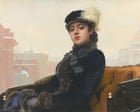
While researching Norwegian director Joachim Trier's award-winning film 'Sentimental Value,' I discovered a hidden connection between the movie and Ivan Kramskoy's famous 1883 painting 'Portrait of an Unknown Woman' that caused scandal in imperial Russia before becoming a staple of Soviet popular art, revealing a poignant personal story about the woman who painted a copy of the artwork that appears in both Trier's current film and his earlier work 'Oslo, 31 August.' The painting, which depicts a mysterious woman seated alone in an open carriage against the misty backdrop of St Petersburg, was initially rejected by Pavel Tretyakov, founder of the Tretyakov Gallery, who called her 'a cocotte in a carriage' and 'one of the monstrous offspring of the great metropolis' due to her unconventional posture and luxurious attire that challenged societal norms of the time. After Tretyakov's rejection, the painting eventually found its way to the Tretyakov Gallery through a collector in Kyiv and Ukrainian sugar magnate Pavel Kharitonenko, whose property was nationalized after the revolution, where it became immensely popular during the Soviet era as millions of cheap reproductions adorned homes across the country, offering a bourgeois alternative to the official socialist realism. When I spotted Kramskoy's painting in Trier's film, I contacted the film's production designer Jørgen Stangebye Larsen, who revealed that the portrait was actually a copy painted by his stepmother's friend, Hedvig Broch, a Norwegian woman who had dreamed of becoming an artist but was forced to abandon her studies for marriage, only to return to painting in her 50s and create this striking interpretation that transformed Kramskoy's arrogant subject into a more melancholic figure, coincidentally mirroring the tragic fate of both the film's characters and Broch herself, who took her own life between the two films.

🏷️ Themes

Art History, Personal Connections, Cultural Memory, Tragedy and Art

📚 Related People & Topics

Joachim Trier

Joachim Trier

Norwegian film director (born 1974)

Joachim Trier (Norwegian: [ˈjùːɑˌkɪm ˈtɾìːəɾ]; born 1 March 1974) is a Danish-Norwegian filmmaker. His films have been described as "melancholy meditations concerned with existential questions of love, ambition, memory, and identity." He has received numerous accolades, including the Grand Prix at t...

View Profile → Wikipedia ↗
Portrait of an Unknown Woman

Portrait of an Unknown Woman

1883 painting by Ivan Kramskoi

Portrait of an Unknown Woman, also known as The Unknown Woman, An Unknown Lady or Stranger (Russian: Неизвестная, romanized: Neizvestnaya) is an oil painting by the Russian artist Ivan Kramskoi, painted in 1883. The model, whose identity is unknown, is a woman of "quiet strength and forthright gaze"...

View Profile → Wikipedia ↗
Ivan Kramskoi

Ivan Kramskoi

Russian painter (1837–1887)

Ivan Nikolayevich Kramskoi (Russian: Иван Николаевич Крамской; 8 June [O.S. 27 May] 1837 – 5 April [O.S. 24 March] 1887) was a Russian Realist painter and art critic. One of the most prominent artisans during Tsar Alexander II's reign, he is remembered as co-founding member and public frontman of th...

View Profile → Wikipedia ↗

Sentimental Value

2025 Norwegian drama film by Joachim Trier

Sentimental Value (Norwegian: Affeksjonsverdi) is a 2025 drama film directed by Joachim Trier, who co-wrote it with Eskil Vogt. It follows sisters Nora (Renate Reinsve) and Agnes (Inga Ibsdotter Lilleaas) in their reunion with their estranged father Gustav (Stellan Skarsgård). It also stars Elle Fan...

View Profile → Wikipedia ↗

Entity Intersection Graph

Connections for Joachim Trier:

👤 Sentimental Value 3 shared
👤 Academy Awards 3 shared
👤 Cannes Film Festival 1 shared
🌐 Oslo trilogy 1 shared
👤 Renate Reinsve 1 shared
View full profile

Deep Analysis

Original Source
An Unknown Woman: how I discovered a hidden tragedy tied to Russia’s most famous painting It caused a scandal in imperial Russia, then became a staple of popular art in the USSR. But when I spied a copy of Ivan Kramsky’s portrait in the film Sentimental Value, it opened a door to an untold case of life imitating art S entimental Value is one of those films you have to watch very closely. In the Norwegian director Joachim Trier’s latest work , which swept the board at the European film awards and is nominated for eight Baftas and nine Oscars, stories are hidden in closeups, half-tones and peripheral objects. Some of these stories are so well hidden, in fact, that they aren’t even apparent to the people who made the film. In one scene, roughly an hour in, the camera glides down a corridor, and suddenly there she is: a woman’s portrait on the wall. Anyone who grew up in the Soviet Union and later Russia between the 1950s and 2000s, like me, would recognise her instantly. She has been endlessly reproduced: as prints, embroideries, portrait medallions, even on boxes of chocolates. In Britain, people may have encountered her on the covers of various editions of Anna Karenina. Portrait of an Unknown Woman is a painting by Ivan Kramskoy, a celebrated Russian portraitist. Kramskoy began his career as a provincial retoucher before being admitted to the Imperial Academy of Arts in St Petersburg. There, he went on to lead the Revolt of the Fourteen – a protest over the right to choose their subject for the Academy’s gold medal competition. The rebels later became known as the peredvizhniki , or the Wanderers, a group of artists who continued their protest by organising travelling exhibitions across the Russian empire. In 1883, Kramskoy painted Neizvestnaya (the Romanised Russian for Portrait of an Unknown Woman), quietly hoping it would end up with Pavel Tretyakov, the founder of the Tretyakov Gallery – Russia’s leading museum of national art – and the guardian angel of the Wan...
Read full article at source

Source

theguardian.com

More from United Kingdom

News from Other Countries

🇺🇸 USA

🇺🇦 Ukraine