
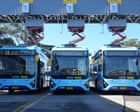
Australia urged to swap diesel for electric buses as fuel costs soar
📖 Full Retelling
📚 Related People & Topics

Australia
Country in Oceania
Australia, officially the Commonwealth of Australia, is a country comprising the mainland of the Australian continent, the island of Tasmania and numerous smaller islands. It has a total area of 7,688,287 km2 (2,968,464 sq mi), making it the sixth-largest country in the world and the largest in Ocea...
Entity Intersection Graph
Connections for Australia:
Mentioned Entities
Deep Analysis
Why It Matters
This news matters because rising diesel costs are significantly impacting public transportation budgets across Australia, potentially leading to higher fares or reduced services that affect millions of daily commuters. The push for electric buses represents a critical opportunity to reduce both operational costs and greenhouse gas emissions in the transportation sector, which accounts for nearly 20% of Australia's emissions. This transition affects public transit agencies, taxpayers, urban residents who rely on buses, and workers in both the fossil fuel and emerging electric vehicle industries.
Context & Background
- Australia's public bus fleet currently consists of approximately 100,000 vehicles, with diesel buses dominating the market despite growing electric alternatives
- Global diesel prices have increased by over 40% in the past year due to geopolitical tensions and supply chain disruptions, putting pressure on transportation budgets
- Several Australian cities including Sydney, Melbourne, and Brisbane have already begun pilot programs with electric buses, but adoption remains below 5% of the total fleet
- The Australian government has set a target of net-zero emissions by 2050, with transport sector transformation being a key component of this strategy
- Electric bus technology has advanced significantly in recent years, with modern models now offering ranges of 250-350 km per charge, making them viable for most urban routes
What Happens Next
State and local governments will likely accelerate electric bus procurement programs in the coming 6-12 months as budget pressures mount from high diesel prices. Expect to see major transit agencies in Sydney, Melbourne, and Brisbane announce expanded electric bus tenders by Q4 2023, with federal funding potentially becoming available through the National Electric Vehicle Strategy. Infrastructure challenges including charging station deployment and grid capacity upgrades will become more prominent in public discussions as adoption scales up.
Frequently Asked Questions
Electric buses typically have 50-70% lower fuel and maintenance costs compared to diesel buses, though higher upfront purchase prices. Over a 12-year lifespan, total cost of ownership for electric buses is becoming competitive or lower than diesel alternatives, especially with current high fuel prices.
Key barriers include higher upfront costs (electric buses cost approximately 50-100% more than diesel equivalents), limited charging infrastructure, concerns about range for longer routes, and the need for grid upgrades to support large-scale charging operations during peak hours.
Drivers will require training on new vehicle systems and charging procedures, while maintenance staff need retraining for electric vehicle technology. The transition creates new jobs in EV maintenance while potentially reducing positions in traditional diesel engine repair over time.
Even with Australia's current electricity mix (approximately 60% fossil fuels), electric buses produce 30-50% fewer emissions over their lifecycle. As the grid becomes cleaner with more renewables, this advantage grows significantly, with zero tailpipe emissions improving urban air quality immediately.
Sydney leads with plans for its entire 8,000-bus fleet to be electric by 2035, while Melbourne has committed to purchasing only zero-emission buses from 2025. Canberra operates Australia's first fully electric public bus route, and Brisbane has several electric buses in trial operations across different route types.