
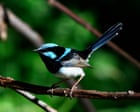
Australia’s superb fairywren could be extinct within decades due to climate crisis, researchers say
📖 Full Retelling
📚 Related People & Topics

Australia
Country in Oceania
Australia, officially the Commonwealth of Australia, is a country comprising the mainland of the Australian continent, the island of Tasmania and numerous smaller islands. It has a total area of 7,688,287 km2 (2,968,464 sq mi), making it the sixth-largest country in the world and the largest in Ocea...
Entity Intersection Graph
Connections for Australia:
Mentioned Entities
Deep Analysis
Why It Matters
This news matters because it highlights how climate change is driving specific species toward extinction, which disrupts ecosystems and biodiversity. The superb fairywren's potential extinction affects conservationists, policymakers, and the public by illustrating the tangible impacts of climate change on native wildlife. It also underscores the urgency for climate action and habitat protection to prevent irreversible biodiversity loss.
Context & Background
- The superb fairywren (Malurus cyaneus) is a small, colorful bird native to southeastern Australia, known for its vibrant blue plumage and complex social behaviors.
- Australia has one of the highest rates of mammal extinction globally, with climate change and habitat destruction being major drivers.
- Previous research has shown that many Australian bird species are shifting their ranges or declining due to rising temperatures and altered rainfall patterns.
- The superb fairywren is considered an indicator species, meaning its health reflects the overall condition of its ecosystem.
What Happens Next
Researchers will likely conduct further studies to model population trends and identify critical habitats for conservation. Conservation groups may advocate for protected areas or climate mitigation policies. If no action is taken, the species could face significant decline within 20-50 years, potentially leading to localized extinctions.
Frequently Asked Questions
Rising temperatures, prolonged droughts, and altered fire regimes reduce habitat quality and food availability. These changes make it harder for the birds to breed and survive in their native range.
Yes, targeted actions like habitat restoration, predator control, and climate-resilient protected areas could help. However, success depends on reducing global greenhouse gas emissions to mitigate broader climate impacts.
Superb fairywrens help control insect populations and disperse seeds. Their extinction could disrupt food webs and reduce biodiversity, impacting other plants and animals in their habitat.
Yes, many Australian bird species, such as the regent honeyeater and swift parrot, face extinction threats from climate change and habitat loss. This highlights a broader biodiversity crisis in the region.