
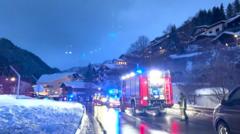
Avalanches kill five in Austrian Alps, officials say
#avalanches #Austrian Alps #ski fatalities #heavy snowfall #avalanche risk #winter tourism #mountain rescue
📌 Key Takeaways
- Five avalanche fatalities in Austria amid heavy snowfall
- German father and son caught in avalanche; son survived
- Avalanche risk remains high in parts of Tyrol
- Alpine region experiencing higher-than-usual avalanche deaths this season
- Heavy snow also caused transport chaos and power outages
📖 Full Retelling
🏷️ Themes
Avalanche Safety, Winter Weather, Alpine Tourism
📚 Related People & Topics

Central Eastern Alps
Portion of the Eastern Alps mountain range
The Central Eastern Alps (German: Zentralalpen or Zentrale Ostalpen), also referred to as Austrian Central Alps (German: Österreichische Zentralalpen) or just Central Alps, comprise the main chain of the Eastern Alps in Austria and the adjacent regions of Switzerland, Liechtenstein, Italy and Sloven...
Entity Intersection Graph
No entity connections available yet for this article.
Mentioned Entities
Deep Analysis
Why It Matters
The recent avalanches in the Austrian Alps highlight the increasing risk of winter storms and the need for improved safety measures for skiers and residents. The loss of five lives, including a German family, underscores the human cost of extreme weather events.
Context & Background
- Heavy snowfall triggered multiple avalanches across Tyrol and Vorarlberg
- At least 21 avalanche deaths this winter in Austria alone
- Avalanche risk remains high in off-piste areas
- Rescue teams deployed with helicopters and ground units
What Happens Next
Authorities are likely to increase avalanche monitoring and issue stricter warnings for off-piste skiing. Rescue teams may be deployed more rapidly as the winter season continues.
Frequently Asked Questions
Heavy snowfall and unstable snow layers triggered the avalanches, with some triggered by skiers themselves.
Five people were killed in the recent avalanches, bringing Austria's winter death toll to at least 21.
Avalanche risk assessments are ongoing, and authorities are enhancing monitoring, issuing warnings, and deploying rescue teams more quickly.