
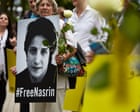
Award-winning Iranian human rights lawyer arrested in Tehran, says her daughter
📖 Full Retelling
📚 Related People & Topics

Iran
Country in West Asia
# Iran **Iran**, officially the **Islamic Republic of Iran** and historically known as **Persia**, is a sovereign country situated in West Asia. It is a major regional power, ranking as the 17th-largest country in the world by both land area and population. Combining a rich historical legacy with a...

Nasrin Sotoudeh
Human rights female lawyer in Iran
Nasrin Sotoudeh Langarudi (Persian: نسرین ستوده لنگرودی) is an Iranian human rights lawyer known for her defense of activists, opposition politicians, and individuals facing human rights violations. She has represented Iranian opposition activists and politicians detained after the disputed June 200...

Tehran
Capital and largest city of Iran
Tehran is the capital and largest city of Iran. It is also the capital of Tehran province and the administrative center for Tehran County and its Central District. With a population of around 9 million in the city, and 16.8 million in the metropolitan area, Tehran is the most populous city in Iran a...
Entity Intersection Graph
Connections for Iran:
Mentioned Entities
Deep Analysis
Why It Matters
This arrest matters because it represents another escalation in Iran's systematic crackdown on human rights defenders and legal professionals who challenge the government. It directly affects Iran's shrinking civil society space, international human rights monitoring efforts, and families of detained activists who face retaliation. The targeting of an award-winning lawyer sends a chilling message to Iran's legal community about the consequences of defending political prisoners and marginalized groups. This development further isolates Iran internationally as Western governments increasingly link human rights records to diplomatic relations.
Context & Background
- Nasrin Sotoudeh, another prominent Iranian human rights lawyer, was sentenced to 38 years in prison and 148 lashes in 2019 for her human rights work
- Iran has arrested numerous lawyers, journalists, and activists since the 2022 nationwide protests following Mahsa Amini's death in custody
- The UN Special Rapporteur on Iran reported in 2023 that authorities have increasingly targeted lawyers who defend political prisoners and protestors
- Iran's judiciary is constitutionally subordinate to the Supreme Leader rather than independent, creating systemic challenges for human rights defenders
- Several Iranian lawyers have received international awards including the Ludovic-Trarieux Prize and the International Bar Association's Human Rights Award
What Happens Next
International human rights organizations will likely issue condemnations and call for the lawyer's immediate release within 24-48 hours. The Iranian judiciary will probably bring formal charges within days under national security laws like 'propaganda against the state' or 'assembly and collusion against national security.' Family members may face restrictions on hiring independent counsel or speaking publicly about the case. The arrest could trigger renewed discussions at the UN Human Rights Council about establishing additional monitoring mechanisms for Iran.
Frequently Asked Questions
Authorities target human rights lawyers because they effectively challenge state narratives in court and document abuses. These lawyers often represent political prisoners, journalists, and activists, making them key obstacles to the government's control over legal proceedings and public discourse about rights violations.
Detainees usually face prolonged solitary confinement without access to chosen lawyers, followed by televised confessions obtained under duress. Trials before Revolutionary Courts rarely meet international fair trial standards, often resulting in lengthy prison sentences based on vague national security charges.
This creates a climate of fear where fewer lawyers dare to take sensitive cases, leaving many Iranians without adequate defense. The systematic targeting creates a justice gap particularly affecting women, ethnic minorities, religious groups, and political dissidents who most need legal protection.
Governments can impose targeted sanctions on officials involved in human rights violations and raise cases in multilateral forums like the UN. Diplomatic missions can request consular access if dual nationals are involved, while legal associations worldwide can provide professional solidarity and documentation for potential future accountability mechanisms.
Yes, some high-profile cases like Nasrin Sotoudeh have seen temporary releases following global campaigns, though often with suspended sentences that allow re-arrest at any time. International attention sometimes results in reduced sentences or medical furloughs but rarely complete exoneration of charges.