
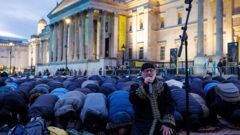
Badenoch backs Tory MP in row over Muslim prayer event
#Kemi Badenoch #Lee Anderson #Muslim prayer event #Parliament #Conservative Party #interfaith #backlash #Christian country
📌 Key Takeaways
- Business Secretary Kemi Badenoch supports Tory MP Lee Anderson's criticism of a Muslim prayer event in Parliament.
- Anderson faced backlash for calling the event 'appalling' and questioning its appropriateness in a Christian country.
- The event, organized by a cross-party group, aimed to promote interfaith understanding but sparked political controversy.
- Badenoch's backing highlights internal Conservative Party tensions over religious and cultural issues in public life.
📖 Full Retelling
🏷️ Themes
Political Controversy, Religious Tensions
📚 Related People & Topics

Parliament
Legislative body of government
A parliament is a type of legislature, or law-making body, of a state. Generally, a parliament has three functions: representing the electorate, making laws, and overseeing the executive government via hearings and inquiries. Its role is similar to that of a senate, synod or congress; a parliament i...

Lee Anderson
British politician and television presenter (born 1967)
Lee Anderson (born 6 January 1967) is a British politician and television presenter who has served as the Member of Parliament (MP) for Ashfield since 2019. A member of Reform UK, he has served as its Chief Whip since July 2024. Anderson was elected in 2019 as a member of the Conservative Party, but...
Conservative Party
Topics referred to by the same term
The Conservative Party is a name used by many political parties around the world. These political parties are generally right-wing though their exact ideologies can range from centre-right to far-right.

Kemi Badenoch
British politician (born 1980)
Olukemi Olufunto Adegoke Badenoch (née Adegoke; born 2 January 1980) is a British politician who has served as Leader of the Opposition and Leader of the Conservative Party since November 2024. Badenoch previously worked in the Cabinet for prime ministers Liz Truss and Rishi Sunak from 2022 to 2024....
Entity Intersection Graph
Connections for Parliament:
Mentioned Entities
Deep Analysis
Why It Matters
This news matters because it highlights tensions within the Conservative Party regarding religious expression in public institutions, specifically Muslim prayer events in schools. It affects Muslim communities seeking accommodation for religious practices, Conservative Party members navigating cultural and religious debates, and educational institutions balancing secular policies with religious freedoms. The controversy reflects broader societal discussions about multiculturalism, secularism, and the role of religion in public life in the UK.
Context & Background
- The UK has a diverse religious landscape with approximately 3.9 million Muslims (6.5% of population) as of 2021 census
- There have been ongoing debates about religious accommodation in British schools including previous controversies about prayer rooms, halal food, and religious clothing
- The Conservative Party has experienced internal divisions regarding multiculturalism and religious expression policies in recent years
What Happens Next
The local education authority will likely review policies regarding religious events in schools. The Conservative Party may face continued internal debate about religious accommodation policies. Muslim community organizations will probably engage in dialogue with local officials about religious practice accommodations.
Frequently Asked Questions
The controversy centers on whether public schools should accommodate Muslim prayer events during school hours. Supporters argue for religious accommodation while opponents raise concerns about secular education principles and potential disruption to school activities.
Kemi Badenoch is a senior Conservative Party figure and current Secretary of State for Business and Trade. Her backing of the Tory MP gives political weight to the position and signals alignment with certain factions within the Conservative Party regarding religious expression policies.
This controversy connects to ongoing national discussions about balancing religious freedom with secular principles in public institutions. Similar debates have occurred regarding Christian assemblies in schools, religious symbols in workplaces, and accommodation of various faith practices in public spaces.
The situation may involve considerations of the Equality Act 2010 which protects against religious discrimination, education laws governing school activities, and human rights legislation regarding freedom of religion. Legal challenges could arise if policies are perceived as discriminatory.