
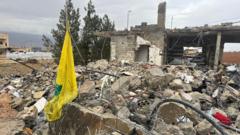
BBC visits aftermath of Israeli strike on Lebanon that killed family as IDF targets Hezbollah
#Israeli strike Lebanon #Hezbollah #civilian casualties #IDF military operation #BBC news #Israel Lebanon border #terrorist infrastructure
📌 Key Takeaways
- Israeli airstrike in Lebanon killed a family
- IDF claims it was targeting Hezbollah infrastructure
- Relative insists victims were civilians, not Hezbollah operatives
- Incident highlights ongoing Israel-Hezbollah tensions
📖 Full Retelling
🏷️ Themes
Civilian casualties, Israel-Hezbollah conflict, Military targeting
📚 Related People & Topics

BBC News
News division of the British Broadcasting Corporation
BBC News is an operational business division of the British Broadcasting Corporation (BBC) responsible for the gathering and broadcasting of news and current affairs in the UK and around the world. The department is the world's largest broadcast news organisation and generates about 120 hours of rad...
Hezbollah
Islamist movement and militant group based in Lebanon
Hezbollah is a Shia Islamist Lebanese political party and paramilitary group. Hezbollah's paramilitary wing is the Jihad Council, and its political wing is the Loyalty to the Resistance Bloc party in the Lebanese Parliament. Its armed strength was assessed to be equivalent to that of a medium-sized ...

Blue Line (withdrawal line)
Israel–Lebanon border demarcated by the United Nations in 2000
The Blue Line is a demarcation line dividing Lebanon from Israel and the Golan Heights. It was published by the United Nations on 7 June 2000 for the purposes of determining whether Israel had fully withdrawn from Lebanon. It has been described as "temporary" and "not a border, but a “line of withdr...
Entity Intersection Graph
No entity connections available yet for this article.
Mentioned Entities
Deep Analysis
Why It Matters
This news highlights the ongoing Israel-Hezbollah conflict and the tragic human cost of military operations in Lebanon. It affects families who have lost loved ones, potentially escalates regional tensions, and raises critical questions about civilian protection in conflict zones. The incident also draws international attention to the complex dynamics of asymmetric warfare where militant groups operate near civilian populations.
Context & Background
- Israel and Hezbollah have engaged in intermittent conflict since Hezbollah's formation in the 1980s, with a major escalation during the 2006 Lebanon War
- Hezbollah is a Lebanese Shia political party and militant group backed by Iran, which Israel considers a significant security threat
- Israel frequently conducts strikes in Lebanon targeting what it claims are Hezbollah infrastructure, weapons storage, and military positions
- Civilian casualties have been a persistent issue in Israeli operations against Hezbollah, drawing criticism from human rights organizations
- The UN has repeatedly called on both parties to protect civilians in conflict zones and adhere to international humanitarian law
- Hezbollah maintains a significant military presence along Israel's northern border, with tens of thousands of rockets aimed at Israeli cities
What Happens Next
The incident is likely to prompt international condemnation and investigation by human rights organizations. Hezbollah may respond with rocket attacks into Israel, potentially escalating tensions along the border. The IDF may continue operations targeting Hezbollah infrastructure in Lebanon, while facing increased scrutiny over civilian protection measures. The incident could also impact diplomatic efforts to de-escalate the broader Israel-Lebanon border situation.
Frequently Asked Questions
Hezbollah is a Lebanese Shia political party and militant group backed by Iran. Israel views them as a terrorist organization and security threat due to their military capabilities, rocket arsenal, and frequent attacks on Israeli targets.
International humanitarian law requires parties to distinguish between military targets and civilians, and to take all feasible precautions to minimize civilian harm. Indiscriminate attacks or disproportionate force causing excessive civilian casualties may constitute war crimes.
Relations remain tense with no formal peace agreement. While not in constant open warfare, the border experiences periodic escalations with exchanges of fire between Israeli forces and Hezbollah, creating a fragile security situation.
When militant groups operate from populated areas, it creates complex dilemmas for opposing forces. International law prohibits using civilians as human shields but also requires militaries to take precautions even when enemy forces embed themselves among civilians.