
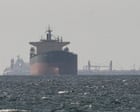
Beyond the strait: why Middle East oilfield shutdowns threaten to keep prices high
#Safaniya oilfield #Iran war #oil prices #supply shock #Saudi Arabia #Persian Gulf #energy markets #crude oil
📌 Key Takeaways
- Safaniya oilfield shutdown threatens to push oil prices above 2008 record
- The world's largest offshore oilfield has been producing for 70 years
- Iran war is compounding supply shock in Middle Eastern energy infrastructure
- Global markets face sustained high prices due to reduced supply
📖 Full Retelling
🏷️ Themes
Geopolitics, Energy Markets, Supply Chain
📚 Related People & Topics
List of wars involving Iran
This is a list of wars involving the Islamic Republic of Iran and its predecessor states. It is an unfinished historical overview.

Saudi Arabia
Country in West Asia
Saudi Arabia, officially the Kingdom of Saudi Arabia (KSA) and also known simply as the Saudi, is a country in West Asia. Located in the centre of the Middle East, it covers the bulk of the Arabian Peninsula and has a land area of about 2,150,000 km2 (830,000 sq mi), making it the fifth-largest coun...

Persian Gulf
Arm of the Indian Ocean in West Asia
The Persian Gulf, sometimes called the Arabian Gulf, is a mediterranean sea in West Asia. The body of water is an extension of the Arabian Sea and the larger Indian Ocean located between the Arabian Peninsula and Iran (Persia). It is connected to the Gulf of Oman in the east by the Strait of Hormuz.

Middle East
Transcontinental geopolitical region
The Middle East is a geopolitical region encompassing the Arabian Peninsula, Egypt, Iran, Iraq, the Levant, and Turkey. The term came into widespread usage by Western European nations in the early 20th century as a replacement of the term Near East (both were in contrast to the Far East). The term ...
Entity Intersection Graph
Connections for List of wars involving Iran:
Mentioned Entities
Deep Analysis
Why It Matters
The shutdown of the world's largest offshore oilfield threatens to push global oil prices beyond the 2008 record of $147.50 per barrel, potentially triggering widespread economic consequences. This situation affects not just oil-producing nations but also oil-importing countries, industries dependent on oil, and ultimately consumers through higher prices for goods and services. The escalating tensions in the Persian Gulf create a perfect storm for energy markets already grappling with geopolitical instability.
Context & Background
- The Safaniya oilfield has been operational for nearly seven decades and is a critical source of Arabian heavy crude
- The Strait of Hormuz is a strategic chokepoint through which approximately 20% of global oil shipments pass
- Oil prices reached a record high of $147.50 per barrel in 2008 before the global financial crisis
- Saudi Arabia is the world's biggest oil-producing nation, significantly influencing global oil markets
- The Persian Gulf region has historically been a flashpoint for geopolitical tensions affecting energy markets
What Happens Next
Energy markets will likely react immediately to the news, with oil prices potentially spiking in the coming days. We can expect increased diplomatic efforts to stabilize the region and prevent further disruptions. If the shutdown persists, global oil prices could exceed the 2008 record, leading to pressure on oil-producing nations to release strategic reserves and for consumers to reduce consumption, potentially accelerating efforts to diversify energy sources.
Frequently Asked Questions
The Safaniya oilfield is the world's largest offshore oilfield stretching over 40 miles into the Persian Gulf, producing millions of barrels daily of Arabian heavy crude for Saudi Arabia, the world's biggest oil-producing nation.
Approximately 20% of global oil shipments pass through the Strait of Hormuz, making it one of the world's most critical energy chokepoints with immediate consequences for global energy markets.
The previous record for oil prices was set in 2008 at $147.50 per barrel, and the current situation with the Safaniya shutdown threatens to exceed this historical high.
Oil-importing nations, industries heavily dependent on oil (such as transportation and manufacturing), and consumers will be most affected through higher prices for goods and services and potential economic slowdowns.
Countries may release strategic oil reserves, increase production from other sources, implement price controls, or accelerate efforts to diversify energy sources to reduce dependence on Middle Eastern oil.