
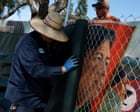
California lawmakers vote to rename Cesar Chavez Day as Farmworkers Day
📖 Full Retelling
📚 Related People & Topics

Cesar Chavez Day
US commemorative holiday on March 31
Cesar Chavez Day is a U.S. federal commemorative holiday, proclaimed by President Barack Obama in 2014. The holiday celebrates the birth and legacy of the civil rights and labor movement activist Cesar Chavez on March 31 every year.

California
U.S. state
California () is a state in the Western United States that lies on the Pacific Coast. It borders Oregon to the north, Nevada and Arizona to the east, and shares an international border with the Mexican state of Baja California to the south. With almost 40 million residents across an area of 163,696 ...
Entity Intersection Graph
Connections for Cesar Chavez Day:
Mentioned Entities
Deep Analysis
Why It Matters
This legislative action matters because it shifts the focus from honoring a single historical figure to recognizing the collective contributions of all farmworkers, who form the backbone of California's $50 billion agricultural industry. The change affects California's 800,000+ farmworkers, many of whom are immigrants and face challenging working conditions, by giving them broader symbolic recognition. It also impacts how California's history is taught and commemorated in schools and public institutions, potentially sparking debates about how social movements should be memorialized.
Context & Background
- Cesar Chavez Day was established as a California state holiday in 2000 to honor the labor leader who co-founded the United Farm Workers union and led the Delano grape strike in the 1960s.
- California has the largest agricultural output of any U.S. state, producing over 400 commodities and relying heavily on migrant and seasonal farm labor.
- The United Farm Workers union, co-founded by Chavez and Dolores Huerta, successfully organized boycotts and strikes that led to the first collective bargaining agreements for farmworkers in U.S. history.
- Farmworkers in California have historically faced issues including low wages, poor working conditions, limited access to healthcare, and housing insecurity, with many being undocumented immigrants.
- The movement to rename the holiday follows years of debate about whether focusing on Chavez alone adequately represents the broader farmworker movement and its diverse participants.
What Happens Next
The bill will proceed to Governor Gavin Newsom's desk for signature or veto within the next 30 days. If signed, the change would take effect January 1, 2025, meaning the first Farmworkers Day would be observed on March 31, 2025. Implementation would require updates to state calendars, educational materials, and public observances, potentially including new ceremonies or events honoring farmworkers more broadly.
Frequently Asked Questions
No, Chavez will still be recognized as a key figure in farmworker history, but the holiday will now honor all farmworkers collectively rather than focusing exclusively on one leader. His contributions will likely remain part of educational materials and commemorations, just within a broader context.
For most workers and businesses, the practical impact is minimal as it remains a state holiday with the same date (March 31) and observance rules. However, it may influence how schools teach about labor history and could lead to different types of public commemorations honoring contemporary farmworkers.
March 31 was Cesar Chavez's birthday, so the date maintains historical continuity while expanding the holiday's meaning. This timing also falls during spring planting season in many agricultural regions, making it symbolically appropriate for recognizing farmworkers' contributions.
Possibly, as eight other states already observe Cesar Chavez Day to varying degrees, but each would need to pass its own legislation. The change might inspire similar debates in states with significant agricultural sectors like Texas, Florida, or Washington about how best to honor farm labor movements.
Reactions are mixed, with some groups supporting the broader recognition while others worry it could dilute the specific historical achievements of the United Farm Workers movement. The United Farm Workers union itself has not issued an official statement on the legislation as of this analysis.