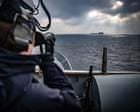
Baltic nations are pioneering regional security cooperation amid US uncertainty
Joint patrols and surveillance initiatives protect critical undersea infrastructure
Localized approaches represent a potential model for NATO's future
Security cooperation has intensified following Russian 'shadow fleet' activities
📖 Full Retelling
Baltic Sea nations including Finland, Sweden, Denmark, and Estonia are launching regional security initiatives in 2026 to protect critical undersea infrastructure from Russian threats, as uncertainty grows about US commitment to NATO's mutual defense pact in the region. These vulnerable countries, which joined NATO specifically for protection against Russia, now face the unsettling prospect that their most powerful ally might not honor the collective defense agreement, particularly under the Trump administration which has suggested it may not defend European territories. The Baltic nations have responded with an impressive array of localized security measures, creating a maritime surveillance center, implementing joint patrols called Baltic Sentry, and developing an AI detection tool called Nordic Warden to monitor suspicious activities above undersea cables and pipelines. This regional cooperation has intensified since the 2022 Nord Stream pipeline explosions and the subsequent increase in Russian 'shadow fleet' activities designed to circumvent sanctions, demonstrating how smaller nations are adapting to a security landscape where traditional US guarantees may no longer be reliable.
🏷️ Themes
NATO security, Regional cooperation, Defense autonomy
Submarine cable is any electrical cable that is laid on the seabed, although the term is often extended to encompass cables laid on the bottom of large freshwater bodies of water.
Europe faces a new security reality as US defence commitments waver, making regional cooperation essential to protect critical undersea infrastructure and maintain deterrence
Context & Background
Baltic Sea nations create joint maritime surveillance centre
Repeated sabotage of undersea cables and pipelines highlights vulnerability
NATO’s mutual defence pledge is questioned as US support declines
What Happens Next
Regional defence groups are likely to expand, sharing intelligence and patrol resources, while NATO may explore new structures that rely less on US forces
Frequently Asked Questions
Why are Baltic nations cooperating on maritime security?
They aim to protect vital cables and pipelines and reduce dependence on US military support
What is the Russian shadow fleet?
Vessels used by Russia to evade sanctions and conduct covert operations in European waters
Will NATO survive without US support?
Its future is uncertain, but localized cooperation may sustain its effectiveness
How can other countries learn from the Baltic model?
By forming regional defence partnerships that share resources and intelligence within international law
}
Original Source
Can Europe survive without US defence? Surprisingly, the Baltic sea nations are showing the way Elisabeth Braw Joint patrols are being mounted to protect undersea cables from Russian sabotage: localised cooperation is our best hope for now Elisabeth Braw is a senior fellow at the Atlantic Council thinktank W hen European countries in the Baltic Sea region joined Nato for protection against Russia, they were not anticipating their most powerful Nato ally would be the one threatening to seize territory from them. The shock of the Greenland crisis may have faded from the headlines, but Donald Trump’s US has also suggested it may decide not to defend Europe. And Russia continues to be a nuisance in the Baltic Sea. Luckily, the vulnerable Baltic nations have launched an impressive string of initiatives to keep their mini-ocean safe. As the US sheds responsibility for Europe’s defence, these efforts could provide a model for the future of Nato itself. Finland announced in January that it would team up with other Baltic Sea countries to create a maritime surveillance centre. Finland sees it as a way to increase capability and authority to intervene in “situations” in its territorial sea and exclusive economic zone. It’s a sensible measure. And it’s not the only one. When the two Nord Stream pipelines exploded in the exclusive economic zones of Sweden and Denmark in September 2022, it took the region by complete surprise . To be sure, a few prophetic voices had been warning for years that undersea cables and pipelines were vulnerable to sabotage, but with virtually no suspicious incidents jeopardising this invaluable infrastructure, complacency set in. Then came the sabotage of Nord Stream , followed by the arrival of the Russian shadow fleet – designed to dodge oil sanctions – and the mysterious rupture of two cables and a pipeline in 2023. The ocean’s coastal states – minus Russia – began cooperating more. As undersea cables continued to be mysteriously cut, threatening e...