| United Kingdom
| politics
| ✓ Verified - theguardian.com
Cemented locks and deflated diggers: the war over privately run allotments
#Allotments#Roots company#Green belt development#Private gardening spaces#Community protests#Urban farming#Council waiting lists#Land use conflict
📌 Key Takeaways
Roots provides private allotments to address decades-long council waiting lists across England
The company faces organized resistance with protests and acts of sabotage in multiple locations
Critics accuse Roots of developing land without proper permissions and damaging countryside
Supporters argue Roots fills a supply gap providing accessible green spaces for urban dwellers
The conflict highlights tensions between privatization and public goods in urban planning
📖 Full Retelling
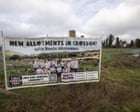
British startup Roots faced fierce local resistance when attempting to develop private allotments in Bristol during October 2023, as protesters blocked access with cars and engaged in acts of sabotage to prevent the company from building vegetable patches on green belt land, highlighting the growing conflict between private solutions to public demand for growing spaces and community concerns about unauthorized development. Founded in 2021 by Christian Samuel, Ed Morrison, and William Gay after experiencing a 28-year waiting list for council allotments in London, Roots has rapidly expanded to 20 sites across England with nearly 5,000 customers, offering subscription-based plots ranging from £9.99 to £49.99 monthly. The company secured £6 million in funding from notable investors including former Tesco CEO Terry Leahy and has even announced plans for international expansion starting with Austin, Texas, positioning itself as 'WeWork for allotments' to address the significant supply-demand gap in urban green spaces. Despite its popularity among urban dwellers seeking escape and mental health benefits, Roots has encountered organized opposition nationwide, with communities protesting what they view as aggressive expansion strategies that develop land before obtaining proper planning permissions. Protesters in Bristol poured cement into locks, deflated digger tires, and repeatedly moved blockade vehicles, while councils in Ecclesfield and West Sussex denied or questioned development permissions on protected land. The conflict extends beyond local disputes, with environmentalist Chris Packham criticizing the company's development on species-rich grasslands and highlighting the fundamental tension around allotments as traditionally public goods versus commercial opportunities. As Roots plans further expansion targeting 1,000 sites worldwide by 2033, the debate continues about whether private enterprise can responsibly address public needs in urban planning while respecting community concerns and environmental protections.
🏷️ Themes
Privatization, Urban planning, Community resistance, Environmental concerns
No entity connections available yet for this article.
Deep Analysis
Why It Matters
Roots' private allotment model highlights a growing gap between demand for green space and limited council provision, sparking legal and environmental disputes. The controversy underscores tensions between private enterprise and public stewardship of green belt land.
Context & Background
Long waiting lists for council allotments across England
Roots leases farmland to create subscription allotments
Opposition claims commercial development on protected green belt land
Incidents of sabotage and planning conflicts
Government approval of allotment sales for housing funding
What Happens Next
Roots plans to open up to 20 new sites this year and aims for 1,000 sites globally by 2033, while facing ongoing planning and utility challenges. The company is seeking another round of funding to support expansion and will continue to lobby for permits. Local communities may intensify protests if further green belt sites are developed without consent.
Frequently Asked Questions
What is Roots?
A private company that leases farmland to offer subscription allotments for city dwellers.
Why are there protests?
Opponents argue the sites are commercial developments on protected green belt land and lack proper planning permission.
Will Roots get more permits?
They have secured some permissions but still face challenges like water shutoffs and ongoing planning disputes.
How much does a plot cost?
Monthly fees range from £9.99 to £49.99, with a full 108‑square‑metre plot costing about £550 per year.
Original Source
Cemented locks and deflated diggers: the war over privately run allotments With waits for council plots in England decades-long, Roots is renting out green space – but some communities are digging in W hen police arrived at the field outside Bristol in October 2023, two old cars, wheels removed, were blockading the gates. Protesters had hauled them across the entrance to stop developers building on the slice of north Somerset green belt. The threat was not housing or industry, but a company building vegetable patches. Roots builds privatised allotments to give city dwelling customers a place to grow food. It was co-founded in 2021 by Christian Samuel, Ed Morrison and William Gay, who were frustrated by a 28-year waiting list for a plot in their area of Streatham, south London. “We thought: ‘This is crazy’,” says Samuel, 32. “‘Why don’t we just build our own?’” The idea was a runaway success. Roots now has 20 sites from London to Leeds, and nearly 5,000 customers. Last October the founders announced a £6m fundraise. Backers included Terry Leahy, the former Tesco chief executive and Mark Selby, co-founder of Wahaca restaurants. There are early plans for a site in Austin, Texas – Roots’ first abroad. The startup leases farmland and turns it into plots that it rents out on subscription. Prices range from £9.99 to £49.99 a month for a patch of up to 108 sq metres. One adviser describes it as “WeWork for allotments”, a fresh air and wellies version of the coworking office space trend . The appeal is obvious. More than 170,000 people are thought to be sitting on council allotment waiting lists across the country. “For many people it is not about growing the food, it’s the mental health and the wellbeing side of being outside,” says Samuel. “They see it as a place to escape. And there’s clearly a supply and demand gap here.” Not everybody sees it that way. What started as a local protest in Bristol has turned into a nationwide opposition campaign. A Facebook group, Roots Al...