
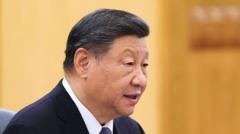
China is trying to play peacemaker in the Iran war - will it work?
📖 Full Retelling
📚 Related People & Topics

China
Country in East Asia
China, officially the People's Republic of China (PRC), is a country in East Asia. It is the second-most populous country after India, with a population exceeding 1.4 billion, representing 17% of the world's population. China borders fourteen countries by land across an area of 9.6 million square ki...

Iran
Country in West Asia
# Iran **Iran**, officially the **Islamic Republic of Iran** and historically known as **Persia**, is a sovereign country situated in West Asia. It is a major regional power, ranking as the 17th-largest country in the world by both land area and population. Combining a rich historical legacy with a...

Middle East
Transcontinental geopolitical region
The Middle East is a geopolitical region encompassing the Arabian Peninsula, Egypt, Iran, Iraq, the Levant, and Turkey. The term came into widespread usage by Western European nations in the early 20th century as a replacement of the term Near East (both were in contrast to the Far East). The term ...
Entity Intersection Graph
Connections for China:
Mentioned Entities
Deep Analysis
Why It Matters
China's attempt to mediate in the Iran conflict matters because it represents a significant shift in global diplomacy, challenging traditional Western-led peace initiatives. This affects Middle Eastern stability, global energy markets, and the geopolitical balance between major powers. If successful, it could enhance China's international influence while potentially reducing regional tensions that threaten global security.
Context & Background
- China has maintained economic and diplomatic ties with Iran through its Belt and Road Initiative and energy partnerships
- Traditional Middle East peacemaking has been dominated by Western powers, particularly the United States and European nations
- Iran's regional conflicts involve multiple proxy wars and tensions with neighboring countries and Western allies
- China has previously positioned itself as neutral in Middle Eastern conflicts while expanding its economic interests
What Happens Next
China will likely continue diplomatic efforts through backchannel negotiations and multilateral forums. Key developments to watch include potential ceasefire proposals in late 2024, regional summit invitations, and whether China can leverage its economic relationships to create tangible diplomatic breakthroughs. The success or failure will become clearer within 6-12 months as either concrete agreements emerge or mediation efforts stall.
Frequently Asked Questions
China seeks to expand its global diplomatic influence and protect its substantial economic investments in the region. This move aligns with its broader strategy to position itself as an alternative to Western-led international systems.
China maintains relatively neutral relationships with all regional actors and has significant economic leverage through trade and energy partnerships. Unlike Western nations, China isn't historically entangled in Middle Eastern conflicts, potentially making it more acceptable to all parties.
Western nations will probably monitor China's efforts cautiously, potentially viewing them as strategic competition in diplomatic spheres. Some may welcome any reduction in violence, while others might be skeptical of China's long-term intentions in the region.
Success would involve brokering at least a temporary ceasefire, establishing China as a credible diplomatic power in the region, and strengthening its relationships with Middle Eastern nations. Even partial progress would enhance China's international standing.