
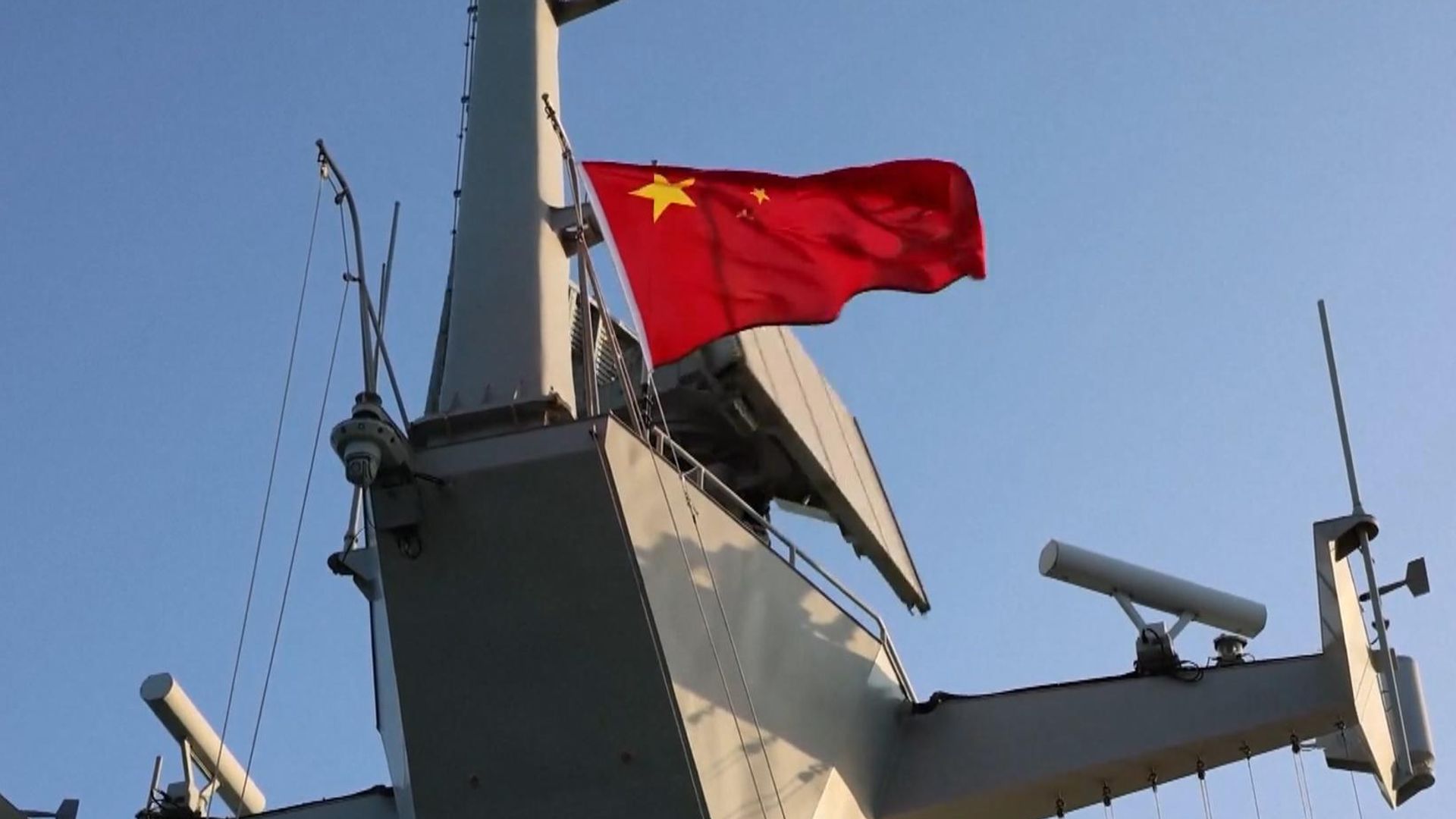
China not planning to invade Taiwan in 2027, US says
#China #Taiwan #invasion #2027 #US intelligence #cross-strait #military assessment
📌 Key Takeaways
- US intelligence assesses China is not planning a Taiwan invasion in 2027
- The statement counters speculation about a specific military timeline
- It reflects ongoing US monitoring of cross-strait tensions
- The assessment aims to clarify perceptions of China's immediate intentions
🏷️ Themes
Geopolitics, Military Intelligence
📚 Related People & Topics

United States Intelligence Community
Collective term for US federal intelligence and security agencies
The United States Intelligence Community (IC) is a group of U.S. federal government intelligence agencies and subordinate organizations that work to conduct intelligence activities which support the foreign policy and national security interests of the United States. Member organizations of the IC ...

China
Country in East Asia
China, officially the People's Republic of China (PRC), is a country in East Asia. It is the second-most populous country after India, with a population exceeding 1.4 billion, representing 17% of the world's population. China borders fourteen countries by land across an area of 9.6 million square ki...

Taiwan
Country in East Asia
Taiwan, officially the Republic of China (ROC), is a country in East Asia. The main island of Taiwan, also known as Formosa, lies between the East and South China Seas in the northwestern Pacific Ocean, with the People's Republic of China (PRC) to the northwest, Japan to the northeast, and the Phili...
Entity Intersection Graph
Connections for United States Intelligence Community:
Mentioned Entities
Deep Analysis
Why It Matters
This statement matters because it addresses one of the most significant geopolitical tensions in the Asia-Pacific region, directly affecting Taiwan's 23 million residents, China's 1.4 billion people, and U.S. strategic interests in the region. It provides temporary reassurance to global markets that rely on Taiwan's semiconductor industry, which produces over 60% of the world's advanced chips. The clarification helps reduce immediate military escalation fears while maintaining pressure on diplomatic solutions, affecting regional stability and international trade routes through the Taiwan Strait.
Context & Background
- Taiwan has been self-governed since 1949 when Chinese Nationalists retreated there after losing China's civil war to Communists
- China claims Taiwan as part of its territory under the 'One China' principle, which most countries acknowledge diplomatically
- The U.S. maintains unofficial relations with Taiwan through the Taiwan Relations Act while officially recognizing Beijing
- Military tensions have increased recently with frequent Chinese air incursions into Taiwan's air defense identification zone
- The 2027 timeline had gained attention as a potential invasion window due to China's military modernization goals
What Happens Next
The U.S. will likely continue arms sales to Taiwan while urging dialogue between Taipei and Beijing. China will probably increase political pressure through diplomatic isolation and military demonstrations. Taiwan's presidential election in January 2024 will test cross-strait relations depending on the winning party's stance. Regional military exercises by all parties will continue, with possible increased U.S.-Taiwan cooperation under existing frameworks.
Frequently Asked Questions
Analysts had identified 2027 as when China's military modernization might achieve sufficient capability for a complex amphibious invasion. This timeline coincided with the 100th anniversary of the People's Liberation Army's founding, making it symbolically significant for Chinese leadership.
No, fundamental disagreements remain unchanged. China continues to reject Taiwan's independence while Taiwan maintains its de facto sovereignty. The statement addresses military timing but doesn't resolve underlying political conflicts that could still trigger crises.
Under the Taiwan Relations Act, the U.S. is committed to providing Taiwan with defensive weapons and considers any non-peaceful resolution a threat to regional peace. However, the U.S. officially recognizes Beijing as China's government and doesn't support Taiwan's independence.
Taiwan produces over 90% of the world's most advanced semiconductors, making global supply chains vulnerable to disruption. This economic reality creates additional pressure against military conflict while increasing the strategic importance of Taiwan's security for technology-dependent nations.
Most analysts believe China would invade only if Taiwan formally declares independence, if foreign troops are stationed there, or if internal unrest creates an opportunity. Gradual moves toward permanent separation rather than specific dates are considered more likely triggers.