
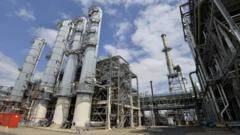
CO2 plant in UK to reopen in war contingency plan
#Teesside CO2 plant #UK government investment #Food security #War contingency #Carbon dioxide production #Supply chain resilience #Manufacturing security
📌 Key Takeaways
- UK government investing £100m to restart Teesside CO2 plant
- Restart is part of war contingency planning for food security
- CO2 is essential for food and drink manufacturing processes
- Plant closure had caused previous supply chain disruptions
- Investment reflects broader policy toward industrial self-sufficiency
📖 Full Retelling
🏷️ Themes
National Security, Food Supply Chain, Industrial Policy
📚 Related People & Topics

Food security
Measure of the availability and accessibility of food
Food security is the state of having reliable access to a sufficient quantity of affordable, healthy food. The availability of food for people of any class, gender, status, ethnicity, or religion is another element of food protection. Similarly, household food security is considered to exist when al...
Supply chain resilience
Persisting, adapting or transforming a supply chain
Supply chain resilience is "the capacity of a supply chain to persist, adapt, or transform in the face of change".
Entity Intersection Graph
Connections for Food security:
Mentioned Entities
Deep Analysis
Why It Matters
This decision matters because CO2 is a critical component in the UK's food and drink supply chain, affecting everything from beer carbonation to meat preservation. The reopening of the Teesside plant addresses national security concerns about food security in an increasingly unstable global environment. This £100 million investment represents a significant shift toward domestic production of essential industrial gases, reducing reliance on potentially vulnerable international supply chains. The move affects food manufacturers, beverage producers, and ultimately consumers who could face shortages or price increases during supply disruptions.
Context & Background
- The Teesside CO2 plant had operated for decades before being closed due to economic factors
- CO2 shortages in the UK have caused significant disruptions to food manufacturers in recent years
- The COVID-19 pandemic exposed vulnerabilities in global supply chains for essential industrial materials
- Geopolitical tensions, particularly the conflict in Ukraine, have heightened concerns about energy and industrial supply security
- Food security has increasingly been recognized as a national security priority by governments worldwide
- The UK has been working to strengthen its domestic industrial base as part of its 'levelling up' agenda
- Carbon dioxide is a byproduct of fertilizer production and other industrial processes, making supply vulnerable to changes in those sectors
What Happens Next
The immediate next steps will involve the government finalizing contracts and beginning the restart process at the Teesside facility. Production is expected to resume within months, likely before the end of 2023. The facility will likely undergo upgrades to meet modern environmental standards while maintaining production capacity. The government may also assess other potential vulnerabilities in the industrial gas supply chain and consider additional contingency measures. Food and drink manufacturers will adjust their supply strategies to incorporate the newly available domestic CO2 source, potentially reducing their reliance on imported CO2.
Frequently Asked Questions
CO2 is essential for carbonating beverages, preserving meat in modified atmosphere packaging, and extending the shelf life of various food products. Without adequate CO2 supplies, food manufacturers would struggle to maintain product quality and safety standards.
The plant was shuttered due to economic factors, likely including the high cost of operation compared to importing CO2 from other sources. The decision to reopen reflects a reassessment of these economic factors in light of national security concerns.
In potential conflict scenarios, supply chains for essential materials could be disrupted. By securing domestic CO2 production, the UK ensures continued food production capabilities even if international supply routes are compromised, treating food security as a national security priority.
While the primary goal is security of supply rather than price control, having a reliable domestic CO2 source could help stabilize prices during supply disruptions. However, the £100 million investment may contribute to slightly higher production costs that could be passed on to consumers.
The article mentions that upgrades will likely include measures to meet modern environmental standards. While CO2 production itself isn't typically a major environmental concern, the plant's operations will need to comply with current regulations on emissions and energy efficiency.