
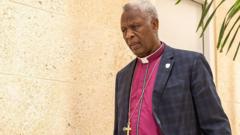
Conservative Anglicans pull back from electing rival to Archbishop of Canterbury
📖 Full Retelling
The group had said it would choose a new leader with the same title as Sarah Mullally, the first female head of the Church.
Entity Intersection Graph
No entity connections available yet for this article.
Original Source
Conservative Anglicans pull back from electing rival to Archbishop of Canterbury 16 minutes ago Share Save Lebo Diseko Global religion correspondent, Abuja Share Save Conservative Anglicans meeting in Nigeria's capital Abuja have pulled back on plans to elect a rival "primus inter pares" - the Latin term meaning "first among equals" and describing the Archbishop of Canterbury's position within the worldwide church, where Sarah Mullally is considered the ceremonial leader. Electing another person with the same title would have been seen by many as an open challenge to the leadership of the first female Archbishop of Canterbury just weeks before she formally begins the job. Instead, the group, known as Gafcon, says it is leaving behind old structures and old titles, and is now unveiling a new leadership council with Rwanda's Archbishop Laurent Mbanda as its leader. Reporters reacted with some puzzlement to news of the appointments as they were announced on Thursday, with some suggesting it still amounted to an act of defiance. Asked repeatedly whether Gafcon members still recognised the supreme authority of the Archbishop of Canterbury, spokesman Venerable Canon Justin Murff said: "The Global Anglican Council recognises Archbishop Laurent Mbanda as its leader." "Sarah Mullally is the Archbishop of Canterbury." There are some 95 million Anglicans around the world with the Archbishop of Canterbury as their spiritual figurehead. Later this month Archbishop Mullally will be formally installed at a ceremony in Canterbury. But her appointment has divided opinion in Nigeria and elsewhere, with many conservative Christians believe that only men should be consecrated as bishops. At Thursday's press conference, Gafcon insisted doctrine was at the heart of their differences with the Church of England, not gender or sexuality. "The issue is not same-sex marriage, nor is it about the female Archbishop. It is whether scripture or contemporary culture governs the life of this chur...
Read full article at source