
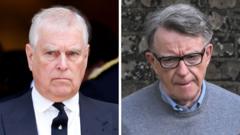
CPS giving 'investigative advice' to police over Andrew and Mandelson probes
📖 Full Retelling
📚 Related People & Topics

Peter Mandelson
British politician, lobbyist and diplomat (born 1953)
Peter Benjamin Mandelson, Baron Mandelson (born 21 October 1953) is a British former Labour Party politician, lobbyist and diplomat. He was the Member of Parliament (MP) for Hartlepool from 1992 to 2004. He served in Tony Blair and Gordon Brown's cabinets as Minister without portfolio, Secretary of ...

Andrew
Name list
Andrew is the English form from the Old French name Andreu / Andrieu (now French surnames), themselves from Latin Andreas, from Greek-derived given name Andreas (Greek: Ἀνδρέας). It is related to Ancient Greek: ἀνήρ/ἀνδρός aner/andros, "man" (as opposed to "woman"), thus meaning "manly" and, as cons...
Entity Intersection Graph
Connections for CPS:
Mentioned Entities
Deep Analysis
Why It Matters
This news matters because it involves high-profile political figures—Prince Andrew and Peter Mandelson—in ongoing police investigations, indicating serious legal scrutiny at the highest levels of British society. It affects the individuals directly involved, their associates, and the public's trust in institutions, as it raises questions about accountability and transparency among elites. The involvement of the Crown Prosecution Service (CPS) in providing 'investigative advice' suggests that these cases are advancing beyond initial inquiries, potentially leading to formal charges or significant legal outcomes. This could have broader implications for the monarchy, political circles, and public confidence in the justice system's handling of sensitive cases.
Context & Background
- Prince Andrew, the Duke of York, has faced allegations related to his association with Jeffrey Epstein, including a civil lawsuit settled in 2022, which led to his removal from royal duties.
- Peter Mandelson, a former Labour minister and EU commissioner, has been involved in various political controversies over the years, though specific details of the current probe are not provided in the article.
- The Crown Prosecution Service (CPS) is the principal public agency for criminal prosecutions in England and Wales, often advising police during investigations to determine if evidence meets the threshold for charges.
- High-profile investigations involving public figures in the UK often draw intense media and public scrutiny, impacting reputations and institutional integrity, as seen in past cases like the phone-hacking scandal or parliamentary expenses scandal.
What Happens Next
In the coming weeks or months, police are likely to continue their investigations based on the CPS's advice, possibly gathering more evidence or interviewing witnesses. Depending on the findings, the CPS may decide whether to authorize formal charges against Prince Andrew, Peter Mandelson, or others involved, with potential court proceedings or settlements to follow. Public updates or official statements from the police or CPS could emerge, especially if there are significant developments, though timelines may vary due to the sensitivity and complexity of the cases.
Frequently Asked Questions
It means the Crown Prosecution Service is reviewing evidence gathered by police to guide the investigation, such as suggesting further lines of inquiry or assessing if the evidence is strong enough for potential prosecution. This step often occurs before a formal decision on charges, indicating the cases are being taken seriously and may be nearing a critical phase.
The article does not specify the exact reasons, but Prince Andrew has been linked to past allegations involving Jeffrey Epstein, while Peter Mandelson's probe may relate to undisclosed political or financial matters. Both cases likely involve separate issues that have prompted police scrutiny, with details possibly emerging as investigations progress.
For the monarchy, it could further damage public perception if Prince Andrew faces legal action, adding to recent controversies. In politics, it might fuel debates over ethics and accountability, especially if Mandelson's case reveals misconduct, potentially impacting Labour Party dynamics and trust in public figures.
Possible outcomes include no further action if evidence is insufficient, formal charges leading to trials, or out-of-court settlements to resolve matters privately. The results will depend on the evidence and CPS decisions, with legal, reputational, and financial consequences for those involved.