
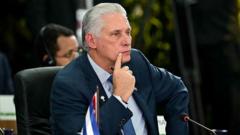
Cuba says it will release 51 prisoners in the coming days
#Cuba #prisoner release #prisoners #government announcement #human rights
📌 Key Takeaways
- Cuba announces plans to release 51 prisoners in the near future
- The release is scheduled to occur within the coming days
- The announcement comes directly from Cuban authorities
- The specific reasons or criteria for the release are not detailed in the article
🏷️ Themes
Prisoner Release, Cuban Policy
📚 Related People & Topics

Cuba
Country in the Caribbean
Cuba, officially the Republic of Cuba, is an island country in the Caribbean. It comprises the eponymous main island as well as 4,195 islands, islets, and cays. Situated at the convergence of the Caribbean Sea, Gulf of Mexico, and Atlantic Ocean, Cuba is located east of the Yucatán Peninsula, south ...
Entity Intersection Graph
Connections for Cuba:
Mentioned Entities
Deep Analysis
Why It Matters
This news is important because it signals a potential shift in Cuba's human rights and political climate, affecting the prisoners and their families directly. It may indicate efforts by the Cuban government to address international criticism or improve diplomatic relations, particularly with countries like the United States. The release could also influence domestic perceptions of governance and justice within Cuba.
Context & Background
- Cuba has a history of political imprisonment, often targeting dissidents and activists, which has drawn international condemnation.
- The U.S. has maintained economic sanctions on Cuba for decades, partly due to human rights concerns, though relations have fluctuated under different administrations.
- Cuba's communist government, led by the Cuban Communist Party, has faced periodic protests and calls for reform, especially regarding civil liberties and economic hardships.
- Previous prisoner releases in Cuba have sometimes been tied to diplomatic negotiations, such as the 2014 release of 53 political prisoners as part of U.S.-Cuba normalization talks.
What Happens Next
In the coming days, the 51 prisoners are expected to be released, with potential monitoring by human rights organizations. This may lead to increased scrutiny of Cuba's human rights record and could spark further diplomatic discussions, possibly influencing future U.S.-Cuba policy decisions. If the release includes political prisoners, it might encourage calls for more reforms or additional releases in the near term.
Frequently Asked Questions
The article does not specify, but they could include political dissidents, activists, or individuals imprisoned for various offenses; details may emerge as releases occur, with human rights groups likely monitoring their identities.
Possible reasons include easing international pressure, improving diplomatic relations, or addressing internal social tensions; it may be a strategic move to showcase progress on human rights ahead of potential negotiations.
It could lead to positive developments, such as reduced tensions or renewed talks on sanctions, if the U.S. views it as a goodwill gesture; however, sustained improvements depend on broader human rights reforms in Cuba.
Cuba has periodically released prisoners, often in response to international advocacy or as part of deals, like in 2014 when political prisoners were freed during U.S.-Cuba rapprochement; such releases are typically seen as limited gestures rather than systemic change.
It might set a precedent, but further releases will depend on Cuba's internal policies and external pressures; human rights organizations will likely push for more comprehensive reforms based on this action.