
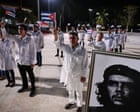
Cuba’s doctors were a lifeline for the world. Now the Caribbean is shamefully complicit in the US drive to expel them | Kenneth Mohammed
#Cuban doctors #medical missions #US pressure #Caribbean complicity #healthcare solidarity #expulsion
📌 Key Takeaways
- Cuba's medical missions historically provided essential healthcare globally, especially in underserved regions.
- The US is actively pressuring countries to expel Cuban doctors, framing it as opposing forced labor.
- Several Caribbean nations are complying with US demands, undermining Cuba's international medical solidarity efforts.
📖 Full Retelling
🏷️ Themes
International Medical Diplomacy, Geopolitical Pressure and Compliance
Entity Intersection Graph
No entity connections available yet for this article.
Deep Analysis
Why It Matters
This news is important because it highlights how geopolitical tensions can directly impact public health and humanitarian aid. It affects Caribbean nations that rely on Cuban doctors for healthcare services, especially in rural or under-resourced areas. The situation also impacts Cuba's economy and international relations, as medical missions are a key source of revenue and soft power. Ultimately, vulnerable patients in the Caribbean could suffer if Cuban doctors are expelled, exacerbating existing healthcare disparities.
Context & Background
- Cuba has a long history of medical diplomacy, sending doctors abroad since the 1960s as part of its foreign policy and humanitarian efforts.
- These medical missions often serve in underserved regions globally, including Latin America, Africa, and the Caribbean, during crises like Ebola and COVID-19.
- The US has historically opposed Cuba's government, maintaining an economic embargo since 1962 and criticizing its human rights record.
- Cuban doctors abroad generate significant revenue for Cuba through agreements with host countries, supporting its economy amid US sanctions.
- Previous US administrations, including Trump's, pressured countries to end contracts with Cuban medical missions, citing concerns over exploitation and human trafficking.
What Happens Next
Caribbean nations may face increased US pressure to comply, potentially leading to expulsions of Cuban doctors in the coming months. This could trigger healthcare shortages, forcing these countries to seek alternative medical staffing solutions. Cuba might respond by reassigning doctors to other regions or leveraging diplomatic channels to resist the US campaign. International organizations, such as the WHO, could become involved in mediating or condemning the impact on public health.
Frequently Asked Questions
The US views Cuba's medical missions as a tool for political influence and revenue generation, alleging exploitation of doctors. It aims to undermine Cuba's soft power and pressure its government through economic and diplomatic means.
Cuban doctors provide essential healthcare in underserved areas, often during emergencies like pandemics or natural disasters. They help fill staffing gaps in public health systems, improving access to medical services for vulnerable populations.
Critics, including the US, argue that Cuba exploits its doctors by paying them low wages while retaining most of the revenue from host countries. Some also raise concerns about political indoctrination and restrictions on doctors' freedoms.
Expelling Cuban doctors could lead to shortages, especially in rural or poor regions, worsening health outcomes. Caribbean nations may struggle to replace them quickly due to limited resources and medical workforce gaps.
Cuba will likely defend its medical missions as humanitarian and may seek international support from allies and organizations. It could also reassign doctors to other regions or use diplomatic efforts to resist US pressure.