
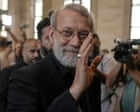
Death of influential Ali Larijani would be bigger loss to Iran than Khamenei
#Ali Larijani #Iran #Supreme Leader Khamenei #political influence #leadership loss
📌 Key Takeaways
- Ali Larijani's death would be a greater loss to Iran than that of Supreme Leader Khamenei, according to the article.
- Larijani is described as an influential figure in Iranian politics and governance.
- The article suggests his influence and role are critical to Iran's stability or strategic direction.
- This perspective highlights internal dynamics and potential vulnerabilities in Iran's leadership structure.
📖 Full Retelling
🏷️ Themes
Iranian politics, Leadership influence
📚 Related People & Topics

Iran
Country in West Asia
# Iran **Iran**, officially the **Islamic Republic of Iran** and historically known as **Persia**, is a sovereign country situated in West Asia. It is a major regional power, ranking as the 17th-largest country in the world by both land area and population. Combining a rich historical legacy with a...
Supreme Leader Khamenei
Topics referred to by the same term
Supreme Leader Khamenei may refer to: Ali Khamenei (1939–2026), 2nd Supreme Leader of Iran from 1989 to 2026 and father of Mojtaba Mojtaba Khamenei (b.

Ali Larijani
Iranian politician (born 1958)
Ali Ardashir Larijani (born 3 June 1958) is an Iranian politician and former military officer in the Islamic Revolutionary Guard Corps, who serves as Secretary of Supreme National Security Council since 2025. He served as the Speaker of the Parliament of Iran from 2008 to 2020. He has been a member ...
Entity Intersection Graph
Connections for Iran:
Mentioned Entities
Deep Analysis
Why It Matters
This analysis suggests that Ali Larijani's potential death would represent a more significant loss to Iran's political stability than that of Supreme Leader Khamenei, highlighting Larijani's unique role as a bridge between conservative and moderate factions. This matters because it reveals the complex power dynamics within Iran's political system, where institutional figures can sometimes wield more practical influence than the supreme leader. The assessment affects Iran's domestic politics, regional diplomacy, and international negotiations, as Larijani has been instrumental in navigating both internal factional disputes and external relations. If accurate, this perspective challenges conventional Western understanding of Iranian power structures and suggests potential vulnerabilities in Iran's political continuity.
Context & Background
- Ali Larijani served as Speaker of Iran's Parliament from 2008 to 2020 and previously held key positions including Secretary of the Supreme National Security Council and head of state broadcasting.
- The Larijani family represents one of Iran's most influential political dynasties, with multiple members holding senior positions in government, judiciary, and religious institutions over decades.
- Larijani has consistently positioned himself as a pragmatic conservative, maintaining ties with both hardline factions and reformists while serving as a key negotiator in nuclear talks with Western powers.
- Supreme Leader Ali Khamenei, aged 85, has led Iran since 1989 through multiple political crises while establishing a robust system of succession planning and institutional continuity.
- Iran's political system features complex checks and balances between elected bodies (presidency, parliament) and unelected institutions (Revolutionary Guards, judiciary, Guardian Council) overseen by the Supreme Leader.
What Happens Next
In the immediate term, attention will focus on Larijani's health and political activities, with factions positioning themselves to either support or undermine his influence. Should his influence wane, we can expect intensified competition among conservative factions to fill the resulting power vacuum, particularly ahead of the 2025 presidential election. Long-term, this analysis may prompt international observers to reassess which Iranian figures actually drive policy decisions versus those who hold ceremonial authority.
Frequently Asked Questions
This perspective suggests Larijani operates as a crucial consensus-builder between Iran's competing political factions, whereas Khamenei's role has become more symbolic with established succession mechanisms. Larijani's practical influence in day-to-day governance and international negotiations might exceed the Supreme Leader's direct operational control.
Larijani has served as Parliament Speaker, chief nuclear negotiator, and head of state media, consistently mediating between hardliners and moderates. His family connections and institutional knowledge make him uniquely positioned to navigate Iran's complex political landscape.
While provocative, this analysis likely comes from observers noting Larijani's hands-on governance role versus Khamenei's broader ideological leadership. However, it potentially underestimates the Supreme Leader's control over military, judicial, and religious institutions that form Iran's power backbone.
Iran would likely experience intensified factional competition, particularly between pragmatic conservatives and hardliners seeking to influence policy. International negotiations might stall temporarily as new power brokers emerge within Iran's political establishment.
Larijani's potential absence could complicate diplomatic engagements where he served as a trusted intermediary. Western governments might need to identify new channels for communication with Iran's pragmatic conservative faction.