
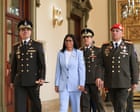
Delcy Rodríguez replaces Venezuela’s top military commanders
#Delcy Rodríguez #Venezuela #military commanders #leadership change #political stability
📌 Key Takeaways
- Delcy Rodríguez has been appointed to replace Venezuela's top military commanders.
- This change signifies a major reshuffle in the country's military leadership.
- The move could impact Venezuela's internal security and political stability.
- It reflects ongoing adjustments within the Venezuelan government's power structure.
📖 Full Retelling
🏷️ Themes
Military reshuffle, Political change
📚 Related People & Topics

Venezuela
Venezuela, officially the Bolivarian Republic of Venezuela, is a country on the northern coast of South America, consisting of a continental landmass and various islands and islets in the Caribbean Sea. It comprises an area of 912,050 km2 (352,140 sq mi), with a population estimated at 31.8 million ...
Entity Intersection Graph
Connections for Venezuela:
Mentioned Entities
Deep Analysis
Why It Matters
This news is important because it represents a significant reshuffling of Venezuela's military leadership, which has been a crucial pillar of support for Nicolás Maduro's government. The replacement of top commanders affects national security, political stability, and the balance of power within the ruling coalition. It impacts Venezuelan citizens who rely on military institutions for security, international observers monitoring the country's stability, and opposition groups who may see opportunities or challenges in leadership changes.
Context & Background
- Venezuela's military has historically played a central role in politics since Hugo Chávez's presidency (1999-2013)
- The Bolivarian National Armed Forces (FANB) have been key supporters of the socialist government during multiple political crises
- Previous military reshuffles have often preceded significant political or economic policy shifts
- Delcy Rodríguez is a powerful political figure who previously served as Vice President and Foreign Minister
- Venezuela has experienced severe economic crisis and political polarization since 2014
What Happens Next
Observers will monitor whether the new military leadership alters Venezuela's security posture or internal political dynamics. The changes may lead to shifts in military operations, particularly regarding border security and internal stability. International reactions from countries like the United States and regional neighbors will likely follow as they assess implications for diplomatic relations and regional stability.
Frequently Asked Questions
Delcy Rodríguez is a prominent Venezuelan politician who has served as Vice President, Foreign Minister, and currently holds significant influence within the government. She is known as a loyal ally of President Nicolás Maduro and has played key roles in both domestic governance and international diplomacy.
Governments typically replace military commanders to consolidate political control, address security challenges, reward loyalty, or implement new strategic directions. In Venezuela's case, such changes often aim to maintain regime stability and prevent potential dissent within armed forces.
Military leadership changes could either strengthen government control or create vulnerabilities depending on how new commanders align with existing power structures. The military's continued support remains crucial for the government's survival amid ongoing political and economic challenges.
The Venezuelan military holds substantial political influence, controlling key economic sectors and providing essential security support to the government. Military leaders often occupy important government positions and help maintain stability during periods of political tension.