
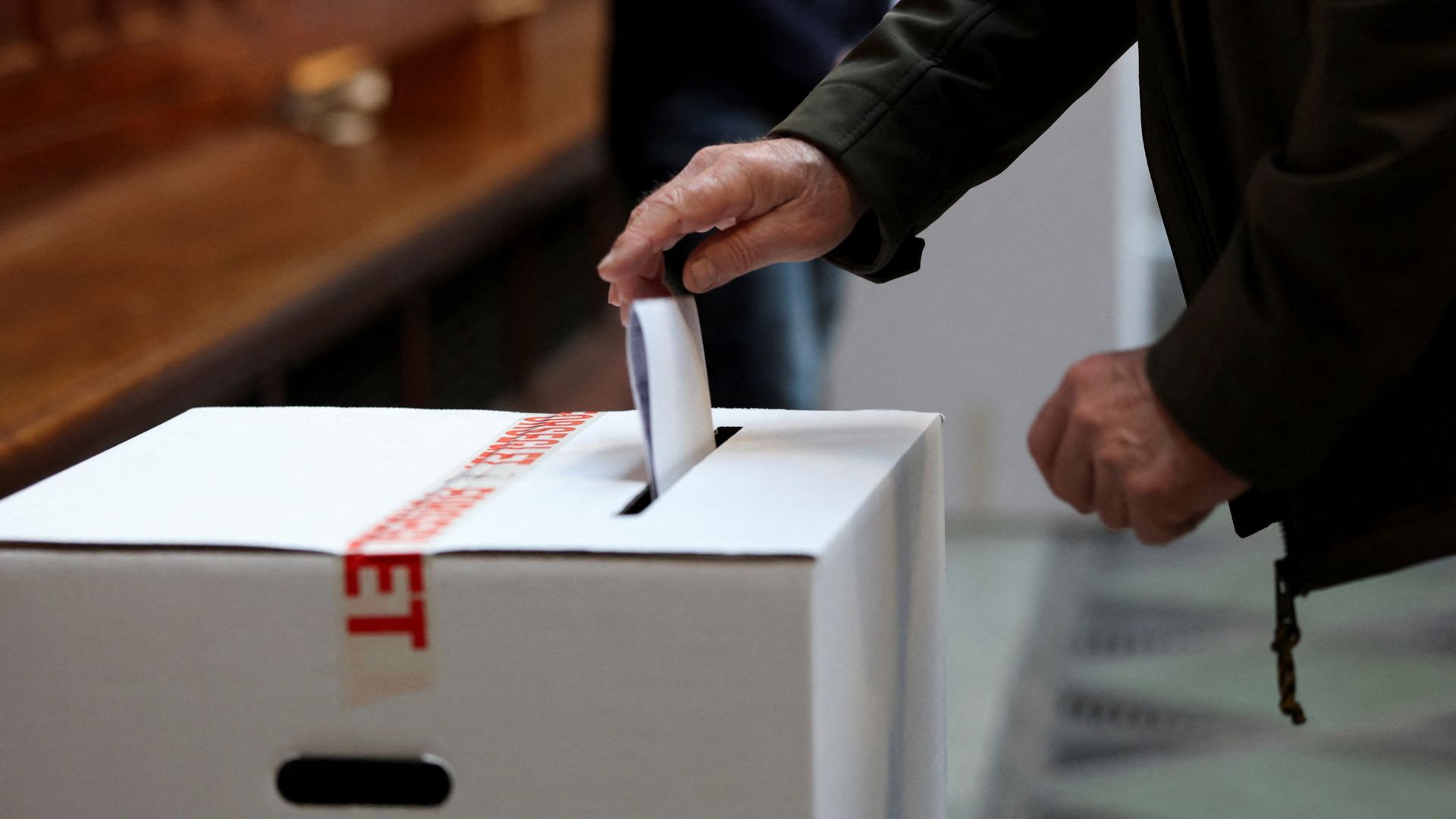
Denmark goes to the polls in a snap election after Trump's Greenland bid
📖 Full Retelling
📚 Related People & Topics

Denmark
Country in Northern Europe
Denmark is a Nordic country in Northern Europe. It is the metropole and most populous constituent of the Kingdom of Denmark, also known as the Danish Realm, a constitutionally unitary state that includes the autonomous territories of the Faroe Islands and Greenland in the north Atlantic Ocean. Metro...

Greenland
Autonomous territory of Denmark
Greenland is an autonomous territory of the Kingdom of Denmark and is the largest of the kingdom's three constituent parts by land area, the others being Denmark proper and the Faroe Islands. Citizens of Greenland are citizens of Denmark. They are thus citizens of the European Union (EU), although G...

Donald Trump
President of the United States (2017–2021; since 2025)
Donald John Trump (born June 14, 1946) is an American politician, media personality, and businessman who is the 47th president of the United States. A member of the Republican Party, he served as the 45th president from 2017 to 2021. Born into a wealthy New York City family, Trump graduated from the...
Entity Intersection Graph
Connections for Denmark:
Mentioned Entities
Deep Analysis
Why It Matters
This snap election is significant because it directly tests the political fallout from Trump's controversial offer to buy Greenland, which was widely seen as an affront to Danish sovereignty and sparked diplomatic tensions. The outcome could reshape Denmark's government, influencing its foreign policy stance toward the U.S. and its approach to Arctic security and climate issues. It affects Danish voters, political parties, and international allies, particularly in NATO, as Denmark balances its transatlantic ties with national pride.
Context & Background
- Denmark is a constitutional monarchy with a parliamentary system, where snap elections can be called by the Prime Minister or triggered by a loss of majority support.
- Greenland is an autonomous territory within the Kingdom of Denmark, with Denmark handling its defense and foreign affairs, while Greenland has self-rule over domestic matters.
- In August 2019, U.S. President Donald Trump publicly expressed interest in purchasing Greenland, leading Denmark to call the idea 'absurd' and cancel a planned visit, straining U.S.-Danish relations.
- The snap election follows this diplomatic incident, with Prime Minister Mette Frederiksen's Social Democrats facing pressure over their handling of the situation and other domestic issues.
What Happens Next
After the election results are tallied, coalition negotiations will begin to form a new government, which could take weeks and may result in a shift to a center-right coalition or a continuation of the current left-leaning bloc. The new government will likely reassess Denmark's foreign policy, including its stance on Arctic cooperation, climate commitments, and relations with the U.S. and EU. Key developments to watch include potential changes in defense spending or Greenlandic autonomy discussions in the coming months.
Frequently Asked Questions
The bid caused a political crisis by undermining Danish sovereignty and embarrassing the government, leading to debates over leadership and foreign policy that eroded parliamentary support, prompting the Prime Minister to call an early election to seek a renewed mandate.
Key issues include Denmark's response to U.S. relations and Arctic policy, domestic concerns like immigration and welfare, and climate change action, with parties divided on how to balance national interests with international alliances.
Greenland's autonomy means Danish parties must consider its interests in foreign and defense matters, with the election potentially influencing future negotiations on Greenland's independence or enhanced self-rule within the kingdom.
A new Danish government might adjust its defense contributions or Arctic military presence, affecting NATO's northern flank and cooperation with allies like the U.S., especially amid rising tensions with Russia in the region.
Prime Minister Mette Frederiksen's Social Democrats lead the left bloc, while opposition includes the Venstre (Liberal) Party and Danish People's Party, with smaller parties like the Social Liberals and Red-Green Alliance influencing coalition outcomes.