
Dirty laundry and chocolate bars: How Venezuelan prisoners smuggled messages out of jail
📖 Full Retelling
Prisoners recently released from detention in Venezuela describe the conditions under which they were held.
Entity Intersection Graph
No entity connections available yet for this article.
Original Source
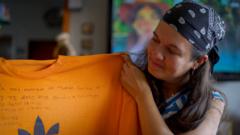
Dirty laundry and chocolate bars: How Venezuelan prisoners smuggled messages out of jail 1 hour ago Share Save Norberto Paredes BBC News Mundo, Caracas, Venezuela Share Save In a small flat in a social housing complex near Caracas, Adriana Briceño holds up what looks like a piece of rubbish, but hidden on the old chocolate bar wrapper is a message. The words scrawled on it were written by her son and are addressed to Ángel Godoy, the boy's father and Briceño's husband, while Ángel Godoy was a prisoner in Venezuela's notorious El Helicoide jail. "Daddy, take this to sweeten things a little," reads the blue ink. "We love you." Originally built in the 1950s as a luxury shopping centre, El Helicoide was never completed and was later taken over by Venezuela's feared intelligence services. It became a symbol of government repression. A United Nations investigation documented it was where people who had been arbitrarily arrested or forcibly disappeared were taken and, in some cases, tortured. Recently released detainees like Godoy have described brutal conditions in interviews with the BBC. El Helicoide: From icon to infamous jail He is one of the hundreds of political prisoners arrested under President Nicolás Maduro and held in Venezuela's vast detention system, sometimes for years. More than 600 people have been released since Maduro was seized by US forces in a military operation at the start of January, but according to prisoners' rights group Foro Penal, hundreds more are still behind bars. Godoy is one of two inmates who has described to the BBC the punishment cells, enforced isolation and threats to family members that they faced before they were released. Punishment "They handcuffed me, beat me, insulted me, and put a balaclava on me as they put me inside a patrol car," says rights activist Javier Tarazona, as he describes the moment he was arrested in July 2021. He knew he was on the radar of Venezuela's state security agencies, but he still found it difficult to...
Read full article at source