
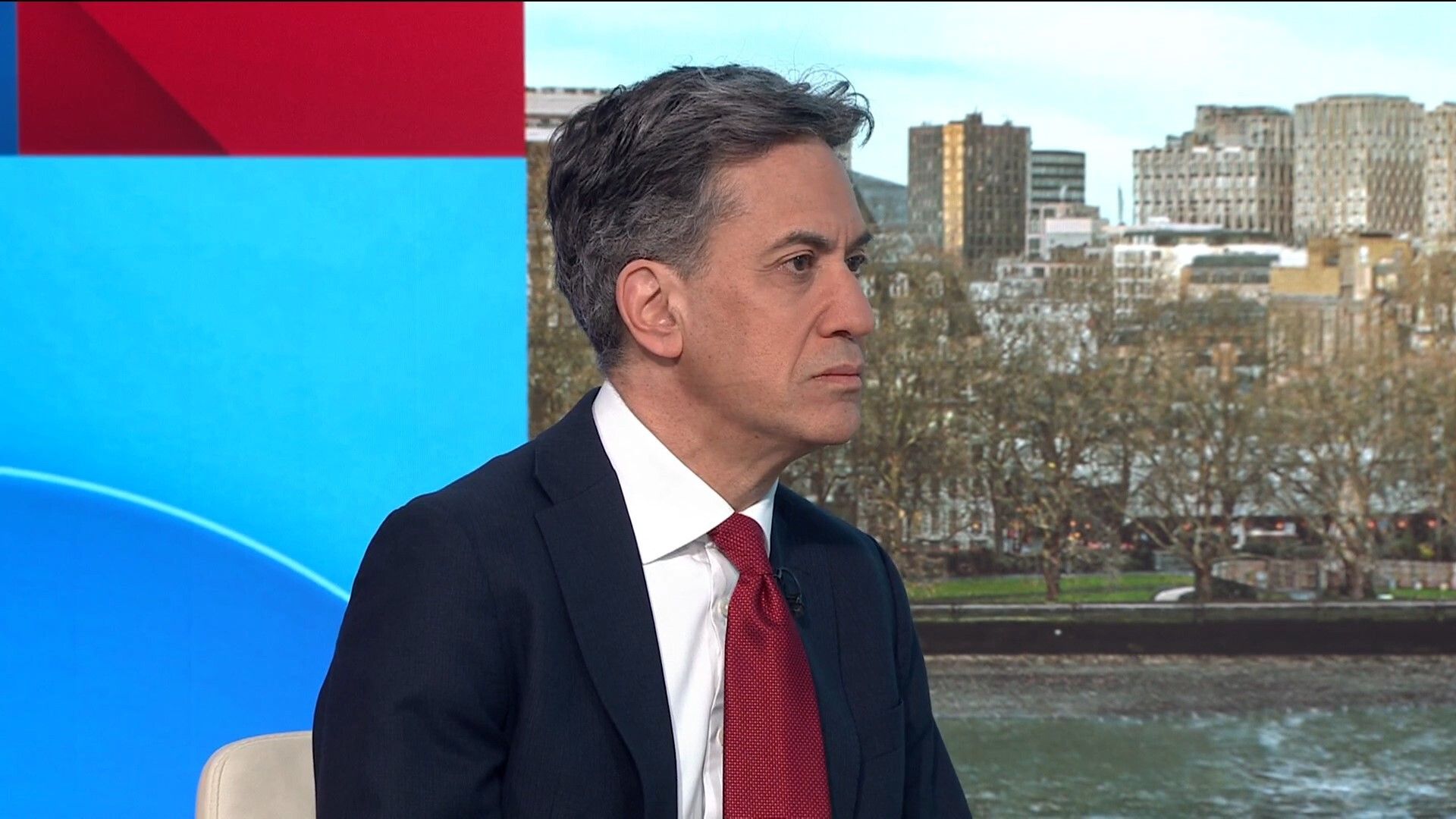
Ed Miliband says Labour will 'fight people's corner' on energy costs - but he doesn't say how
#Ed Miliband #Labour Party #energy costs #consumer advocacy #policy details #political positioning #energy affordability
📌 Key Takeaways
- Ed Miliband pledges Labour will advocate for consumers on energy costs
- No specific policy details or concrete plans are provided
- Focus is on political positioning rather than actionable solutions
- Energy affordability remains a key issue without clear resolution
📖 Full Retelling
🏷️ Themes
Energy Policy, Political Promises
📚 Related People & Topics

Ed Miliband
British politician (born 1969)
Edward Samuel Miliband (born 24 December 1969) is a British politician who has served as Secretary of State for Energy Security and Net Zero since July 2024. He has been Member of Parliament (MP) for Doncaster North since 2005. Miliband was Leader of the Labour Party and Leader of the Opposition fro...
Labour Party
Topics referred to by the same term
Labour Party or Labor Party is a name used by many political parties. These political parties are generally left-wing or centre-left, usually with nominal commitments to social democracy and/or democratic socialism.
Entity Intersection Graph
Connections for Ed Miliband:
Mentioned Entities
Deep Analysis
Why It Matters
This news matters because energy costs directly impact household budgets, particularly for low-income families facing rising living expenses. It highlights political positioning ahead of potential elections, where cost-of-living issues are central to voter concerns. The lack of specific policy details raises questions about political credibility and practical solutions to a pressing economic problem affecting millions of UK residents.
Context & Background
- UK households faced significant energy price increases following Russia's invasion of Ukraine in 2022, with average annual bills exceeding £2,500 at peak
- The UK government previously implemented an Energy Price Guarantee capping typical household bills, but support measures have been scaled back
- Labour has historically positioned itself as the party addressing cost-of-living issues, particularly under Miliband's previous leadership from 2010-2015
- Current energy market structure leaves consumers vulnerable to wholesale price fluctuations despite regulatory oversight by Ofgem
What Happens Next
Labour will likely face pressure to release detailed energy policy proposals ahead of the next general election. Parliamentary debates on energy affordability may intensify as winter approaches. The government may respond with its own energy cost initiatives, potentially creating political competition on this issue. Regulatory reviews of energy market structures could accelerate given ongoing consumer pressure.
Frequently Asked Questions
Political strategists often withhold detailed policies until closer to elections to maintain flexibility and avoid premature criticism. Labour may still be developing specific mechanisms or negotiating internal party consensus on energy policy approaches.
Despite recent decreases from 2022 peaks, energy bills remain significantly higher than pre-pandemic levels. The typical annual household bill is approximately 50% higher than 2021 prices, creating ongoing financial pressure.
Current support includes the Warm Home Discount for vulnerable households, energy efficiency grants, and supplier hardship funds. However, these are limited compared to previous government interventions like the universal Energy Bill Support Scheme.
Potential approaches include expanding renewable energy investment to reduce wholesale prices, implementing social tariffs for vulnerable customers, increasing energy efficiency subsidies, or reforming market regulations to increase competition.
This positions Labour as concerned about cost-of-living issues but risks criticism for lacking concrete solutions. It tests whether voters prioritize sympathetic rhetoric over detailed policy proposals in current economic conditions.