
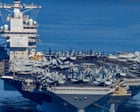
Fire damage, clogged toilets, and sinking morale: USS Gerald R Ford to set sail for repairs in Crete
#USS Gerald R. Ford #aircraft carrier #fire damage #clogged toilets #morale #repairs #Crete #U.S. Navy
📌 Key Takeaways
- The USS Gerald R. Ford aircraft carrier is sailing to Crete for repairs due to fire damage and clogged toilets.
- The ship's crew is experiencing sinking morale as a result of the ongoing maintenance issues.
- The repairs are necessary to address both structural damage from a fire and plumbing system failures.
- This incident highlights operational challenges faced by the U.S. Navy's newest and most advanced aircraft carrier.
📖 Full Retelling
🏷️ Themes
Military Maintenance, Naval Operations
📚 Related People & Topics

Crete
Largest Greek island
Crete ( KREET; Greek: Κρήτη, Modern: Kríti [ˈkriti], Ancient: Krḗtē [krɛ̌ːtεː]) is the largest and most populous of the Greek islands, the 90th largest island in the world, and the fifth largest island in the Mediterranean Sea, after Sicily, Sardinia, Cyprus, and Corsica. Crete is located approximat...
Entity Intersection Graph
Connections for Crete:
View full profileMentioned Entities
Deep Analysis
Why It Matters
This news matters because it reveals significant operational and maintenance issues aboard the USS Gerald R. Ford, the U.S. Navy's newest and most advanced aircraft carrier. It affects U.S. national security readiness, naval personnel morale, and taxpayer investments in military technology. The carrier's deployment to Crete for repairs highlights vulnerabilities in the Navy's ability to maintain cutting-edge vessels during extended deployments, potentially impacting NATO operations in the Mediterranean region.
Context & Background
- The USS Gerald R. Ford (CVN-78) is the lead ship of the Ford-class aircraft carriers, commissioned in 2017 as the most advanced carrier in the U.S. Navy
- The carrier incorporates new technologies including electromagnetic aircraft launch systems (EMALS) and advanced arresting gear that have experienced technical challenges during development
- The ship was deployed to the Eastern Mediterranean in October 2023 as part of U.S. response to the Israel-Hamas conflict, marking its first combat deployment
- U.S. Navy carriers typically undergo maintenance at designated shipyards, making repairs in foreign ports like Crete unusual for major issues
What Happens Next
The USS Gerald R. Ford will likely undergo several weeks of repairs in Crete's Souda Bay naval facility, with Navy engineers assessing whether additional work will be needed stateside. Congressional oversight committees will probably demand reports on the carrier's maintenance issues and their impact on operational readiness. The incident may accelerate planned upgrades to the Ford-class design and maintenance protocols, potentially affecting the construction schedule for future carriers in the class.
Frequently Asked Questions
The carrier is likely remaining in the Mediterranean region to maintain U.S. military presence and rapid response capability near ongoing conflicts. Crete's Souda Bay has extensive NATO naval facilities capable of handling significant repairs while keeping the ship closer to potential operational requirements.
While clogged toilets may seem minor, they indicate broader sanitation system failures that significantly impact crew living conditions and morale. Fire damage suggests potential electrical or mechanical system vulnerabilities that could compromise the ship's operational safety and combat effectiveness.
Temporarily yes, as repair work will limit the carrier's operational availability. The Navy may need to adjust deployment schedules of other carriers or extend existing deployments to maintain regional coverage, potentially straining naval resources and personnel.
These issues may lead to increased scrutiny of the new technologies implemented on Ford-class carriers and potentially slower adoption of similar systems on future vessels. Congress may demand more testing and validation before approving full production of additional Ford-class carriers.
New carrier classes typically experience 'teething problems' during initial deployments, but the combination of fire damage, plumbing failures, and morale issues on the Ford suggests more systemic challenges. Previous carrier classes like the Nimitz had fewer publicized maintenance issues during their early deployments.