
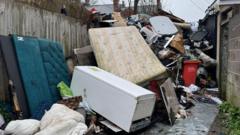
Fly tippers in England face clearing up own rubbish as punishment
#fly tipping #England #rubbish clearance #punishment #environmental crime #illegal dumping #waste disposal #enforcement
📌 Key Takeaways
- Fly tippers in England may be required to clean up their own illegally dumped waste as a penalty.
- This measure aims to deter illegal dumping by making offenders directly face the consequences of their actions.
- The punishment is part of broader efforts to combat environmental crimes and reduce fly-tipping incidents.
- Authorities are implementing stricter enforcement to address the growing problem of waste disposal violations.
📖 Full Retelling
🏷️ Themes
Environmental Enforcement, Legal Penalties
📚 Related People & Topics

England
Country within the United Kingdom
England is a country that is part of the United Kingdom. It is located on the island of Great Britain, of which it covers about 62%, and more than 100 smaller adjacent islands. England shares a land border with Scotland to the north and another land border with Wales to the west, and is otherwise su...
Entity Intersection Graph
Connections for England:
View full profileMentioned Entities
Deep Analysis
Why It Matters
This policy matters because it directly addresses England's growing fly-tipping problem, which costs taxpayers millions annually in cleanup costs and damages local environments. It affects local communities who suffer from illegal dumping, waste management authorities burdened with cleanup, and offenders who will now face more meaningful consequences. The approach represents a shift toward restorative justice in environmental offenses, potentially creating stronger deterrents while reducing public costs.
Context & Background
- Fly-tipping (illegal dumping of waste) has increased significantly in England, with over 1 million incidents reported annually in recent years
- Local authorities currently spend approximately £50 million per year on cleanup costs for illegally dumped waste
- Previous penalties have included fines up to £50,000 and potential imprisonment, but enforcement has been inconsistent across regions
- The Environmental Protection Act 1990 provides the legal framework for addressing fly-tipping offenses in England and Wales
What Happens Next
Local authorities will implement the new punishment system in coming months, with first offenders likely facing cleanup orders by early next year. Monitoring and reporting of fly-tipping incidents will increase to measure the policy's effectiveness. Additional legislation may follow if this approach proves successful in reducing illegal dumping rates.
Frequently Asked Questions
Fly-tipping is the illegal disposal of household, industrial, commercial or other waste without a license or on unapproved land. This includes dumping waste on roadsides, in fields, or in public spaces rather than using proper waste disposal facilities.
Courts will issue Community Protection Notices or similar orders requiring offenders to participate in supervised cleanup operations. They'll work with local authority teams to remove illegally dumped waste, often including waste they didn't personally dump.
Offenders can still face unlimited fines and up to 5 years imprisonment for serious cases. Vehicles used in fly-tipping can be seized, and offenders may receive criminal records affecting future employment and travel opportunities.
Any member of the public witnessing fly-tipping should report it to their local council or through the government's reporting website. Providing details like vehicle registrations, descriptions of people involved, and photos can help investigations.
Factors include increased waste disposal charges at legitimate facilities, reduced council waste collection services in some areas, and the growth of unlicensed waste carriers offering cheap disposal services that ultimately involve illegal dumping.