
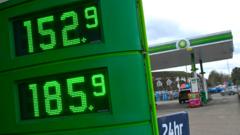
Fuel rations and free buses: How countries are responding to rising oil prices
Governments around the world have introduced measures to limit the impact of price increases.
Entity Intersection Graph
No entity connections available yet for this article.
Original Source
Fuel rations and free buses: How countries are responding to rising oil prices 37 minutes ago Share Save Share Save The war in Iran and the effective closure of the Strait of Hormuz - through which around 20% of the world's oil and natural gas flows - has seen fuel costs rise sharply in the past month. With the disruption expected to have a lasting impact on prices, governments around the world have begun introducing measures to limit the impact on consumers and the economy. Here is a rundown of what's been introduced so far. Why did US and Israel attack Iran and how long could the war last? Why the Strait of Hormuz matters so much in the Iran war How the Hormuz closure could affect food, medicines and smartphones UK While most of the UK's electricity is generated through natural gas and renewables, petrol prices have reached an 18-month high due to rising global oil prices, according to motoring organisation the RAC. The government has said it is primed to step in if there are signs petrol sellers are profiteering from the crisis - something the Petrol Retailers Association has denied is the case. Meanwhile, low-income households that use heating oil will be eligible to access a £53m package announced by the prime minister in March to help with costs. Australia In two Australian states, public transport will be made free in order to incentivise people not to drive. Travel on Victoria's trains, trams and buses will be free from Tuesday and throughout April, while commuters in Tasmania will not need to pay for buses, coaches and ferries from Monday until the end of June. Tasmania's transport minister also said that paid-for school buses would be made free, saving those who use them A$20 (£10.40) a week. The price of petrol has risen sharply in Australia since the conflict in the Middle East began, with the national average at A$2.38 a litre on 22 March, up from around A$2.09 at the start of the war, according to figures from the Australian Institute of Petroleum. Rea...
Read full article at source