
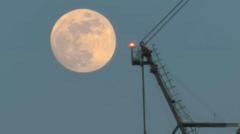
Full Worm Moon shines in UK skies
#Worm Moon #full Moon #lunar eclipse #Blood Moon #spring equinox #celestial events #astronomy #Blue Moon
📌 Key Takeaways
- The first full Moon of spring, known as the Worm Moon, was visible across the UK Monday night and will remain visible Tuesday night into Wednesday morning
- For viewers in Asia, Australia, and parts of the Americas, the full Moon coincided with a rare total lunar eclipse, creating a Blood Moon phenomenon
- The Worm Moon derives its name from ancient traditions marking seasonal changes when earthworms emerge from warming spring soil
- The next full Moons will be the Pink Moon on April 1, Flower Moon on May 1, and a rare Blue Moon on May 31
📖 Full Retelling
The first full Moon of spring, known as the 'Worm Moon,' rose across the United Kingdom on Monday night, offering sky watchers a celestial spectacle that will be visible again Tuesday night into Wednesday morning. For sky watchers in Asia, Australia, and parts of the Americas, this celestial event coincided with a rare total lunar eclipse, causing the Moon to appear red—a phenomenon commonly known as a Blood Moon. The totality occurred at approximately 11:30 GMT, making it invisible to viewers in the UK, but the Moon remained full throughout Tuesday night into Wednesday morning. Meteorological forecasts predicted clear skies across much of the UK, providing optimal viewing conditions for those eager to witness the lunar display. The name 'Worm Moon' originates from ancient traditions that predate modern calendars, serving as seasonal markers for early societies. This particular full Moon in March derives its name from earthworms that begin emerging from the soil as spring temperatures rise—a significant sign of seasonal change for agricultural communities. While UK residents enjoyed the sight of the Worm Moon, approximately one-third of the world's population had the opportunity to witness the total lunar eclipse, which began at 11:04 GMT and concluded at 12:02 GMT. For those in England and Wales, forecasters predicted some cloud cover but assured adequate clear spells for moon viewing. Sky watchers who missed this lunar event will have further opportunities in the coming months. The next full Moon, known as the Pink Moon, will rise on April 1, followed by the Flower Moon on May 1. May will also feature a second full Moon on May 31, a rare occurrence known as a Blue Moon. The Blue Moon designation comes from the infrequency of having two full Moons within a single calendar month, giving rise to the popular expression 'once in a blue moon.'
🏷️ Themes
Astronomy, Seasonal traditions, Celestial events
📚 Related People & Topics
Blue moon
Name for three (unconnected) events
A blue moon refers either to the presence of a second full moon in a calendar month, to the third full moon in a season containing four, or to a moon that appears blue due to atmospheric effects. The calendrical meaning of "blue moon" is unconnected to the other meanings. It is often referred to as ...
Entity Intersection Graph
Connections for Blood Moon:
View full profileMentioned Entities
Original Source
Full Worm Moon shines in UK skies By Simon King Lead Weather Presenter Published 14 minutes ago Comments The first full Moon of the spring - known as the 'Worm Moon' rose in the skies across the United Kingdom on Monday night. For sky watchers in Asia, Australia and parts of the Americas the full moon will coincide with a rare total lunar eclipse which will make the Moon appear red. Totality will occur at around 11:30 GMT which means it will not be visible in the UK. The Moon will still appear full on Tuesday night into Wednesday and with lots of clear skies forecast, there'll be another opportunity to see it. Full Moons have names that date back to ancient traditions before modern calendars were used. They were helpful ways to mark the changing seasons and the names tended to relate to significant timely events. The March full Moon is known as the Worm Moon as it refers to when earthworms start to emerge from the soil as the weather warms in springtime. Why do full Moons have names? Published 13 March 2025 Rare 'Blood Moon' for some For some parts of the world, the full Moon will be visible as it undergoes a total lunar eclipse, becoming what is known as a Blood Moon. A lunar eclipse occurs when Earth moves directly between the Sun and Moon, casting a shadow onto the Moon's surface. During this, the Moon can turn a rusty red colour, which is where it gets it nickname, the Blood Moon. Those most likely to see the phenomenon include observers in parts of North America, South America, East Asia, and Australia. The full eclipse starts on Tuesday morning at 11.04 GMT and concludes at 12:02 GMT. It's estimated that almost a third of the world's population will see the total phase. When can you see the full moon? The forecast for Tuesday night suggests that while there will be some areas of cloud across England and Wales, there should be plenty of clear spells to see the Worm Moon. However, if the weather is not on your side this time, the next full Moon will rise on 1 Ap...
Read full article at source