
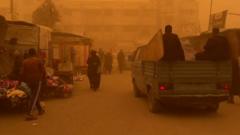
Gazans urged to shelter as sandstorm turns skies orange
#sandstorm #Gaza #shelter #air quality #health advisory #environmental hazard #weather warning
📌 Key Takeaways
- A severe sandstorm has turned skies orange in Gaza, prompting urgent shelter advisories.
- Residents are advised to stay indoors to avoid health risks from poor air quality.
- The storm highlights environmental vulnerabilities in the region amid ongoing challenges.
- Local authorities are monitoring the situation and providing updates to the public.
📖 Full Retelling
🏷️ Themes
Weather, Health, Environment
📚 Related People & Topics
Entity Intersection Graph
Connections for Gaza:
Mentioned Entities
Deep Analysis
Why It Matters
This sandstorm represents a serious health and humanitarian crisis for Gaza's 2.3 million residents, many already living in overcrowded conditions with limited healthcare access. The storm exacerbates existing respiratory problems in a population suffering from malnutrition and poor health infrastructure due to the ongoing conflict. Environmental disasters like this compound the territory's humanitarian emergency, straining already overwhelmed emergency services and potentially causing long-term respiratory damage to vulnerable populations including children and the elderly.
Context & Background
- Gaza has experienced increasingly severe sandstorms in recent years, linked to climate change and regional desertification patterns
- The territory's healthcare system has been severely degraded by 16 years of blockade and repeated military conflicts, with only 40% of essential medicines available
- Gaza's population density of over 5,500 people per square kilometer makes evacuation and sheltering particularly challenging during environmental emergencies
- Previous sandstorms in 2015 and 2018 caused widespread respiratory illnesses and overwhelmed Gaza's limited hospital capacity
- The territory faces chronic electricity shortages (4-8 hours daily) that complicate indoor sheltering during environmental crises
What Happens Next
Health authorities will likely report increased hospital admissions for respiratory distress within 24-48 hours, particularly among asthma patients and the elderly. International aid organizations may deploy emergency medical supplies if the storm persists beyond 48 hours. The storm's duration will determine whether it causes significant agricultural damage to Gaza's limited farmland, potentially affecting food security in coming weeks. Cleanup efforts will be hampered by limited equipment and resources once the storm passes.
Frequently Asked Questions
Gaza's extreme population density means more people are exposed, while damaged infrastructure and poor building conditions offer limited protection. The healthcare system's collapse makes treating respiratory complications from dust inhalation extremely difficult.
The conflict has destroyed many buildings that would normally provide shelter, damaged healthcare facilities needed to treat storm-related illnesses, and left the population more vulnerable due to malnutrition and trauma. Emergency response capabilities are severely limited by movement restrictions and resource shortages.
Children breathe faster than adults, inhaling more dust relative to their body weight, and their developing respiratory systems are more susceptible to permanent damage. Many Gaza children already suffer from malnutrition and anemia, reducing their resilience to environmental stressors.
Organizations like UNRWA and WHO preposition emergency medical supplies and distribute masks when possible, but movement restrictions often delay responses. They focus on protecting vulnerable groups in shelters and supporting overwhelmed hospitals with medicines and equipment.
Environmental emergencies sometimes create temporary humanitarian pauses for aid delivery, but they rarely alter fundamental political positions. However, they may increase international pressure for improved humanitarian access if the storm causes significant casualties.