
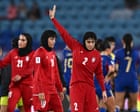
‘Grave concerns’ for Iran’s return home after Women’s Asian Cup elimination
#Iran #Women's Asian Cup #football elimination #player safety #political backlash #sports controversy #international concern
📌 Key Takeaways
- Iran's women's football team faces potential backlash after early Asian Cup exit.
- The team's elimination raises safety and political concerns for players returning to Iran.
- The situation highlights ongoing tensions between sports and government in Iran.
- International attention is focused on the players' welfare amid strict national policies.
📖 Full Retelling
🏷️ Themes
Sports Politics, Women's Rights
📚 Related People & Topics

Iran
Country in West Asia
# Iran **Iran**, officially the **Islamic Republic of Iran** and historically known as **Persia**, is a sovereign country situated in West Asia. It is a major regional power, ranking as the 17th-largest country in the world by both land area and population. Combining a rich historical legacy with a...
AFC Asian Cup
Association football tournament
The AFC Asian Cup is the primary association football competition contested by the senior men's national teams of the members of the Asian Football Confederation (AFC), determining the continental champion of Asia. It is the second-oldest continental football championship in the world after Copa Amé...
Entity Intersection Graph
Connections for Iran:
Mentioned Entities
Deep Analysis
Why It Matters
This news matters because it highlights the dangerous intersection of sports, politics, and human rights in Iran, where female athletes face severe consequences for perceived failures. It affects Iran's women's national soccer team members who risk retaliation from authorities for their competitive performance, potentially facing travel bans, imprisonment, or forced retirement. The situation also impacts international sports organizations that must navigate political pressures when involving Iranian teams. This case underscores how authoritarian regimes weaponize sports achievements for propaganda while punishing athletes for losses, creating chilling effects on women's sports participation globally.
Context & Background
- Iran's women's national soccer team has faced decades of restrictions including bans on stadium attendance and limited funding compared to men's teams
- Female athletes in Iran have historically been punished for political reasons, such as the 2019 arrest of Sahar Khodayari who self-immolated after facing charges for attending a men's match
- The Iranian government uses international sports successes for propaganda but often blames athletes personally for failures
- Iran was suspended from international soccer in 2006 and 2019 for political interference in sports governance
- The Women's Asian Cup serves as a qualifier for the 2023 FIFA Women's World Cup, making elimination particularly consequential
What Happens Next
The Iranian team will likely face security screenings and interrogations upon returning to Tehran airport in the coming days. Sports authorities may announce 'disciplinary measures' against coaching staff within 1-2 weeks. FIFA and AFC will monitor the situation but likely avoid direct intervention unless clear human rights violations occur. Several players may quietly retire from international soccer or seek asylum opportunities during future overseas tournaments. The incident may affect Iran's bid to host future Asian women's sporting events.
Frequently Asked Questions
The Iranian regime views international sports as extensions of national prestige and political legitimacy. Losses are often framed as moral failures or lack of revolutionary spirit rather than athletic outcomes, making athletes vulnerable to accusations of insufficient patriotism or intentional underperformance.
International sports bodies like FIFA have human rights statutes but rarely intervene in domestic disciplinary matters. The UN's special rapporteur on cultural rights has criticized Iran's treatment of athletes, but enforcement mechanisms are limited to diplomatic pressure and potential competition bans.
Continued mistreatment may lead to player boycotts or talent drain as athletes seek safer environments. FIFA could theoretically suspend Iran for government interference, but geopolitical considerations usually prevent such actions unless violations receive sustained international attention.
Past cases include travel bans imposed on chess players for competing against Israelis, forced retirements of soccer players for improper hijab, and imprisonment of climbers for social media activism. Punishments often involve psychological pressure and career termination rather than formal legal charges.