
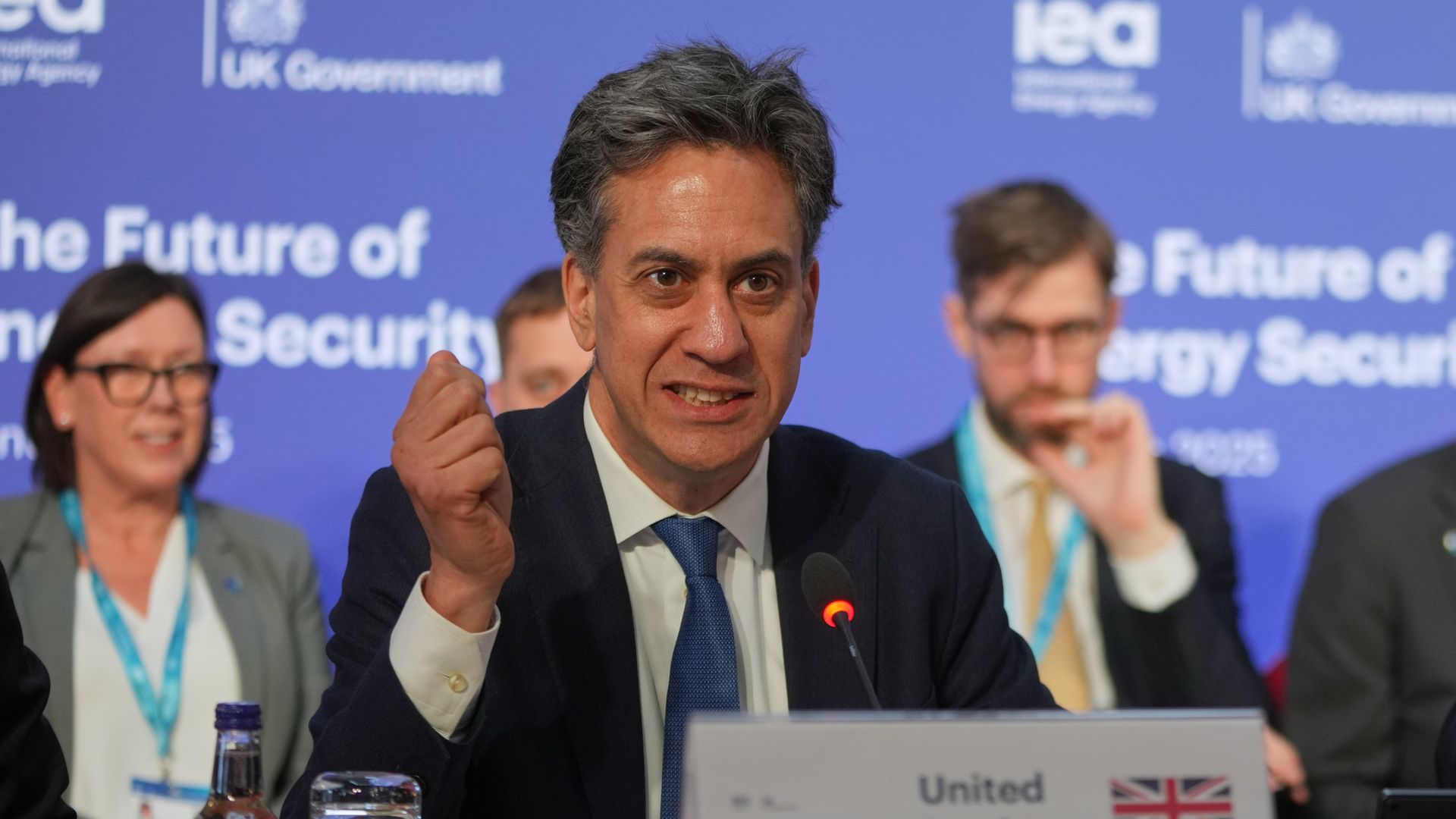
Greens pile pressure on Miliband over decoupling electricity and gas prices
📖 Full Retelling
📚 Related People & Topics
Miliband
Surname list
Miliband may refer to: Ed Miliband (born 1969), British politician, former leader (Sep.
Greens
Topics referred to by the same term
Greens may refer to: Leaf vegetables such as collard greens, mustard greens, spring greens, winter greens, spinach, etc.
Entity Intersection Graph
Connections for Miliband:
Mentioned Entities
Deep Analysis
Why It Matters
This news matters because it highlights a critical energy policy debate affecting both consumers and the UK's transition to renewable energy. Decoupling electricity prices from volatile gas prices could lower electricity bills for households and businesses while accelerating investment in clean energy infrastructure. The pressure on Energy Secretary Ed Miliband reveals political tensions within the Labour Party's climate agenda, with significant implications for energy affordability, net-zero targets, and the UK's economic competitiveness.
Context & Background
- UK electricity prices are currently linked to wholesale gas prices through the 'marginal pricing' system, even though renewable sources now generate over 40% of the country's electricity.
- The energy crisis following Russia's invasion of Ukraine caused gas prices to spike dramatically, leading to record-high electricity bills and government intervention through price caps.
- The European Union has already implemented electricity market reforms to reduce the influence of gas prices, creating pressure for the UK to follow suit to maintain competitive energy costs.
- Ed Miliband previously served as Energy Secretary from 2008-2010 and has been a vocal advocate for green energy policies, making this a test of his current political influence.
What Happens Next
Miliband will likely face increased parliamentary scrutiny and potential amendments to energy legislation in the coming months. The Labour government may commission an official review of electricity market reform options, with policy announcements expected before the next budget cycle. Industry stakeholders will intensify lobbying efforts, while consumer groups will monitor potential impacts on energy bills ahead of the winter heating season.
Frequently Asked Questions
It means changing how electricity prices are calculated so they're no longer tied to the most expensive power source (usually gas). Instead, prices would better reflect the actual costs of different generation methods, particularly cheaper renewables like wind and solar.
Green politicians see this reform as essential for making renewable energy more competitive and accelerating the transition away from fossil fuels. They're targeting Miliband because he holds the Energy Secretary position and has historically positioned himself as a climate champion within the Labour Party.
Most experts believe decoupling would reduce electricity bills over time by breaking the link to volatile gas markets. However, there could be transitional costs and complex market adjustments that might create short-term uncertainty about pricing.
Opponents argue that sudden market reforms could destabilize energy investment and create unintended consequences. Some energy companies worry about revenue impacts, while others caution that the transition costs might outweigh benefits without careful implementation.
Yes, several European countries have implemented variations of electricity market reform. Spain and Portugal successfully introduced temporary price caps on gas for electricity generation, while Germany and other EU nations are implementing more permanent structural reforms.