
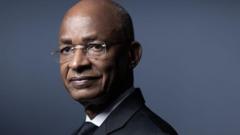
Guinea opposition leader urges 'direct resistance' after 40 parties dissolved
#Guinea #opposition leader #direct resistance #political parties dissolved #West Africa #political tensions #government action
📌 Key Takeaways
- Guinea's opposition leader calls for 'direct resistance' following government action
- 40 political parties have been dissolved by authorities
- The move escalates political tensions in the West African nation
- Opposition is mobilizing against what they see as suppression of political pluralism
🏷️ Themes
Political unrest, Government crackdown
📚 Related People & Topics

West Africa
Westernmost region of Africa
West Africa, also known as Western Africa, is the westernmost region of Africa. The United Nations defines Western Africa as the 16 countries of Benin, Burkina Faso, Cape Verde, The Gambia, Ghana, Guinea, Guinea-Bissau, Ivory Coast, Liberia, Mali, Mauritania, Niger, Nigeria, Senegal, Sierra Leone, a...

Guinea
Country in West Africa
Guinea, officially the Republic of Guinea, is a coastal country in West Africa. It borders the Atlantic Ocean to the west, Guinea-Bissau to the northwest, Senegal to the north, Mali to the northeast, Ivory Coast to the southeast, and Sierra Leone and Liberia to the south. It is sometimes referred to...
Entity Intersection Graph
Connections for West Africa:
Mentioned Entities
Deep Analysis
Why It Matters
This development matters because it represents a significant escalation in Guinea's political crisis, threatening democratic institutions and potentially leading to widespread unrest. It directly affects opposition supporters, civil society organizations, and ordinary citizens who may face increased political repression. The dissolution of 40 political parties undermines pluralism and could destabilize the entire West African region, which has experienced multiple coups in recent years. International partners and regional bodies like ECOWAS must now decide how to respond to this democratic backsliding.
Context & Background
- Guinea has been under military rule since Colonel Mamady Doumbouya seized power in a September 2021 coup, overthrowing President Alpha Condé
- Alpha Condé had sparked protests by changing the constitution to run for a third term in 2020, which many viewed as unconstitutional
- The country has a history of political instability since gaining independence from France in 1958, with multiple authoritarian regimes and limited democratic transitions
- Guinea holds significant mineral resources including bauxite, gold, and diamonds, making political stability crucial for economic development
- ECOWAS (Economic Community of West African States) has suspended Guinea since the 2021 coup and has been pushing for a transition to civilian rule
What Happens Next
The opposition's call for 'direct resistance' suggests increased protests and potential clashes with security forces in coming weeks. ECOWAS will likely convene emergency meetings to discuss sanctions or other measures against the military government. International partners including the African Union, United Nations, and former colonial power France may issue condemnations and reconsider aid and cooperation agreements. The military government may respond with further crackdowns or attempt to legitimize its rule through controlled political processes excluding dissolved parties.
Frequently Asked Questions
The military government likely dissolved these parties to consolidate power and eliminate organized opposition ahead of any planned transition to civilian rule. This move follows a pattern of authoritarian consolidation seen in other post-coup transitions where ruling juntas seek to control the political landscape.
'Direct resistance' typically refers to organized civil disobedience, protests, strikes, and other forms of non-cooperation with authorities. In Guinea's context, this could include street demonstrations, economic boycotts, and potentially more confrontational tactics against the military government.
Political instability will likely deter foreign investment, particularly in the crucial mining sector which accounts for significant government revenue. Economic disruptions from protests and potential international sanctions could worsen living conditions for Guinea's population, approximately half of whom live in poverty.
ECOWAS can impose targeted sanctions on military leaders, suspend Guinea from regional bodies, or mediate dialogue between the government and opposition. However, ECOWAS's credibility has been challenged by its mixed success in reversing recent coups in Mali, Burkina Faso, and Niger.
Yes, the combination of opposition mobilization and military government crackdowns creates high risk of violent confrontations. Guinea has experienced deadly protests during previous political crises, and security forces have sometimes used lethal force against demonstrators.
Party members may face political persecution, arrests, or harassment by authorities. Some may join underground movements, align with remaining legal opposition groups, or seek exile. The dissolution effectively criminalizes organized political activity for a significant portion of the opposition.